
Commercial Roofing Services
ROOFING SERVICES
Commercial Roof Leak Repair
Emergency Commercial Roof Repair
Commercial Roof Repair
Commercial Roof Inspection
Commercial Roof Maintenance
Commercial Roof Coating
Commercial Roof Replacement
ROOF SYSTEMS
TPO Roofing
EPDM Roofing
PVC Roofing
Modified Bitumen Roofing
Standing Seam Metal Roofing
PROPERTY TYPES
Warehouse Roofing
Distribution Center Roofing
Office Building Roofing
School Roofing
INDUSTRIES
DAMAGE REPAIR
CAPABILITIES
MANUFACTURERS
SERVICE AREAS
Storm Damage Roof Repair in Joliet, IL
Commercial Roofing Services
Assess and repair storm-damaged commercial roofs in Joliet with a documented inspection, temporary dry-in and repair scope tied to observed conditions.
Storm Damage Roof Repair
The July 2023 weather record describes tornado activity from Minooka through Shorewood to Joliet, with hail and wind reports in the I-80 and Kankakee River Valley area. That regional chronology can prioritize a response, but only a roof walk can identify a building-level condition. We start with safe access and interior protection, then photograph visible punctures, loose edges, shifted flashing or equipment changes by section. The notes separate confirmed observations, prior repairs where records permit, and temporary dry-in from permanent correction. For a wide roof, the inspection map divides field, edge and equipment zones. If safety or wet conditions limit access, we say so instead of inferring unseen damage. A return visit can then focus on those marked locations, with the owner approving the access plan before another section is opened. Related project details: emergency dry-in
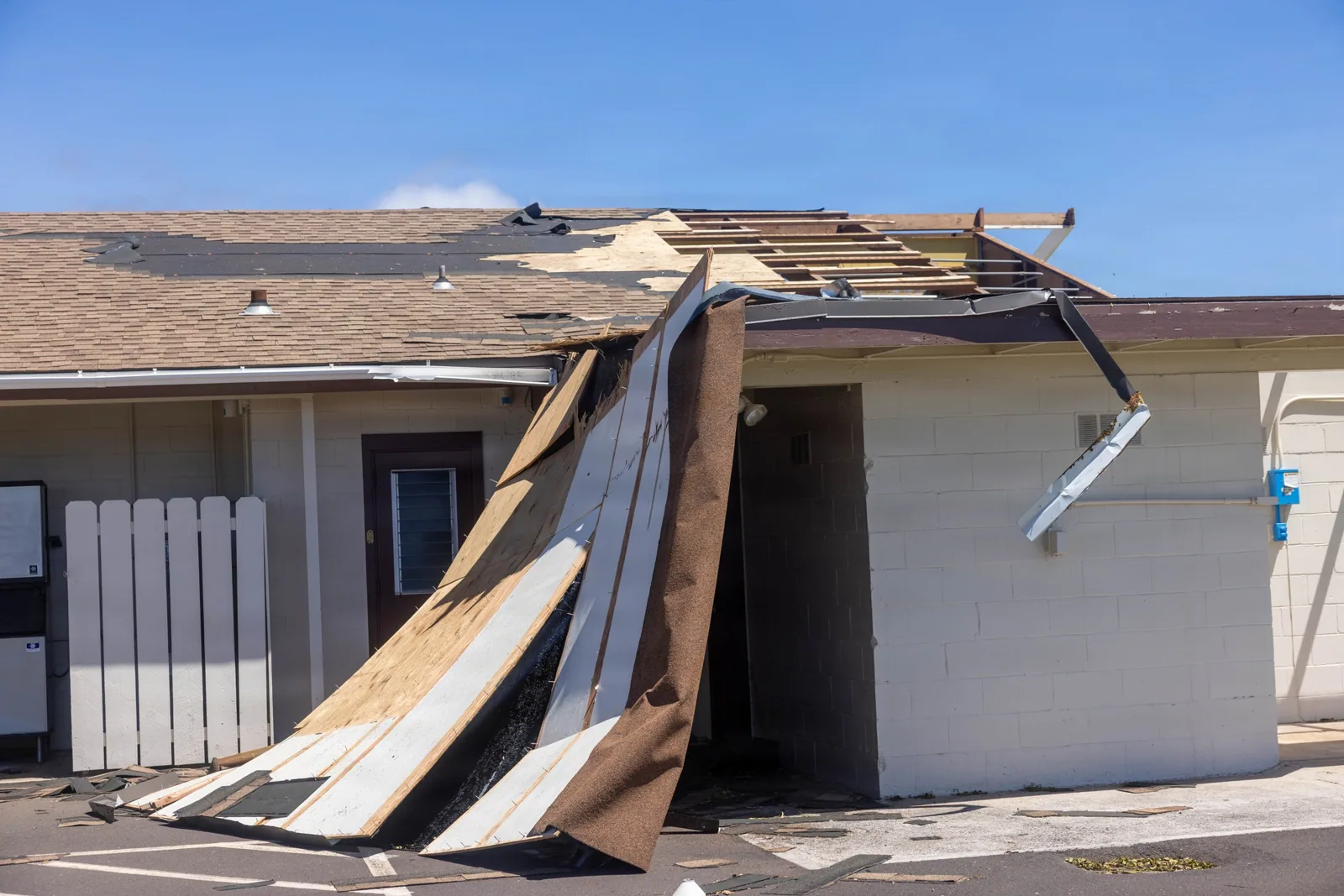
Inspect the Exposed Details
At the Brandon Road Dam station, annual snow averages 16.9 inches, and 125.8 days have minimum temperatures at or below 32 degrees. For a storm repair, that winter baseline matters when water reaches insulation or a temporary cover must remain through a cold period. We trace the entry point, identify wet or displaced layers only where observed, and keep concealed conditions pending until a test opening confirms them. The work note states how the exposed area will be protected and what permanent tie-in remains, so a temporary measure is not mistaken for a completed roof repair. We label each photo by roof zone and distinguish an emergency cover, a completed patch and an area awaiting moisture testing. Before removing wet material, the superintendent confirms the opening limit and interior protection with the owner. At closeout, the report lists the material installed, the tested boundary and any access limitation that prevented a full view, giving the next visit a reliable starting point. Related project details: hands-on roof inspection
Temporary Protection and Return Work
When active water cannot wait for a permanent repair, we establish a temporary measure suited to the opening and current weather. The dry-in has a defined boundary, photographs and a return condition, so the facility contact knows what remains. We coordinate roof access, lift location, interior protection and any shutdown needed beneath the work area. For Joliet distribution properties, we confirm whether loading patterns or yard traffic limit the staging zone. Temporary protection does not remove wet insulation or restore a damaged substrate; those conditions are listed for the permanent scope. Once the surface is safe and dry, we remove unsound material, inspect the deck and install a system-compatible repair. The crew records any concealed condition that changes the repair boundary before closing the assembly. If a roof system needs a larger renewal rather than repeated patches, we can prepare replacement planning after the storm-related work is documented.
Storm work also requires a clear handoff between the crew and the people responsible for the building. We identify who can approve access, where debris can be lowered and which interior areas remain occupied. If a mechanical or electrical trade must isolate equipment, that step is placed in the sequence before membrane removal. The scope states which materials are available during the first response and which require a return visit. This keeps temporary protection from being confused with the completed repair.
Membrane, Flashing, and Edge Corrections
Repair methods follow the installed system and the observed failure. A thermoplastic membrane may need a cleaned and rewelded seam, while EPDM needs compatible splice materials and a prepared surface. A metal roof can require panel, fastener or penetration attention rather than a membrane patch. We check the surrounding lap and termination so a small repair does not bridge loose material or divert water to another weak detail. Damaging hail and wind affected the I-80 and Kankakee River Valley area in July 2023. Hail size or a storm path cannot establish damage at a building, so the repair report uses roof photographs and field observations. We mark membrane punctures, uplifted corners and damaged flashing by roof section, then identify whether water has reached the insulation or deck. Where hail is the reported event, a hail damage inspection can record impact-related conditions while keeping the observed evidence separate from assumptions about the entire roof. Where an edge or coping detail has separated, edge metal repair may need to be coordinated with the membrane work. A defined patch boundary, material note and closeout photo make later maintenance easier to compare.
Records for the Owner and Project Team
We organize the storm inspection by roof section and identify the observed condition, temporary measure, permanent repair and any follow-up testing. Photographs show the location before and after work, while the written notes distinguish visible damage from concealed conditions found after opening. This record can help an owner prepare a repair file and discuss the work with a carrier, but it does not decide coverage or claim value. We list measurements and material descriptions only where they were observed or taken. The general contractor can use the findings to coordinate access, trade handoffs and procurement for permanent work. We can also prepare a roof condition report that organizes the findings for maintenance and budget review. A prompt file should retain original roof photos, repair notes, temporary dry-in details and invoices for completed work. We label each item by location and date so the owner can compare the event inspection with later observations. If an opening reveals moisture beyond the visible damage, the report explains what additional sampling or replacement boundary should be considered before the assembly is closed. If an observed repair expands into structural or other designed work, record the unresolved design question and route it through the owner's established review process before crews extend the scope. For an insurance file, we can provide roof claim documentation based on our inspection and completed repairs. For a building in Joliet, the facility contact confirms roof access, lift placement and the operating window before the crew returns.
Commercial Roofing Questions
How soon should a roof be inspected after hail or wind?
The timing begins with safety and active water control. Once roof access is safe, we inspect exposed edges, seams, penetrations and rooftop equipment, then document any temporary protection or permanent repair. A regional weather report does not show what happened to an individual roof.
Can you distinguish storm damage from older roof wear?
We photograph the observed condition, compare it with prior repair records where available and note indicators that help establish the repair boundary. Some conditions cannot be dated from appearance alone, so we state what is visible and avoid assigning a cause without supporting evidence.
Will you prepare photos for an insurance claim?
We can provide dated inspection photos and a description of observed conditions and completed work. The record supports the owner's file, while coverage and claim decisions remain with the carrier. We keep the temporary response and permanent repair listed separately.
What if a storm opening is still taking water?
We coordinate interior protection and a safe roof assessment, then apply an appropriate temporary dry-in when conditions allow. The report identifies the protected area and any return work needed. Permanent repair follows when the surface, material and weather support that work.
Does hail require replacing the whole commercial roof?
A roof walk and selected testing show whether damage is isolated or spread across the assembly. We inspect the membrane, edges, flashings and rooftop equipment, then separate repair areas from moisture or deck concerns. Replacement is considered when broader condition evidence supports it, not from a storm report alone.
Document the Storm Condition
Arrange a roof walk with our team to inspect exposed details, protect active openings and define the permanent repair boundary. We will provide a field record the owner and general contractor can use for the next decision.
