Commercial Roofing Services
ROOFING SERVICES
Commercial Roof Leak Repair
Emergency Commercial Roof Repair
Commercial Roof Repair
Commercial Roof Inspection
Commercial Roof Maintenance
Commercial Roof Coating
Commercial Roof Replacement
ROOF SYSTEMS
TPO Roofing
EPDM Roofing
PVC Roofing
Modified Bitumen Roofing
Standing Seam Metal Roofing
PROPERTY TYPES
Warehouse Roofing
Distribution Center Roofing
Office Building Roofing
School Roofing
INDUSTRIES
DAMAGE REPAIR
CAPABILITIES
MANUFACTURERS
SERVICE AREAS
Commercial Roof Repair in Joliet, IL
Commercial Roofing Services
Repair commercial roof seams, flashing and drainage in Joliet with a mapped repair boundary, photo record and plan for keeping operations moving.
Commercial Roof Repair
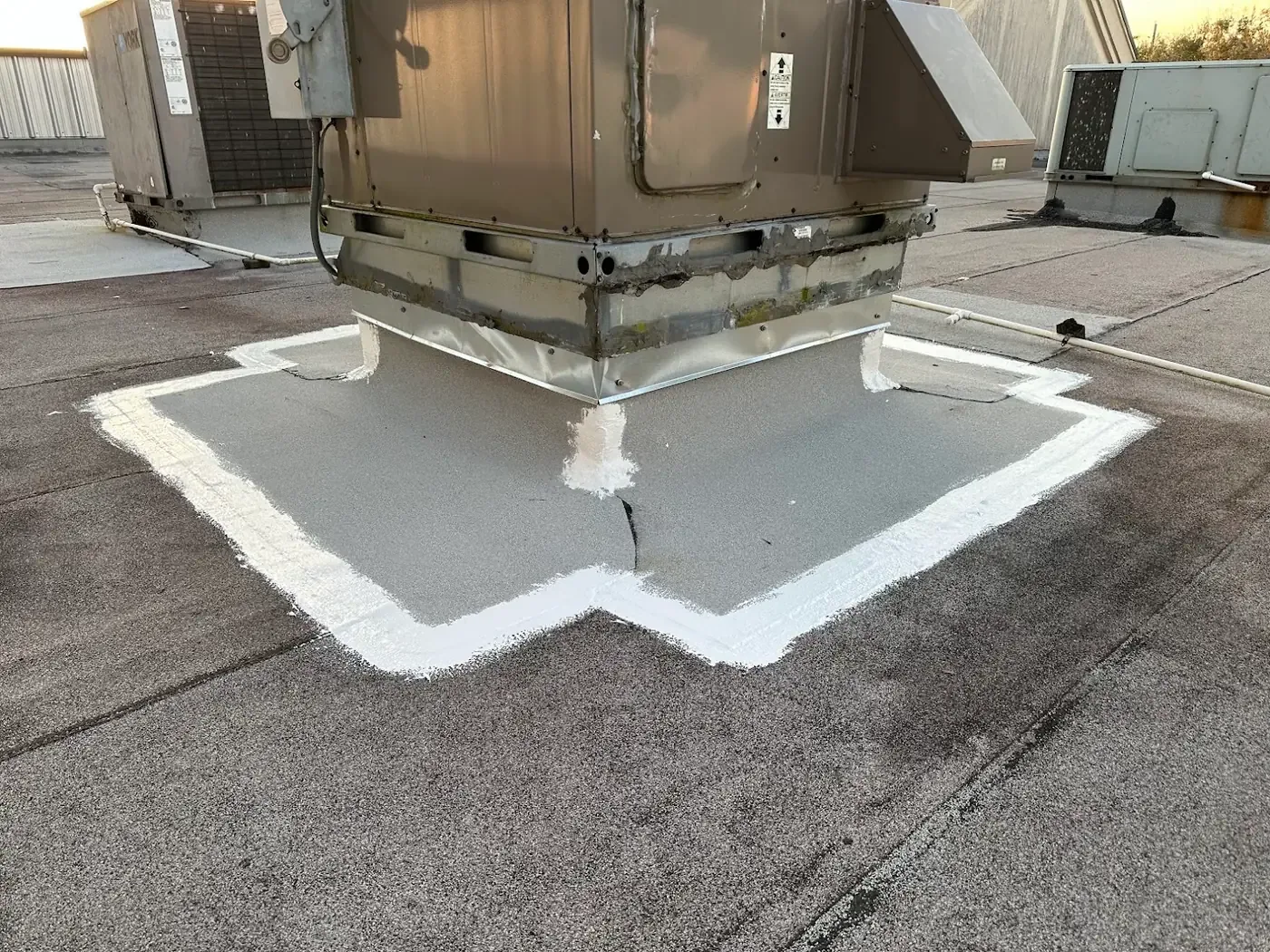
For a repair request in Joliet, the roof walk records a specific defect, its surrounding material and the water route that could reach the interior. We check seams, curbs, drains and perimeter transitions, then mark a boundary that can be verified after work. Joliet averages 16.9 inches of annual snowfall, and minimum temperatures reach freezing or lower on 125.8 days each year. That seasonal pattern makes drainage and secure daily dry-in worth checking during repair planning. A July 2023 tornado crossed Minooka, Shorewood and Joliet, while hail and wind also affected the I-80 and Kankakee River Valley region. We inspect each property for observed conditions before setting a repair boundary. A focused commercial roof inspection can establish which details need repair and which remain sound. We label each roof zone on the work order, then compare the completed patch and follow-up photographs with that same map.
Trace the Failure Before Opening the Roof
Water can travel along a deck flute, insulation joint or pipe before it appears inside. We begin at the reported leak, then inspect nearby seams, penetrations, walls, curbs, drains and previous patches. Staining patterns and moisture readings help set the next test, but the repair should follow the opening condition once the membrane is exposed. If the roof is EPDM, a seam repair may need cleaning and compatible splice materials; a thermoplastic seam requires a different surface preparation and weld. Modified bitumen and built-up assemblies call for their own treatment at laps and flashing. We match the repair method to the installed system instead of forcing a universal patch onto an unknown surface. A field membrane made from EPDM needs a different repair detail than a heat-welded thermoplastic, so we confirm the material before preparing the surface. When the report has to support a capital decision, our roof condition report records the evidence and remaining questions in one place. The repair scope then stays separate from longer-term renewal work. A commercial leak repair addresses active water entry, while planned maintenance can return later for broad condition work. We keep the inspection photographs and Diligence Notes tied to each location so the owner can compare the original defect with the completed repair and decide whether more investigation is justified.
Seams, Flashing, and Penetrations
Most repair scopes are decided at transitions. We inspect whether a seam is open, whether the substrate is secure, and whether the flashing terminates above the water line. Pipe boots, equipment curbs, wall flashing and metal edges each move differently as temperatures change. A patch that bridges loose material can peel again because the surrounding surface has not been corrected. We remove unsound material to a clean boundary, prepare the substrate, install compatible flashing or membrane, and close the lap in a way that leaves it accessible for future review. Temperatures in Joliet reach 32°F or lower on 125.8 days each year, while the annual snowfall average is 16.9 inches; the repair schedule has to account for both. That seasonal movement makes the condition of a termination and its fasteners worth documenting during repair. Where edge metal itself has separated, coping and edge-metal work may be needed alongside the membrane repair. The scope should list each transition separately so the repair crew can complete the detail without leaving a different water path nearby.
Protect the Loading Pattern Below
For an active warehouse, roof access and material handling can matter as much as the patch size. Joliet has ten I-80 and I-55 interstate interchanges within the city and two intermodal terminals in or near it, so freight activity makes delivery timing a practical project constraint. We coordinate with the general contractor or facility contact on access, staging, lift placement and the period when a repair area must remain protected. We also confirm how materials reach the roof and where removed debris can be lowered without crossing active doors. If roof work is above a production line, we identify interior protection and the conditions for pausing operations before opening the assembly. Where weather is approaching, the crew can first establish temporary dry-in, then return for permanent materials when the roof is safe to work. That is a separate task from simply covering a stain. A written scope records the temporary measure, permanent work and any testing still needed. If the roof requires recurring observation, a preventive maintenance visit can track drains, seams and repaired transitions through the seasons.
Repair Record and Next Decision
After repair, we photograph the finished detail and record the materials and boundaries used. The report identifies any wet insulation or damaged deck exposed during the work, and states whether the area was fully corrected or needs a separate replacement scope. That distinction helps an owner avoid treating an old repair as proof that the full roof has been renewed. Commercial work in Joliet may require local approvals and documents sealed by an Illinois-licensed professional; changes to a broader assembly should be coordinated with the design team rather than added to a field patch. The Elwood/Joliet freight area runs from I-80 to the north, US 52 to the east, Hoff Road to the south and I-55 to the west; the roof details at each property still control the repair. We can review those findings with the general contractor and identify whether the next step is monitoring, selective repair or replacement planning. When a repair is scheduled in the Joliet commercial service area, we fit roof access to the property's operating hours and loading sequence.
Commercial Roofing Questions
How do you locate the roof opening when a ceiling stain appears elsewhere?
We start at the interior report and work outward across the roof details that can carry water, including seams, curbs, walls, drains and penetrations. Moisture readings and selective openings help test the likely path. The final repair follows the exposed condition, and the photo record shows where the membrane was opened and closed.
Can a repair be made before a full replacement is budgeted?
A focused repair can control a known defect while the owner reviews the remaining roof condition and capital schedule. We document the boundary, materials and any area that remains under observation. If the deck or insulation shows broader failure, we state that separately so the interim repair is not mistaken for a permanent roof-wide solution.
What changes the cost and timing of a commercial roof repair?
Access, roof height, membrane type, wet insulation, deck condition, equipment conflicts and weather all affect the work sequence. A seam patch on a clear field is different from rebuilding flashing around a curb or protecting an operating area below. We review those conditions at the roof and state any unresolved opening or testing allowance in the scope.
Will the repair stop water immediately during a storm?
For an active leak, we can address emergency water control and temporary dry-in while determining the permanent repair. The appropriate measure depends on access, weather and the exposed assembly. We identify what has been secured and what still needs a weather-safe return visit, rather than describing temporary protection as completed permanent work.
What does the repair report tell a facility manager?
It records the defect location, observed condition, repair boundary, materials installed and photographs of the finished detail. Any saturated insulation, damaged deck or nearby concern is identified for a separate decision. That record supports future maintenance and helps distinguish a recurring leak from a new failure elsewhere.
Map the Repair Boundary
Schedule a roof inspection with our team. We will trace the reported leak, photograph the seams and transitions, and identify the repair scope that fits the field condition and operating schedule.
