Service Areas
ROOFING SERVICES
Commercial Roof Leak Repair
Emergency Commercial Roof Repair
Commercial Roof Repair
Commercial Roof Inspection
Commercial Roof Maintenance
Commercial Roof Coating
Commercial Roof Replacement
ROOF SYSTEMS
TPO Roofing
EPDM Roofing
PVC Roofing
Modified Bitumen Roofing
Standing Seam Metal Roofing
PROPERTY TYPES
Warehouse Roofing
Distribution Center Roofing
Office Building Roofing
School Roofing
INDUSTRIES
DAMAGE REPAIR
CAPABILITIES
MANUFACTURERS
SERVICE AREAS
Commercial Roofing in Elwood, IL
Service Areas
Commercial roofing in Elwood, IL for industrial and business properties. Review roof condition, drainage and access around the building’s operating schedule.
Commercial Roofing in Elwood
A material delivery has to reach the roof without crossing a building's working path. Elwood, IL sits about five miles south of Joliet, and the Elwood International Port district adds business and industrial activity to the area. We use that freight setting to ask where a roof truck can unload and how crews can reach the work zone, then verify the property route with its operations contact. We inspect the actual roof, trace drainage, note penetrations and mark where a repair can tie into sound material. A commercial roof inspection records the assembly, condition and access limits before the bid sets quantities or a work window. A commercial roof inspection documents those conditions before the work sequence is fixed for procurement and roof-zone labeling.
Elwood and the Joliet Subregion
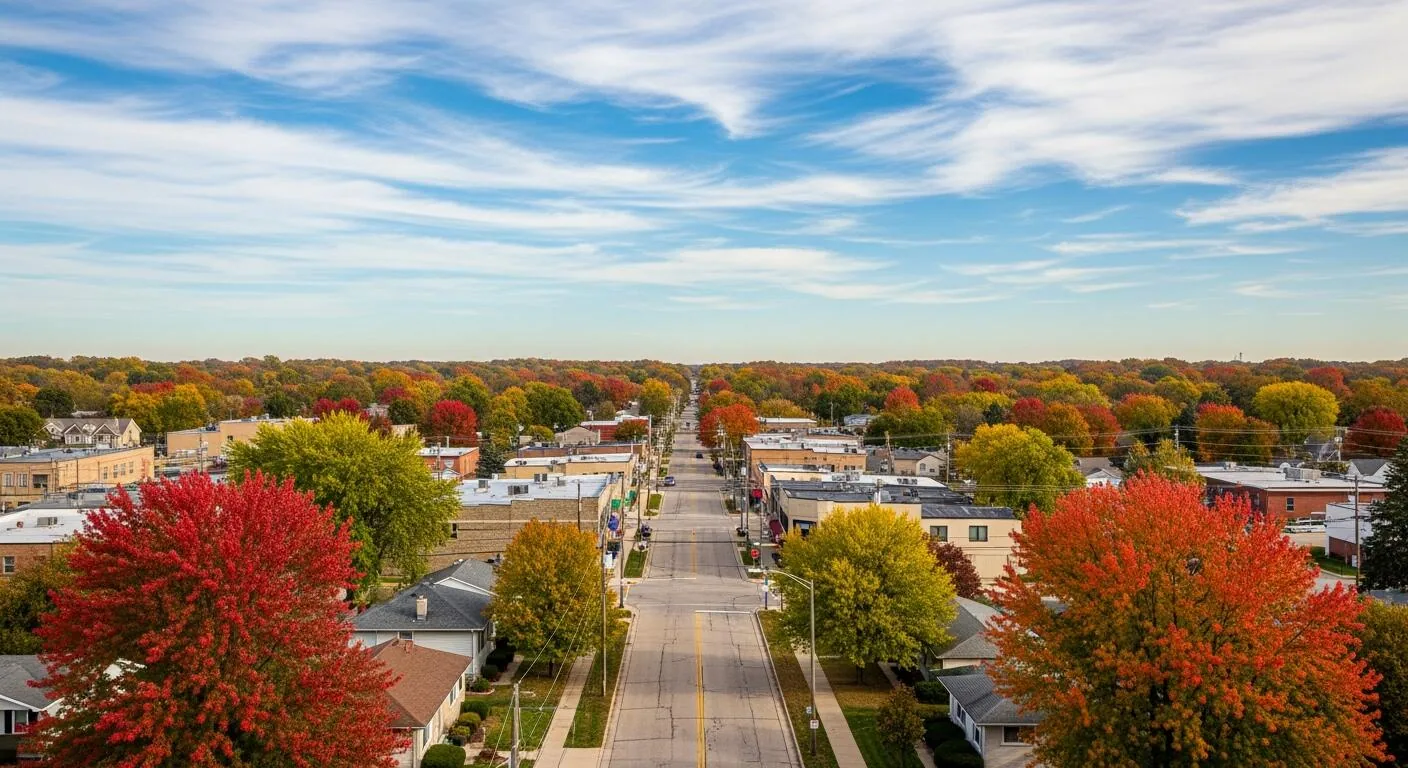
Elwood lies about five miles south of Joliet, with the International Port in its business and industrial area. Will County's freight planning treats Elwood and Joliet as a connected subregion; that movement can affect delivery timing while each property keeps its own operating schedule. We confirm hours, truck routes and safe roof access with the property contact rather than inferring them from the area name.
On a roof over active work, a crane pick, lift route or material drop may need to avoid a loading cycle or service path. The construction schedule should make the access window explicit and leave room for weather holds. If a repair is limited to one drain or curb, its protection zone can be separated from a larger replacement plan. Will County's plan covers the Elwood/Joliet freight subregion and frames regional transportation investment, while a phased occupied-building reroof keeps the individual property's work in sequence.
The Roof and Its Boundary
We record the existing membrane, attachment, insulation and deck information that can be seen or verified. The perimeter walk checks coping, edge metal and termination; the field review follows seams and laps to curbs, skylights, drains and wall transitions. Each defect is placed on a roof sketch with a photograph. That supports a repair boundary that reaches compatible, sound material. If the same symptom appears in several areas, we look for a shared drainage or movement condition before pricing repeated patches.
Elwood's business directory does not establish the assembly on any listed property, and available-property information does not confirm that a parcel is occupied. The inspection avoids those assumptions. Moisture readings can point to test locations when the membrane conceals wet insulation. A moisture survey should state the instrument's limits, and a written condition report can distinguish observed facts from the next diagnostic step.
Drainage, Flashing, and Water Paths
A commercial roof needs a predictable route for water from high points to drains, scuppers and downspouts. We inspect each outlet, overflow, strainer and connection to the membrane. Ponding can be a cleaning issue, a slope issue, or a sign that the roof has moved. Those causes are not interchangeable. The report records where water remained, what outlet was available and whether a cricket or tapered system redirects flow around equipment. At roof drains, we note whether the outlet, overflow and membrane clamping detail can be serviced without moving nearby equipment. If a low area remains after the bowl is clear, we measure the affected zone and carry slope correction as a separate option. That keeps routine cleaning from being priced as a structural change.
The same discipline applies at walls and penetrations. A leak can travel under membrane before it appears inside, so we map likely entry points and note where testing is needed. An outlet repair may be scoped separately from flashing at roof openings. When storm exposure is documented, the crew checks edge metal, seams and rooftop equipment supports without claiming every defect came from the event.
Winter and Summer Work Conditions
Joliet station normals show frequent winter freezing temperatures, snowfall and summer heat across the nearby service area. Freeze-thaw can challenge open details and water held near a seam; heat can change product handling and the available work window. The roofer uses current site conditions and the selected system's instructions to set an opening size and daily dry-in point.
Regional reporting places a July 2023 tornado across Minooka, Shorewood and Joliet, with hail and wind also reported near I-80 and the Kankakee River Valley. That record helps explain why an Elwood owner may request a review, but it does not prove damage at a particular address. We photograph the roof perimeter, seams, penetrations and any impact marks that are actually visible, then compare them with earlier maintenance records if available. The repair note identifies the building section, temporary protection and permanent correction separately. A wind or hail assessment should remain tied to observed material, not a route-wide assumption. Related project details: wind-damage assessment
Repair, Restoration, or Replacement
A repair is a good fit when the defect is localized and the adjacent membrane can accept a durable tie-in. If wet insulation extends beyond a small opening, the scope may need a wider cutback or replacement zone. Coatings can protect a sound assembly after testing and preparation, but they do not correct a wet substrate or unstable edge detail. We state what is included, what remains in place and which condition would change the work.
In the Elwood/Joliet freight subregion, a site may need its work broken into zones to limit access interruptions. That does not change the system requirements. We compare a repair price with restoration and tear-off alternatives only when the field condition supports each option. Owners can review EPDM membrane repair and coating restoration as system choices, with compatible tie-ins and moisture findings shown in the scope.
Work Sequence and Closeout
Before work begins, the owner and general contractor confirm access, laydown, fall protection, lift locations, debris handling and interior protection. We identify the area opened each shift, the dry-in line and the route for material movement. If the property has active deliveries, the site contact supplies the time windows rather than relying on a general freight assumption. The schedule can then show the trade handoff and the point at which the next roof zone becomes available.
Closeout should include the material system, completed areas, photographs and any remaining recommendation. A temporary measure needs a documented permanent repair date or condition. If the roof is part of a portfolio near Romeoville, its record can be compared with a separate condition file without transferring defects between buildings. For an Elwood property, a roof walk sets the actual repair limit, the access sequence and the decision the owner needs next.
Commercial Roofing Questions
Does the five-mile distance from Joliet describe our building?
It describes Elwood’s location relative to Joliet in Village materials. It does not identify a building or roof condition. We use the property address and field inspection for the work scope.
Can a roof repair be scheduled around truck activity?
Yes, when the owner confirms the operating window and access route. We document the work zone, delivery path and dry-in point with the general contractor before mobilizing.
How do you separate storm damage from older wear?
We photograph and map the observed condition, compare it with available maintenance records and state what the inspection can support. The report avoids attributing a defect without evidence.
What does a moisture survey add?
It can identify areas for further review when moisture is concealed beneath the membrane. The findings are interpreted with roof construction and may require approved test openings.
When should a roof be replaced instead of repaired?
The decision depends on the amount of sound material, wet insulation, recurring failures, edge condition and disruption from another repair cycle. We show those factors and price supported options.
Arrange an Elwood Roof Walk
Confirm the building’s assembly, active leak path and access window during a field review before the bid quantities are fixed.
