
Roof Systems
ROOFING SERVICES
Commercial Roof Leak Repair
Emergency Commercial Roof Repair
Commercial Roof Repair
Commercial Roof Inspection
Commercial Roof Maintenance
Commercial Roof Coating
Commercial Roof Replacement
ROOF SYSTEMS
TPO Roofing
EPDM Roofing
PVC Roofing
Modified Bitumen Roofing
Standing Seam Metal Roofing
PROPERTY TYPES
Warehouse Roofing
Distribution Center Roofing
Office Building Roofing
School Roofing
INDUSTRIES
DAMAGE REPAIR
CAPABILITIES
MANUFACTURERS
SERVICE AREAS
Built-Up Roofing in Joliet, IL
Roof Systems
Assess built-up roofing in Joliet, including aggregate, ply condition, drainage and flashing repairs, with replacement work sequenced around operations.
Built-Up Roofing
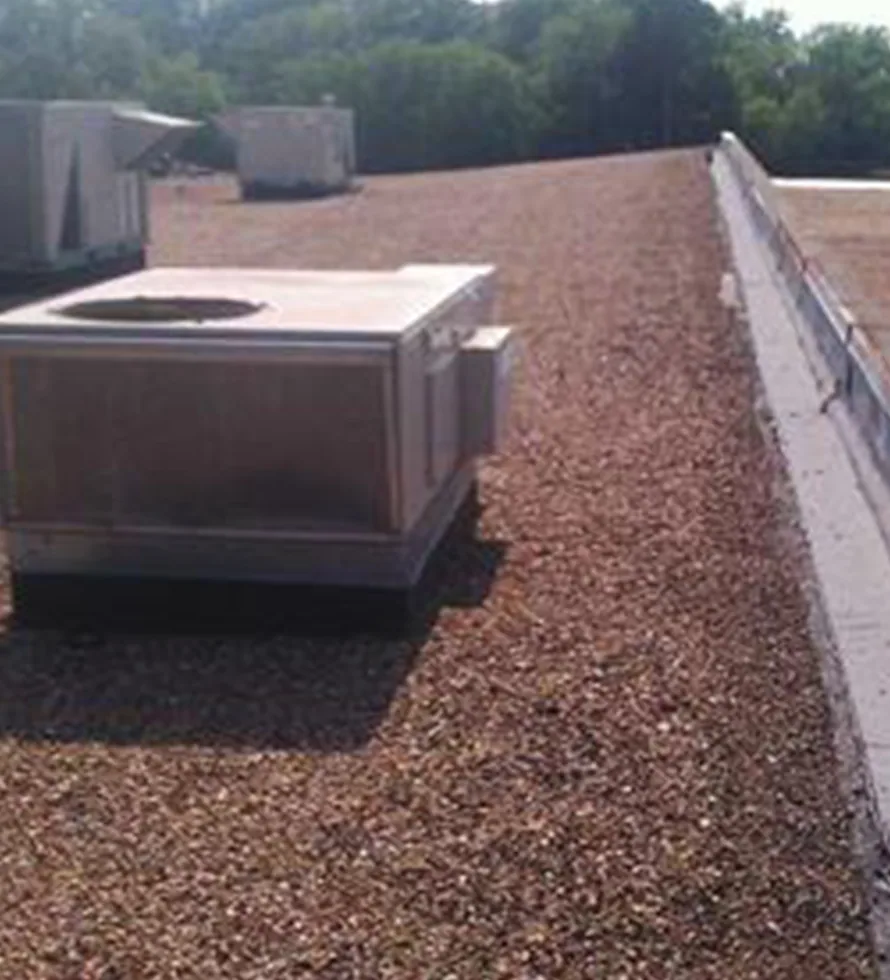
Aggregate on a roof can conceal the condition that determines the next construction move. Built-up roofing uses alternating asphalt and reinforcing plies, often finished with a protective surface such as aggregate or a cap sheet. In Joliet, many commercial roofs operate above loading, manufacturing or office space that cannot be treated as a vacant work zone. We check the surface, drains, parapets, penetrations and roof edges, then open representative areas when the assembly below is unclear. The inspection records how many layers are present, whether moisture has reached insulation, and where the deck needs review. From there, the GC can compare targeted repair, recover or tear-off. A commercial roof inspection and selective core cuts establish a repair boundary. The scope also accounts for debris handling, staging and daily dry-in. A modified bitumen system uses sheet plies with different construction details, while TPO roofing uses welded thermoplastic seams; confirm the actual assembly before pricing. We coordinate access in Joliet around the building's schedule.
Ply Stack and Surface Condition
Built-up roofs may have multiple layers of felt or reinforcing fabric set in asphalt, with surfacing that shields the membrane from weather and foot traffic. Aggregate can scatter, migrate into drains or cover a crack. A cap sheet can split at a seam or around a penetration. We examine exposed areas, probe suspect blisters and inspect the base of parapets and curbs. A core sample shows the sequence and thickness of layers, moisture condition and deck type at that location. We label the opening and close it with a repair detail that matches the existing system until the permanent scope is approved. If separate roof additions created a different assembly, we map those transitions rather than treating the entire roof as one field.
Drainage and flashing often control where water enters. We check whether the drain bowl is clear and properly tied into the plies, whether scuppers have a free outlet, and whether low areas hold water after rainfall. At a curb, new plies need a sound vertical surface and a secure termination. At a parapet, we examine the flashing and coping together because water can bypass either component. Aggregate may need to be removed locally to expose the work area, and replacement surfacing has to protect the completed repair. A drain and scupper review can identify water-path work outside the membrane itself. We document each detail so the crew and GC agree on what belongs in the roofing scope.
Moisture and Roof Load
Additional plies and surfacing add weight, so a recover cannot be selected from appearance alone. We review the existing layer count, attachment, deck and project requirements before proposing another assembly. Core cuts help reveal trapped moisture or deteriorated board. Infrared readings may direct sampling when the weather conditions support them, but an opening confirms the actual layers. If wet insulation is limited, the scope can remove that zone and rebuild the transition. If moisture is widespread, leaving it below new plies can preserve a defect and complicate future repair. We mark the opening limits and identify the deck condition before a decision is made about retaining the roof.
Joliet averages 38.03 inches of annual precipitation and 16.9 inches of snowfall; minimum temperatures reach freezing on 125.8 days each year. Water retained in aggregate or at a drain can challenge an open ply, so we inspect low points and laps after a wet period when access and safety allow. A tornado moved from Minooka through Shorewood to Joliet in July 2023; damaging hail and wind also affected the I-80/Kankakee River Valley region. That regional event does not diagnose a roof. At the building, we look for displaced surfacing, fractured plies, loose edges and equipment impacts, then keep any repair scope within the observed area. A hail condition review records findings while the property inspection establishes its own condition.
Repair, Recover, and Tear-Off
A repair can rebuild a split ply or flashing when the surrounding assembly is dry and bonded. We remove loose surfacing and unsound material, expose a stable edge, install compatible plies and restore the protective finish. For repeat leaks, we trace the water path beyond the interior stain and inspect the adjacent details. If several areas are saturated or separated, repair work may need to transition into broader removal. The scope lists immediate dry-in, permanent patch work and any area held for testing as distinct tasks. Photographs and marked locations let the owner review the limits and compare later findings.
Recovering can reduce tear-off when the existing roof remains sound, but added height, load, drains, curbs, perimeter restraint and local review affect feasibility. If a tear-off is needed, the work plan stages removal, deck inspection, base assembly, plies, flashing and surfacing so the building remains protected. Cost and schedule change with roof access, aggregate removal, disposal volume, crane picks, deck repairs and the number of separate curbs or drains. An overlay feasibility review records what can stay and what must come out. A full replacement plan identifies allowances for concealed deck conditions and where the GC approves changes before covering the assembly.
A Controlled Sequence Above an Active Site
Joliet's industrial activity is supported by freight and intermodal infrastructure, and delivery timing can shape a roof replacement. We coordinate roof access, aggregate handling, dumpster placement, material staging and lift schedules with the site contact. The loading pattern below determines when a truck can use an approach lane and which doors must remain open. Work zones are set to keep removed material away from drains and to leave a secure stopping point at the end of a shift. On an occupied building, the GC also identifies interior areas that need protection while the assembly is opened.
Roofing work can cross mechanical, electrical and masonry scopes. We record which curbs are ready, where equipment must be lifted and who restores temporary openings. If parapet or coping work is separate, the handoff should identify the final tie-in. During rain or snow delays, temporary dry-in is secured and drainage remains open. Closeout photos show the rebuilt plies, drain details, flashing, perimeter and repaired surface, with unresolved work listed for return. An ongoing maintenance visit can track these repaired areas and note changes after seasonal exposure. In the Elwood and Joliet freight area, a roof walk with the GC can confirm access and staging before the scope is finalized.
Commercial Roofing Questions
How do you inspect a built-up roof when aggregate covers the surface?
We check drains, flashing, parapets, seams and areas with visible movement, then remove surfacing at selected locations for a closer look. Core samples show the layer sequence and moisture below. Each opening is recorded and temporarily closed while the permanent work boundary is reviewed.
Can another roof layer be installed over built-up roofing?
A recover depends on layer count, moisture, attachment, deck condition, drainage, added height and structural requirements. We use samples and field inspection to identify what can remain. If the assembly is wet or unstable, removal may provide a clearer path to a lasting repair.
What determines whether built-up repairs need hot asphalt?
The repair material and existing assembly guide the method, along with site safety and project requirements. We review the building use, access, fire controls and the manufacturer's instructions before specifying hot work or an alternate system. The work plan includes a protected daily stopping point.
What changes the cost of a built-up replacement?
Ply count, aggregate removal, roof access, disposal, insulation and deck condition, drain work and flashing complexity affect labor and material. Crane access and occupied areas can also change phasing. We separate visible scope from concealed-condition allowances before the GC approves the work.
How does closeout help with later roof decisions?
A marked roof plan and photos show the layer work, repaired locations, drainage details and any remaining concern. Maintenance staff can locate prior repairs and compare their condition after winter or summer exposure. That record helps separate a recurring detail problem from a new failure elsewhere.
Review the Existing Ply Stack
Arrange a roof walk with Commercial Roofers Joliet. We will check the built-up layers, moisture, drains and access conditions, then map the repair or replacement sequence around your operation.
