Property Types We Roof
ROOFING SERVICES
Commercial Roof Leak Repair
Emergency Commercial Roof Repair
Commercial Roof Repair
Commercial Roof Inspection
Commercial Roof Maintenance
Commercial Roof Coating
Commercial Roof Replacement
ROOF SYSTEMS
TPO Roofing
EPDM Roofing
PVC Roofing
Modified Bitumen Roofing
Standing Seam Metal Roofing
PROPERTY TYPES
Warehouse Roofing
Distribution Center Roofing
Office Building Roofing
School Roofing
INDUSTRIES
DAMAGE REPAIR
CAPABILITIES
MANUFACTURERS
SERVICE AREAS
Manufacturing Plant Roofing in Joliet, IL
Property Types We Roof
Plan manufacturing plant roofing in Joliet around process equipment, roof penetrations, production windows, drainage and documented scope limits.
Manufacturing Plant Roofing
A production line rarely pauses because a roof crew needs to find its next work zone. In Joliet, manufacturing shares the local industrial base with logistics, so the roof scope has to account for process equipment, access and the next trade handoff. We inspect the membrane, deck, curbs, exhaust points and drains, then mark where a leak repair ends and where deterioration calls for replacement. The findings become a sequence the general contractor can price and the plant contact can coordinate with operations. An exhaust plume, pipe support or control cable can change the flashing detail, so we inventory rooftop conditions before ordering material. Our inspection records the field condition, while a repair can stabilize a defined area before larger capital work is scheduled. The roof decision should follow what the assembly shows, not a generic assumption about every manufacturing building.
Process Equipment and Roof Openings
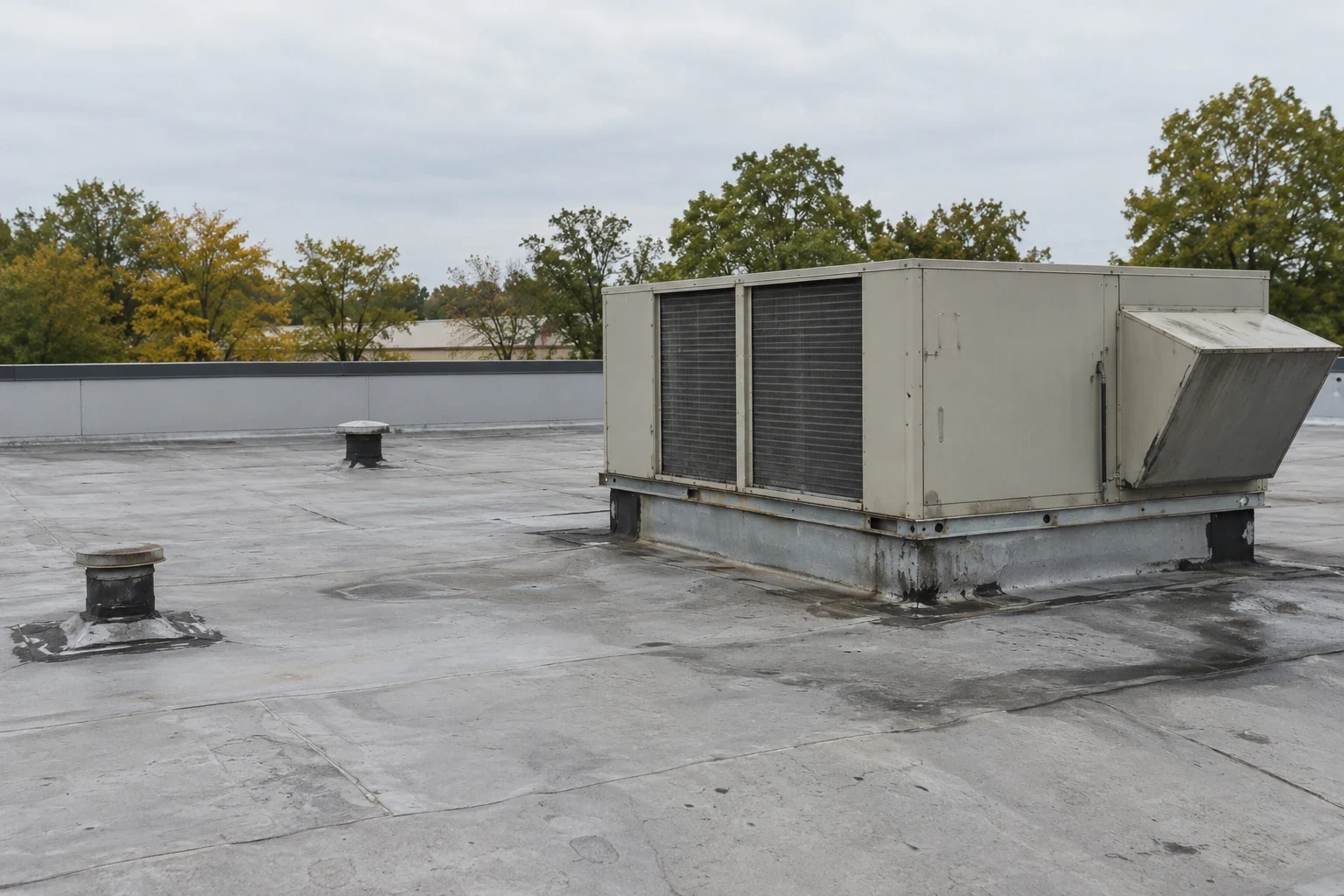
We start with the equipment map and walk every transition where the roof meets a process line. Exhaust fans, piping, electrical conduit and support frames each create a path through or across the membrane. We check the flashing, attachment, sealant and nearby surface for movement or heat-related wear, then note which trade owns the equipment if it needs isolation or reset. A repair may be limited to one curb, but the work cannot close until the support and flashing details are coordinated. Joliet's industrial base includes manufacturing and logistics, and the nearby Romeoville employment corridors include manufacturing and distribution activity. Those facts make trade access and work windows relevant to the market; they do not tell us what equipment sits on a particular roof. We list observed conditions by location and keep the scope tied to the actual penetrations found during the walk. Where moisture extends beyond a curb, an infrared moisture review and selected test cuts can help define the removal line.
Deck, Attachment, and Repair Limits
A manufacturing roof can have different assemblies over separate production areas or additions. We identify membrane type, insulation layers, cover board, deck condition, fasteners, seams and transitions before comparing a repair with recover or replacement. A test cut can confirm wet insulation that surface readings alone cannot establish. If moisture is localized and the deck remains sound, a marked repair boundary may preserve adjacent areas. If attachment has failed or wet material runs across several bays, the proposal needs a broader tear-off and a clear daily close. The scope notes what was observed, what remains concealed and which finding would change the quantity. For related warehouse roof areas or distribution buildings on a mixed-use industrial campus, each roof gets its own condition record. A modified-bitumen assembly or TPO system is evaluated against deck, attachment and rooftop use, not selected by the label alone.
Seasonal Exposure at Penetrations
For a production roof, the local July 2023 storm history can help set an inspection trigger, but it cannot establish present damage. NWS Chicago described a tornado crossing Minooka, Shorewood and Joliet, with hail and wind reported near the I-80 and Kankakee River Valley area. We compare the plant's maintenance notes with each roof zone, photograph verified marks and note whether process equipment, exhaust or a planned shutdown affects access. Findings are tied to the actual membrane or metal detail; the next step may be temporary protection, a focused repair, or a separate deck or structural review. A storm review can fit the facility's production and access constraints.
We also note whether production can release the roof area in one shift or needs a staged handoff with maintenance. For active process lines, sequencing matters as much as the repair detail: the roof plan identifies where a crew can stage, which penetrations require protection and when equipment clearance must be confirmed. Those limits help operations review the proposed work without treating an untested zone as part of the repair.
Shutdown Windows and Trade Handoffs
Before a section opens, we confirm the shutdown window, safety boundary, equipment owner and point where the roof must be dry by the end of the shift. If a unit serves an active process, the mechanical contractor may need to isolate it before the curb or support can be touched. We keep the roof sequence tied to that handoff and identify what must be tested before the opening is closed. Material deliveries, lift access and staging are placed so they do not cross restricted routes. If tear-off reveals damaged deck or additional wet insulation, the crew protects the opening and reports the change before extending the removal boundary. This gives the plant manager and general contractor a decision point with a known schedule consequence. Where reroofing proceeds in phases, occupied-building sequencing helps define daily limits; for an existing roof that may support another layer, we compare a recover option only after moisture and attachment checks.
Closeout Records and Capital Decisions
A plant roof scope should leave a record the next maintenance team can use. We include photographs, test locations, repaired penetrations, drain observations, material details and any access restriction that affected the sequence. The report separates confirmed work from conditions that could not be seen until tear-off. It also notes the responsible trade for each equipment handoff and the date a section returned to service. Commercial projects in Joliet may require local review and sealed documents; we coordinate design and approval questions with the project team before finalizing the assembly. A condition report can inform capital planning when repair and replacement alternatives need to be compared across a plant's separate roof areas. We do not assume one production wing matches another. The walk, test results and repair boundary should show where the roof work begins, how operations are protected and what follow-up belongs in the facility plan.
Commercial Roofing Questions
How do you roof around operating exhaust and process lines?
We map each fan, pipe, support and cable crossing, then coordinate the equipment owner and shutdown window before opening the surrounding membrane. The scope names the trade handoff and the flashing detail to be completed when equipment is reset. If access to a line is restricted, that limit is recorded before the crew is scheduled.
What finding justifies removing more than the leak area?
Wet insulation, failed attachment or deteriorated deck can extend beyond the interior stain. We use visual review, selected infrared checks and test cuts to mark the supported boundary. The written scope identifies the observed condition and the allowance or decision point for concealed areas, so the plant team can approve a change with its schedule effect visible.
Can production continue during a manufacturing roof replacement?
The operating plan determines the phase size and protection below. We agree on access, shutdowns, material lifts and a daily dry-in point with the facility contact and general contractor. Production can continue in areas separated from the work when site controls allow it, but each building needs its own review of safety and interior exposure.
How do you handle a rooftop unit that must remain in service?
We identify the unit's operating requirement, the safe work area and who may isolate or reset it. The roof scope then places the curb or flashing work within an approved window and leaves a defined closeout inspection. We do not assign mechanical work to the roofing crew unless it is included and coordinated in the project scope.
What belongs in the closeout file for a plant roof?
Keep the photographs, test locations, repaired areas, assembly information, equipment handoffs and remaining maintenance items together. We also record any concealed condition that changed the boundary and the phase where it was found. That file lets a future project team compare its inspection with the actual work completed.
Review the Plant Roof Work Window
Arrange a roof walk in Joliet, IL to map process penetrations, deck conditions, access limits and shutdown windows. We will document the repair boundary and trade handoffs for the project scope.
