
Commercial Roofing Services
ROOFING SERVICES
Commercial Roof Leak Repair
Emergency Commercial Roof Repair
Commercial Roof Repair
Commercial Roof Inspection
Commercial Roof Maintenance
Commercial Roof Coating
Commercial Roof Replacement
ROOF SYSTEMS
TPO Roofing
EPDM Roofing
PVC Roofing
Modified Bitumen Roofing
Standing Seam Metal Roofing
PROPERTY TYPES
Warehouse Roofing
Distribution Center Roofing
Office Building Roofing
School Roofing
INDUSTRIES
DAMAGE REPAIR
CAPABILITIES
MANUFACTURERS
SERVICE AREAS
Commercial Roof Replacement in Joliet, IL
Commercial Roofing Services
Plan commercial roof replacement in Joliet with a defined tear-off boundary, drainage review, material sequence and schedule for occupied operations.
Commercial Roof Replacement
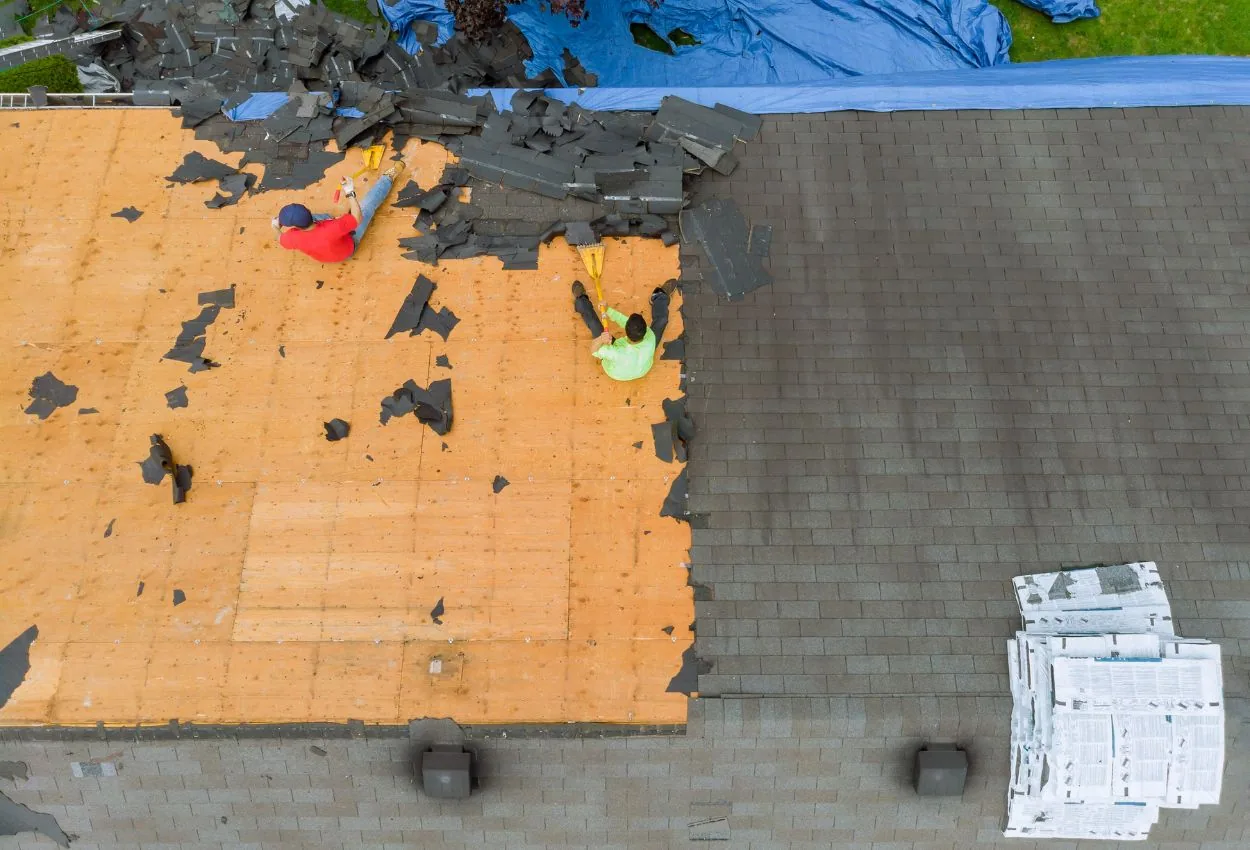
A replacement crew cannot set its first loading zone until the roof scope and building sequence agree. In Joliet, logistics, manufacturing, retail and office activity share a freight-oriented market, so a tear-off plan has to account for deliveries, rooftop equipment and interior protection at the same time. We map the existing membrane, insulation, drains, curbs and edge conditions before setting the replacement boundary. A wet area may require a broader removal than the visible leak, while sound sections may remain outside the work line. The resulting scope gives the general contractor a clear basis for phasing, crane picks and procurement. For a large distribution roof, the question is not simply which membrane to install. It is where removal can proceed without interrupting the loading pattern below. A roof walk can establish that sequence and show whether occupied-building phasing belongs in the bid package from the start.
Tear-Off Boundary and Deck Review
Old roof layers tell only part of the replacement story. We check membrane attachment, insulation condition, cover board, deck type and transitions at walls, drains and penetrations. Core cuts at selected locations help separate isolated wet insulation from widespread deterioration. That distinction changes disposal volume, replacement material and the time needed to close each section. A repair boundary can be marked where the remaining assembly is sound, but widespread moisture or failed attachment may point toward full removal. Joliet’s adopted commercial code review can require project documents and locally determined approvals, so the assembly and design assumptions need to be settled before materials arrive. We coordinate those details with the project team and keep the scope line tied to field findings. When the deck is exposed, concealed corrosion or damaged fasteners can also alter the sequence. For a second opinion on the assembly, compare single-ply membrane options with the existing substrate and building use rather than selecting by product name alone.
Replacement sequencing also affects adjoining trades. A mechanical contractor may need a unit isolated and reset, while electrical work can require a safe path across the roof before the membrane is closed. We list those interfaces in the scope, confirm who protects each opening, and tie inspection points to the work sequence. Where the Illinois Energy Conservation Code applies, insulation and assembly decisions should be coordinated with the project design and approval path before procurement. The roof detail and the permit package need to describe the same assembly.
Drainage, Edges, and Seasonal Exposure
Drain bowls and scuppers deserve a close look before tear-off begins. Debris, low areas and poorly aligned outlets can hold water against seams, while new insulation changes finished elevations around curbs and roof edges. We confirm slope, outlet condition and overflow paths, then set details so the replacement assembly moves water to the intended discharge points. In a typical Joliet year, snowfall averages 16.9 inches and low temperatures reach 32°F or below on 125.8 days. Drainage and flashing details need a close check before the replacement crew closes each section. Summer heat adds a different demand at seams and penetrations. During July 2023, a tornado crossed Minooka, Shorewood and Joliet, and hail and damaging wind struck the broader Kankakee River Valley along the I-80 corridor. On a replacement scope, we photograph perimeter metal, seams and flashing before the tear-off boundary is finalized. Those records support careful inspection of edge metal, membrane punctures and displaced rooftop components, but they do not substitute for a roof-specific condition survey. If an event has exposed a damaged area before replacement, hail-related roof repair can control water while the permanent scope is finalized.
Material Selection and Work Sequence
The replacement material has to fit the deck, existing slopes, rooftop traffic and planned maintenance. TPO, PVC and EPDM each use different seam methods and detail materials; modified bitumen and built-up systems create a different layer sequence. Metal roofs need a separate review of panel condition, clips, fasteners and transitions. We compare those conditions with insulation goals, drainage changes and equipment locations before writing a bid scope. Joliet has multiple intermodal terminals and a broad network of business and industrial parks, which makes shipping access and active loading schedules practical planning questions for many projects. A staging zone near a freight lane may not be available during peak operations. We divide the roof into workable areas, identify when each must be dry-in, and coordinate crane lifts and trade handoffs with the facility schedule. A capital planning review can help the owner separate immediate replacement needs from later roof sections without losing track of shared drainage or perimeter details. Before setting a replacement sequence, we coordinate roof access, delivery windows and staging across the Joliet service area with each property's site contact.
Occupied Operations and Closeout
Replacement work on an active building needs a daily boundary that remains safe for people and products below. We coordinate access, staging, noise windows, interior protection and weather watches with the general contractor or facility contact. Each open area is limited to what the crew can secure or dry-in before conditions change. Rooftop units may require trade coordination, temporary protection or a planned shutdown; that decision belongs in the sequence, not as a field surprise. Joliet’s freight clusters and the Elwood/Joliet study area extend across a defined subregion, so a contractor working near those corridors should expect loading and access constraints to vary by site. The roof report records the selected assembly, concealed conditions, completed details and remaining work. Photos make the closeout useful for future repairs and budget planning. We also check drains, terminations, penetrations and edge transitions before turning the area back over. If the inspection points to a smaller repair instead of full removal, targeted commercial roof repair can address that boundary with less disruption.
Commercial Roofing Questions
What determines whether the old roof comes off completely?
Core samples, deck condition, moisture distribution and the number of existing layers set that boundary. We compare those findings with code requirements and attachment conditions, then mark the removal area so the bid includes the right disposal and replacement work. A small wet zone can sometimes remain separate from sound sections, but widespread moisture or unstable attachment usually changes the plan.
Can deliveries continue while a Joliet warehouse is reroofed?
A phased work zone can keep some loading activity moving when access, crane placement and dry-in limits are coordinated in advance. Joliet's freight network and intermodal activity make that schedule review important for distribution properties. We identify the staging area, roof section boundaries and delivery conflicts with the project team before tear-off begins.
How do you handle wet insulation found after removal starts?
The crew maps the exposed condition, photographs the limits and compares it with the agreed scope. We remove unsound material, inspect the deck, and confirm any added work with the owner or general contractor before closing that section. Keeping the work line documented prevents a localized field change from becoming an unclear roof-wide allowance.
Which roof system should replace an aging membrane?
Deck type, slope, rooftop traffic, drainage and attachment requirements guide the comparison. We review compatible membrane or multi-ply choices with the building's use and maintenance plan, then carry the selected details into the bid documents. A sample or product label alone cannot answer how the system will meet curbs, drains and edges on this roof.
What should be included in a replacement bid scope?
A useful scope identifies removal limits, deck assumptions, insulation and cover board, membrane attachment, edge metal, flashing, drain work, protection and closeout records. It should also state staging, crane picks, temporary dry-in and occupied-building coordination. We can walk the roof with the general contractor and resolve those field questions before pricing and procurement are locked.
Set the Replacement Boundary
Arrange a roof walk with our team to review wet areas, deck assumptions, drainage and staging. We will help identify the replacement sequence and the field questions to resolve before the next procurement decision.
