
Roof Systems
ROOFING SERVICES
Commercial Roof Leak Repair
Emergency Commercial Roof Repair
Commercial Roof Repair
Commercial Roof Inspection
Commercial Roof Maintenance
Commercial Roof Coating
Commercial Roof Replacement
ROOF SYSTEMS
TPO Roofing
EPDM Roofing
PVC Roofing
Modified Bitumen Roofing
Standing Seam Metal Roofing
PROPERTY TYPES
Warehouse Roofing
Distribution Center Roofing
Office Building Roofing
School Roofing
INDUSTRIES
DAMAGE REPAIR
CAPABILITIES
MANUFACTURERS
SERVICE AREAS
PVC Roofing in Joliet, IL
Roof Systems
Compare PVC roof installation and repairs in Joliet with attention to welded seams, chemical exposure, drainage, penetrations and active building operations.
PVC Roofing
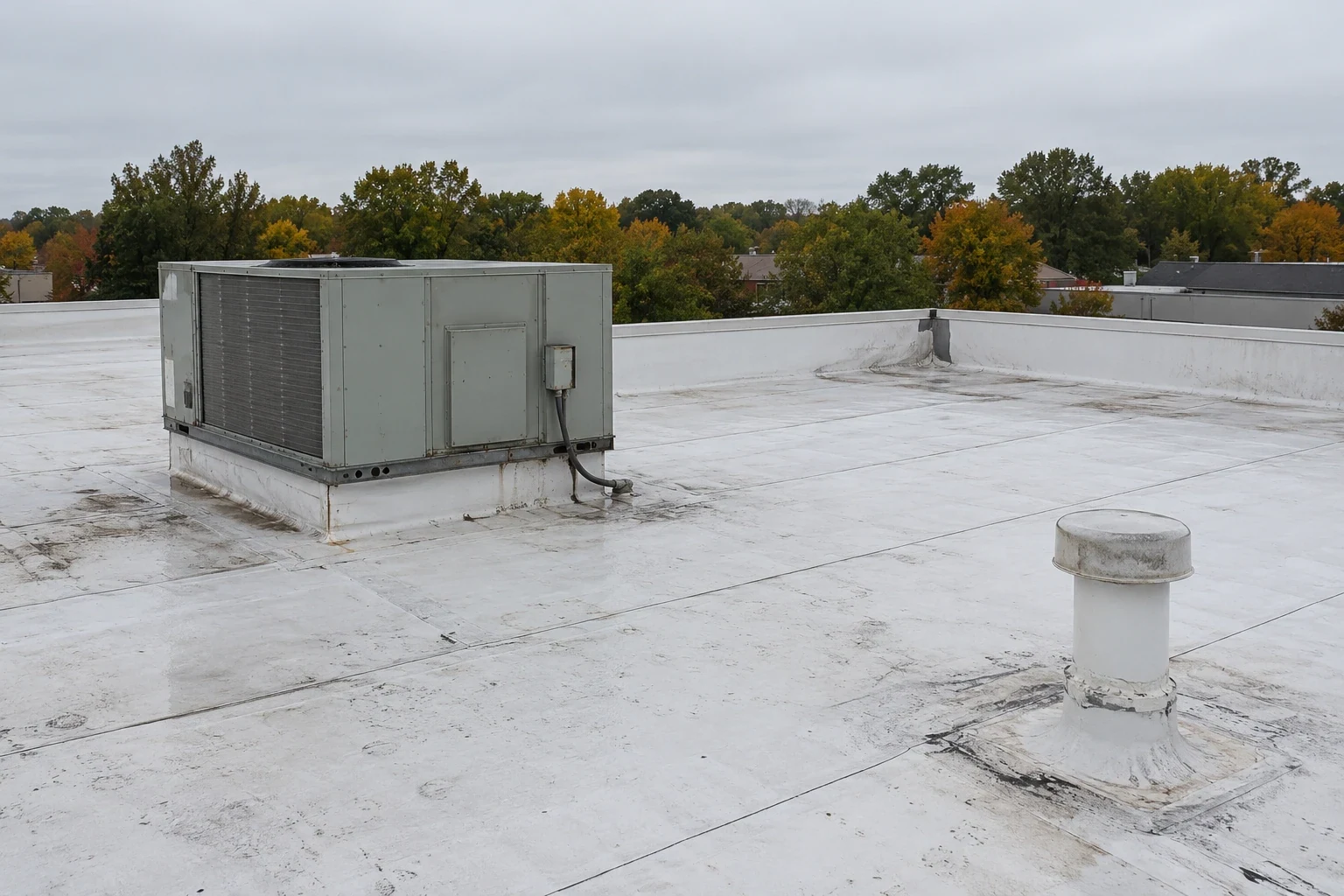
A production line with rooftop exhaust cannot wait for a membrane detail to be guessed in the field. PVC roofing is a heat-welded single-ply system used on low-slope commercial roofs, and its fit depends on the building's exposure, assembly and planned work sequence in Joliet. Around Joliet, manufacturing and logistics properties share freight corridors with retail and office buildings, so access, staging and trade coordination belong in the roof scope. We inspect the existing membrane, flashings, drains, penetrations and substrate before recommending a repair or replacement boundary. For an active leak, a focused roof inspection separates a failed seam from wet insulation or a damaged deck. We also ask what the roof sees below exhaust fans and process areas, since exposure can affect system selection and maintenance. The TPO alternative is another heat-welded membrane, while PVC has its own formulation and compatibility requirements. We document the field condition so the general contractor can compare the roof decision with equipment work, procurement and building access.
Exposure and Membrane Choice
PVC sheets are joined by hot-air welding, creating seams that can be checked with probing after they cool. The weld is only one part of the assembly. Substrate stability, insulation condition, fastener layout, perimeter restraint and flashing workmanship determine how the roof handles movement and water. PVC is frequently selected where grease or other chemical exposure is a concern, but suitability depends on the actual discharge and system specification. We review exhaust locations, service paths and equipment changes with the facility team before choosing a membrane. If a neighboring process line, kitchen or manufacturing operation vents onto the roof, the detail at that point needs to reflect the exposure instead of treating the roof field as uniform.
A proper scope distinguishes the membrane from the complete roof assembly. We identify whether insulation is retained, replaced or added, how the membrane attaches, and which transitions require new flashing. Corners, pipe penetrations, equipment curbs and parapet edges need formed or reinforced details compatible with the field sheet. Drains require an orderly tie-in that does not leave a raised pocket around the bowl. We check existing edge metal and termination bars for secure attachment before a new membrane is carried to them. Where the existing roof includes patches or a different single-ply product, we define a separation line and select a compatible repair method. A KEE membrane may be evaluated for a different set of project demands, but alloy formulation and system details still need to match the design.
Welds, Curbs, and Drainage
A PVC seam can look closed while its edge has not fused consistently. We probe welds, inspect cross seams and corners, and check whether the sheet remains attached where wind and water load the perimeter. At curbs, we look for movement, open corners and counterflashing that directs water into the detail. At drains, we check clamping condition, debris and the transition from field membrane to drain bowl. Water that stays after a storm may indicate a blocked outlet, deflected deck or insulation issue; the remedy depends on what the opening reveals. Our written findings distinguish the point of entry from the condition of the surrounding assembly. If the problem is limited to a short weld, the repair boundary can remain narrow. If several seams and details are failing over a soft substrate, selective patches may only postpone a larger decision.
In the July 2023 event record, the tornado path included Minooka, Shorewood and Joliet, with hail and wind observations also associated with the I-80 and Kankakee River Valley area. For a PVC roof, that history prompts a careful look, not a blanket repair. We probe weld edges, inspect curb corners and check the drain bowl at the affected section. Any moisture below the sheet is mapped before new membrane is installed. The written scope ties each weld repair or flashing replacement to a photographed roof location and identifies adjacent seams that tested sound.
Repair Boundary and Replacement Limits
Repair starts with a clean boundary. We remove contamination from the weld area, expose sound material, prepare the surface and install a compatible patch or flashing detail. We inspect the completed weld and photograph its edges before the roof returns to service. Where moisture has moved into the insulation, we mark the affected zone and determine how far the assembly must be opened. A leak's visible size and the wet-area boundary can differ, so selective openings help set the removal line. Selective openings give the GC a basis to agree on a change before the work extends. If the original material is aged, brittle or contaminated, a full replacement zone may be more buildable than welding a patch to an unreliable surface.
Replacement cost and duration follow the scope line, access and roof geometry. Tear-off, deck repairs, insulation thickness, curb count, parapet height, edge length and disposal paths all affect labor and procurement. Equipment lifts can create extra flashing work and trade handoffs, while an unobstructed roof field allows longer membrane runs. We map crane picks, delivery routes and temporary dry-in areas before setting the crew sequence. A cover-board review addresses substrate needs, and a recover study can determine whether a sound existing assembly can stay. We compare those options using moisture findings, attachment, added height and drainage rather than membrane appearance alone. The final scope identifies which concealed conditions trigger a stop and review, so material ordering reflects the construction decision already made.
Keep Production and Roof Work in Sequence
On a building that stays open, each roof zone needs an access and dry-in plan. We coordinate roof entry, material staging, lift placement, debris lowering and the hours when work can occur above occupied or production areas. Joliet's freight system and Elwood International Port area keep delivery planning visible on many industrial jobs; a roof truck or crane cannot block a route that the operation needs. The site team identifies docks, fire lanes, equipment and interior areas that require protection. We divide work into sections that can be opened and closed within a shift, and record any areas held for mechanical work or later roof access.
Commercial Roofing Questions
When does PVC make sense near a manufacturing exhaust?
Discharge temperature and the materials carried in the exhaust set the compatibility review for PVC. We review equipment locations and the system manufacturer's compatibility requirements before choosing an assembly. The scope then identifies any areas needing additional protection or a different detail.
What happens when a PVC seam has separated?
We test the surrounding weld and inspect the sheet attachment and substrate. A narrow separation on sound membrane may take a localized weld repair. If the membrane is brittle, contaminated or loose across a larger area, we extend the boundary to material that can support a durable connection.
Can you replace PVC in phases while the plant stays active?
A phased plan can work when the roof can be divided into manageable areas and each shift has a secure dry-in point. We coordinate staging, interior protection, crane picks and mechanical work with the general contractor. The schedule identifies the routes and operating areas that must stay clear.
How does Joliet weather affect PVC installation?
Clean surfaces and workable installation conditions support a consistent weld. Joliet has recurring freeze-thaw periods, snowfall and summer heat, so the crew sequence accounts for weather windows and daily closure points. We set the temporary protection plan for any area that cannot be completed before conditions change.
What will I receive after the PVC roof work?
The closeout should show the installed assembly, completed seams and flashing, drainage observations, photos and any remaining work assigned to another trade. We mark repair areas on a roof plan so maintenance staff can find them during later inspections and compare future conditions.
Review PVC Exposure and Sequence
Arrange a roof walk with Commercial Roofers Joliet. We will inspect exhaust areas, welds, curbs and drainage, then set the repair or replacement boundary around the field condition and work schedule.
