Commercial Roofing Services
ROOFING SERVICES
Commercial Roof Leak Repair
Emergency Commercial Roof Repair
Commercial Roof Repair
Commercial Roof Inspection
Commercial Roof Maintenance
Commercial Roof Coating
Commercial Roof Replacement
ROOF SYSTEMS
TPO Roofing
EPDM Roofing
PVC Roofing
Modified Bitumen Roofing
Standing Seam Metal Roofing
PROPERTY TYPES
Warehouse Roofing
Distribution Center Roofing
Office Building Roofing
School Roofing
INDUSTRIES
DAMAGE REPAIR
CAPABILITIES
MANUFACTURERS
SERVICE AREAS
Commercial Roof Insurance Claim Assistance in Joliet, IL
Commercial Roofing Services
Organize Joliet commercial roof claim records with inspection photos, observed damage, temporary protection notes and a repair scope tied to the property.
Commercial Roof Insurance Claim Assistance
A storm report and a property inspection answer different questions. The owner needs a roof record that separates what was observed from what remains uncertain. We inspect the roof, photograph conditions by area and describe temporary protection and permanent repair separately. A regional storm report can explain why an inspection is timely, but it cannot establish damage at one property or determine insurance coverage. In July 2023, a tornado tracked from Minooka through Shorewood to Joliet, with damaging hail and wind also reported across the I-80/Kankakee River Valley region. For the project file, we document the roof surfaces and details actually inspected, including seams, edges, flashings and rooftop equipment. If active water entry threatens stock or operations, we can coordinate a safe emergency dry-in before preparing the permanent scope. Our role is to provide roofing observations and work documentation that the owner can share with the carrier and project team, not to make a coverage decision.
Observed Roof Conditions
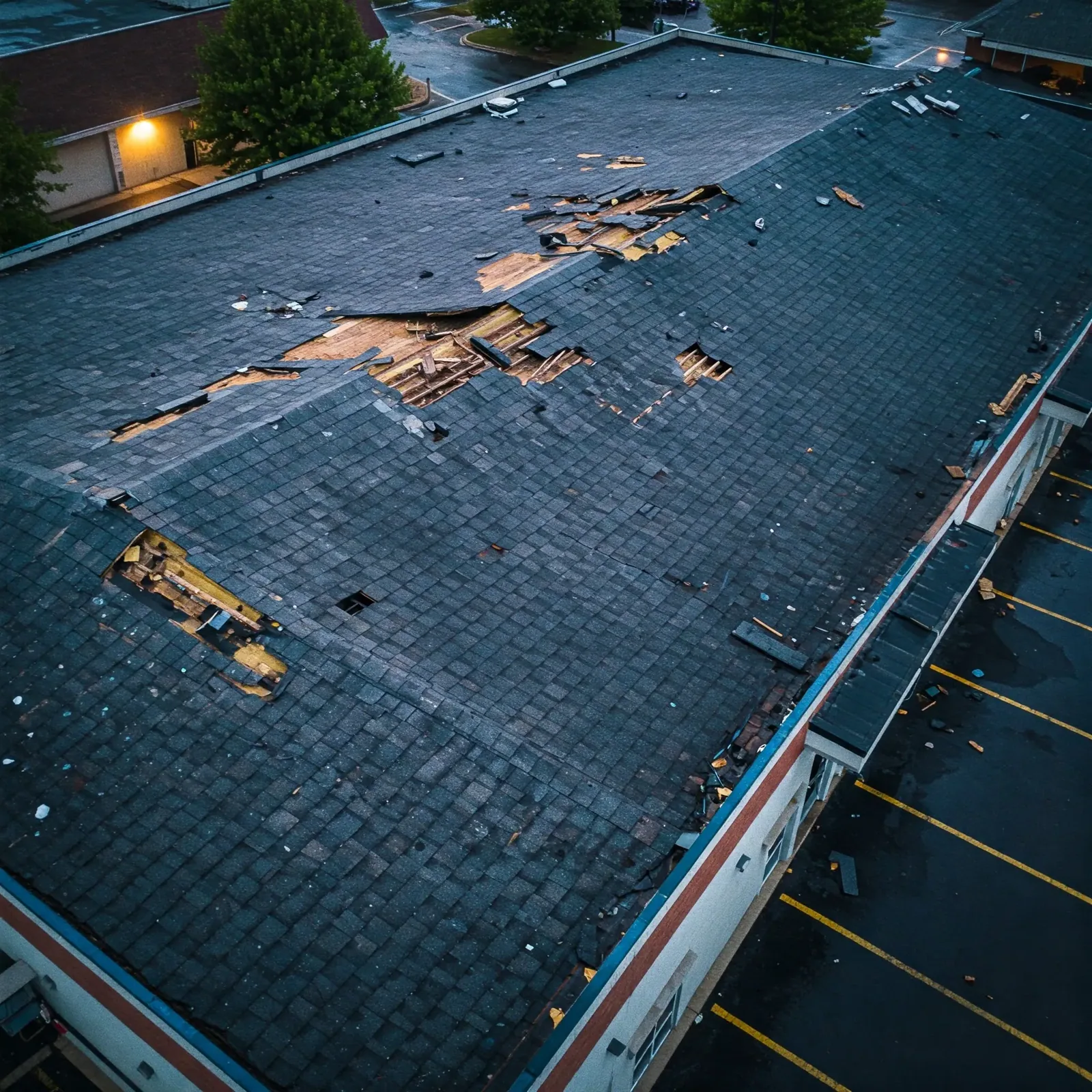
We describe each observed condition with its roof location, photograph and inspection limit. The event date can organize the project file, but it cannot date a roof defect by itself. We compare each reported condition with membrane seams, edges, flashings and repair history. Our written record separates fresh impact marks from age, earlier repairs or conditions that need an opening to confirm. A focused roof inspection can establish the repair boundary, and moisture mapping can help identify where cores may be useful. Each image is tied to a roof location and inspection date, with inaccessible areas clearly marked so a reviewer can see what the contractor did and did not examine. The owner can retain the dated record with the estimate and compare the completed repair with the original inspection photographs.
We also note where the roof walk began and which route was available to the crew. A reviewer can then distinguish a complete area review from a partial inspection limited by access or safety. If a follow-up opening is required, the location and reason are recorded before the work is scheduled. The owner can retain the dated record with the estimate and compare the completed repair with the original inspection photographs.
Separate Dry-In From Permanent Work
A temporary cover is a response measure, while a permanent repair restores the affected roof assembly. The record should state which area was protected, what material was used and whether a return visit is required. Permanent work begins after the roof can be prepared safely and compatible materials are available. We photograph the original condition, the opened area and the completed detail, then list any wet insulation, damaged deck or related work that remains outside the approved repair boundary. The owner can use this sequence to keep invoices, site reports and claim correspondence organized. In the Elwood/Joliet freight area, active dock doors and material staging may affect when a crew can complete each step. We coordinate the work window with the general contractor or facility contact and identify any interior protection or equipment shutdown. A final repair report gives the project team a clear record of what was done and what still needs review.
Scope, Materials, and Open Questions
The repair estimate describes work we can tie to observed roof conditions. It identifies the system type where known, the affected area, preparation, flashing or membrane work, and any testing or access assumption. If concealed conditions may change the work, we state the allowance or hold point rather than price a condition that has not been seen. We place unknowns in a hold-point list, name who must resolve each item, and keep field recommendations separate from policy or coverage decisions. We flag project questions for the design team when they affect the roof assembly or permit path. The estimate does not state what an insurer will pay, whether a claim is covered or how a deductible applies. It provides a roofing scope the owner can compare with the site condition and submit through their own process. If the roof is near end of service life, replacement planning can be documented separately from a storm repair. A condition report can also distinguish event-related items from broader maintenance needs.
Before a work order is issued, we identify the system observed, the measurements taken and any assumption that still needs confirmation. A proposal can distinguish emergency work, temporary protection, permanent membrane repair and concealed damage allowances. Each item should point to a roof area and Diligence Notes so a reviewer can follow the scope without treating an estimate as proof of cause. We also record any condition that requires a licensed design professional or municipal review before construction proceeds. If a membrane system such as TPO is present, the estimate identifies compatible repair materials and surface preparation. We do not describe policy language or tell the owner how a carrier will interpret the evidence. Instead, the roofing file gives the owner a documented condition and a defined construction scope for that separate conversation.
Organized Records for the Project Team
A useful claim file keeps the site report, dated photographs, repair proposal, work tickets and closeout images together. We can label photos by building area and reference the repair item they support. The owner or general contractor can then provide those records to a carrier or adjuster for its review. Joliet's business and industrial parks include logistics, manufacturing, retail and office properties, each with different access rules and operating concerns. We coordinate roof work around the property's schedule and record any delay caused by weather, access or a required trade handoff. The report also identifies temporary measures that remain in place, so a later visit can confirm the permanent work is complete. If the building is in Plainfield's 119th Street and IL Route 59 commercial area, we still plan access with the actual property contact rather than assume conditions from a corridor. A follow-up roof walk in Plainfield can confirm any remaining conditions; storm damage repair should address only observed roof conditions.
Commercial Roofing Questions
Can your report determine whether my claim is covered?
No. We document roof conditions, repair work and observations for the owner to share with the carrier. Coverage, claim value, policy interpretation and payment decisions belong to the insurer and the owner. Our report does not promise a claim result.
What should be included in a commercial roof claim file?
Keep the inspection report, dated photos, temporary dry-in details, repair scope, invoices and closeout images together. We can label roof locations and connect observations to work items, giving the owner a clearer set of records for carrier review.
Can you inspect before the adjuster visits?
We can inspect and document the roof condition, then coordinate access for the owner and project team. The timing and scope of an adjuster's review are separate decisions. We preserve the conditions observed at our visit and identify any temporary work performed before a later inspection.
How are older repairs handled in the report?
We photograph current conditions and note visible prior repair materials or boundaries. If the evidence cannot establish when a defect began, we state the present condition rather than assign a date. The report distinguishes observed roof facts from assumptions about cause.
Does emergency tarping count as the final repair?
A tarp or temporary dry-in is listed as water control, with its location and return requirement. Permanent work is documented separately after the substrate and weather support a compatible repair. The owner can then see which roof items remain open.
Prepare a Clear Roof Record
Arrange a roof inspection with our team to document the observed condition, temporary measures and permanent repair scope. We will organize the findings by roof area for review with your project team.
