
Roof Systems
ROOFING SERVICES
Commercial Roof Leak Repair
Emergency Commercial Roof Repair
Commercial Roof Repair
Commercial Roof Inspection
Commercial Roof Maintenance
Commercial Roof Coating
Commercial Roof Replacement
ROOF SYSTEMS
TPO Roofing
EPDM Roofing
PVC Roofing
Modified Bitumen Roofing
Standing Seam Metal Roofing
PROPERTY TYPES
Warehouse Roofing
Distribution Center Roofing
Office Building Roofing
School Roofing
INDUSTRIES
DAMAGE REPAIR
CAPABILITIES
MANUFACTURERS
SERVICE AREAS
KEE Roofing in Joliet, IL
Roof Systems
Plan KEE roof installation and repair in Joliet with alloy membrane, welded seam, flashing, drainage and trade sequencing details.
KEE Roofing
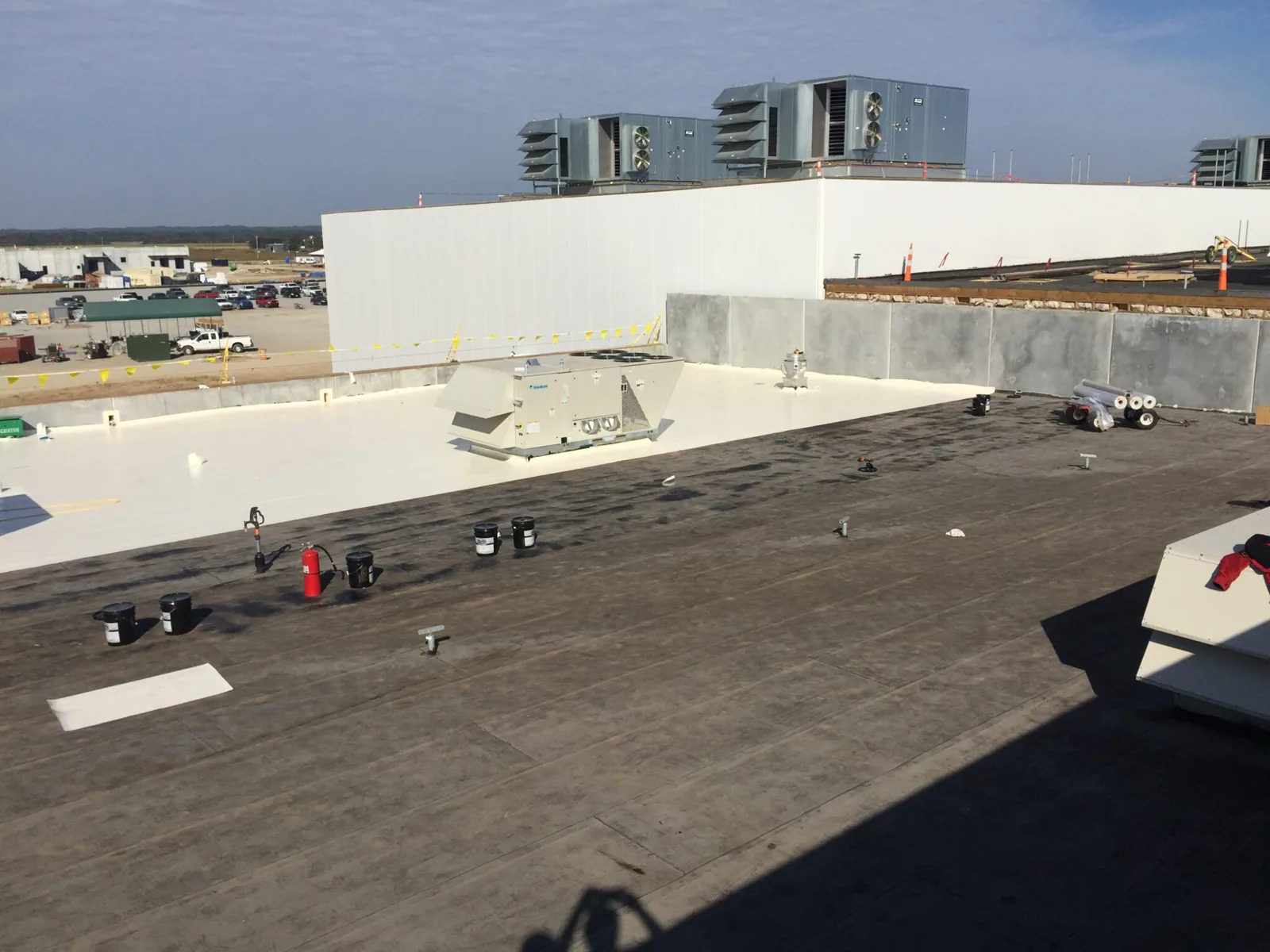
Before a roof package reaches the submittal desk, the membrane has to fit the exposure and the work sequence. KEE is a PVC-alloy single-ply membrane system that uses heat-welded seams and compatible flashings. In Joliet, manufacturing and logistics buildings may have rooftop equipment, service traffic and active loading patterns that make membrane selection only one part of the decision. We inspect the field, drain bowls, curbs, penetrations and edge conditions, then match the proposed assembly to the roof beneath it. A condition inspection checks seams, moisture, attachment and previous repairs. We compare KEE with PVC roofing and TPO systems using project requirements, exposure and design details rather than a surface label. For a building in Joliet, the scope should also state staging, dry-in and trade handoffs before materials are ordered.
KEE Formulation and System Requirements
KEE membranes use a ketone ethylene ester alloy in a PVC-based formulation. Product constructions vary, so the selected sheet, reinforcement, thickness and attachment method must follow the project specification. Heat-welded seams are made with clean surfaces and controlled preparation; crews verify the weld after it cools. The alloy does not remove the need for sound substrate, reliable flashing or secure perimeter restraint. We review what the membrane will encounter, including roof traffic, exhaust locations, ponding areas and equipment maintenance paths. If grease or chemical exposure is part of the operation, the owner should identify the source and location so the system documents can be checked against it.
The assembly includes more than the membrane. Insulation, cover board, fasteners or adhesive, perimeter metal and flashing details all shape performance. Existing roof layers may be retained only when they are dry, attached and suitable for the new work. We inspect a sample of the field and open selected areas when the surface does not show the condition below. A cover board and insulation review helps define the substrate and attachment approach. We also map existing curbs and lines that need service access. Where KEE meets another membrane or older flashing, the transition must use a compatible detail with a clear termination. A mixed assembly scope records where those materials start and end rather than assuming a single weld procedure can join everything.
The Details That Govern the Work
At each seam, we check whether the weld is continuous, the sheet is fully secured and the lap avoids a channel that could direct water inward. Cross seams and corners need particular attention because several sheets or flashings meet in a small area. At a curb, the membrane must turn up and terminate at a sound surface. Pipes, conduit and supports require individual flashing details, while drains need a secure connection into the bowl. On older roofs, we look for repairs that have lifted, cuts from service work, and sealant that has lost contact. We photograph representative conditions and mark each repair boundary before installation begins.
At Joliet’s Brandon Road Dam station, annual normals include 14.9 days with highs of 90°F or above, 125.8 days with freezing lows and 38.03 inches of precipitation. Summer heat affects roof preparation; winter freeze-thaw can move edges and flashings, so we plan welding and daily closure for the expected conditions. NWS Chicago's July 2023 account describes damaging hail and wind around the I-80/Kankakee River Valley and a tornado path crossing Minooka, Shorewood and Joliet. After a storm, we test representative KEE welds, corners and curb flashings where field observations warrant it. Drain bowls and overflow paths stay in the same review. A blocked outlet calls for drainage correction, not a different membrane. We identify whether the deck, insulation, drain or membrane detail needs repair. An outlet and drain review can help set that work boundary.
Repair Scope and Replacement Choice
A localized KEE repair can address a puncture, seam separation or flashing failure when nearby material remains sound and can accept a new weld. We clean and prepare the membrane, attach compatible repair material and inspect the finished edges. If a sheet has become brittle, contaminated or loose, the patch must extend to a surface that can hold the connection. Moisture or damaged deck can make the repair larger than the visible opening. We use readings and selective openings to identify the layer that failed, then separate immediate water control from permanent restoration. Photos and a marked plan give the GC evidence for a change request if opening the roof reveals a different condition.
For replacement, cost and timing follow the attachment method, tear-off, insulation depth, deck repairs, curb details, roof access and debris handling. A straightforward field can move quickly, while numerous units, parapets and drain tie-ins create more separate work areas. We identify crane picks, mechanical changes, staging and the daily dry-in line before setting production. A recover evaluation checks moisture, attachment and added height before an existing assembly remains in place. If removal is required, a replacement scope identifies tear-off limits and allowance for concealed deck conditions. We coordinate any design approvals and field substitutions with the project team before covering work.
Submittals, Staging, and Closeout
KEE procurement should follow an agreed system, not a product name alone. Before release, we compare the submittal to the roof plan, confirm membrane and insulation quantities, and check accessory details at drains, walls, curbs and terminations. The GC can confirm rooftop equipment that will be moved or remain in service, along with when trades need to return. Joliet's intermodal and freight activity makes delivery timing important at industrial properties; we coordinate unload space and crane access around active doors. For work near Elwood International Port, site operations and truck routes set practical limits on when materials can arrive and where a staging zone can be kept.
During installation, we mark daily work limits, close seams and temporary openings, and protect completed areas from later trade traffic. If a schedule pause is needed, the scope states how the roof will remain secure and what must be inspected before work restarts. At closeout, we review welded seams, penetrations, parapet flashings, perimeter details and drainage. Photos and marked locations help identify both finished work and unresolved trade items. An ongoing maintenance plan can track the condition of these details. Commercial Roofers Joliet can review a KEE roof walk with the project team and connect the system choice to actual exposure, access and construction timing.
Commercial Roofing Questions
What separates KEE from standard PVC in a project review?
KEE is a PVC-based alloy formulation, while product make-up and reinforcement vary by manufacturer. We review the specified product, exposure, roof assembly and compatibility requirements together. The comparison should include membrane, attachment, flashing and accessory details, not just the resin name.
Can an existing PVC roof receive a KEE repair?
Compatibility depends on the existing sheet, its age and condition, and the repair method. We identify the material and test whether the surrounding surface can accept the proposed weld. If it cannot, the scope needs a transition or replacement boundary that closes the detail reliably.
What would make the KEE schedule slip after installation starts?
Weather, wet insulation, hidden deck damage, late equipment lifts and trade access can alter the planned sequence. We set daily stop lines and dry-in details, then record any concealed condition before work continues. That gives the GC a defined point to confirm the change and protect the open roof.
How do you check KEE seams at closeout?
We inspect welds after cooling, probe selected edges and review corners, cross seams, flashing terminations and drains. The closeout photographs each detail and marks its location. Any area requiring a trade return is recorded separately so it does not appear complete before that work is finished.
Will a KEE roof handle rooftop chemical exposure?
The exposure source, concentration and location must be matched against the selected system's documentation. We review equipment and process locations with the facility team before specifying the membrane. Where the discharge is concentrated, the scope can address additional protection or a different material at that zone.
Review the KEE Assembly
Arrange a roof walk with Commercial Roofers Joliet. We will check the membrane transitions, exposure points, drainage and staging needs before setting the KEE scope and procurement sequence.
