Roof Systems
ROOFING SERVICES
Commercial Roof Leak Repair
Emergency Commercial Roof Repair
Commercial Roof Repair
Commercial Roof Inspection
Commercial Roof Maintenance
Commercial Roof Coating
Commercial Roof Replacement
ROOF SYSTEMS
TPO Roofing
EPDM Roofing
PVC Roofing
Modified Bitumen Roofing
Standing Seam Metal Roofing
PROPERTY TYPES
Warehouse Roofing
Distribution Center Roofing
Office Building Roofing
School Roofing
INDUSTRIES
DAMAGE REPAIR
CAPABILITIES
MANUFACTURERS
SERVICE AREAS
Modified Bitumen Roofing in Joliet, IL
Roof Systems
Review SBS and APP modified bitumen roofing in Joliet, from flashing and lap repairs to replacement sequencing, drainage and dry-in planning.
Modified Bitumen Roofing
Hot work permits, fire watch and trade access can decide how a modified bitumen roof is installed. These multi-layer sheets use asphalt modified with polymers, with SBS and APP products installed using methods allowed by the system design. In Joliet, a warehouse or manufacturing roof may need a phased work plan that keeps loading and production areas clear. We inspect the existing plies, seams, flashing, drains, deck and rooftop equipment before setting the scope line. A roof inspection establishes whether a leak comes from an open lap, flashing, drain or concealed wet layer. The roof plan identifies the work method and safety controls before material is delivered. The site team can compare modified bitumen with built-up roofing and EPDM by considering layers, attachment, repair approach and roof use. We map access and dry-in points for each zone, then coordinate the work with nearby trades and operating hours in Joliet.
SBS and APP Assemblies
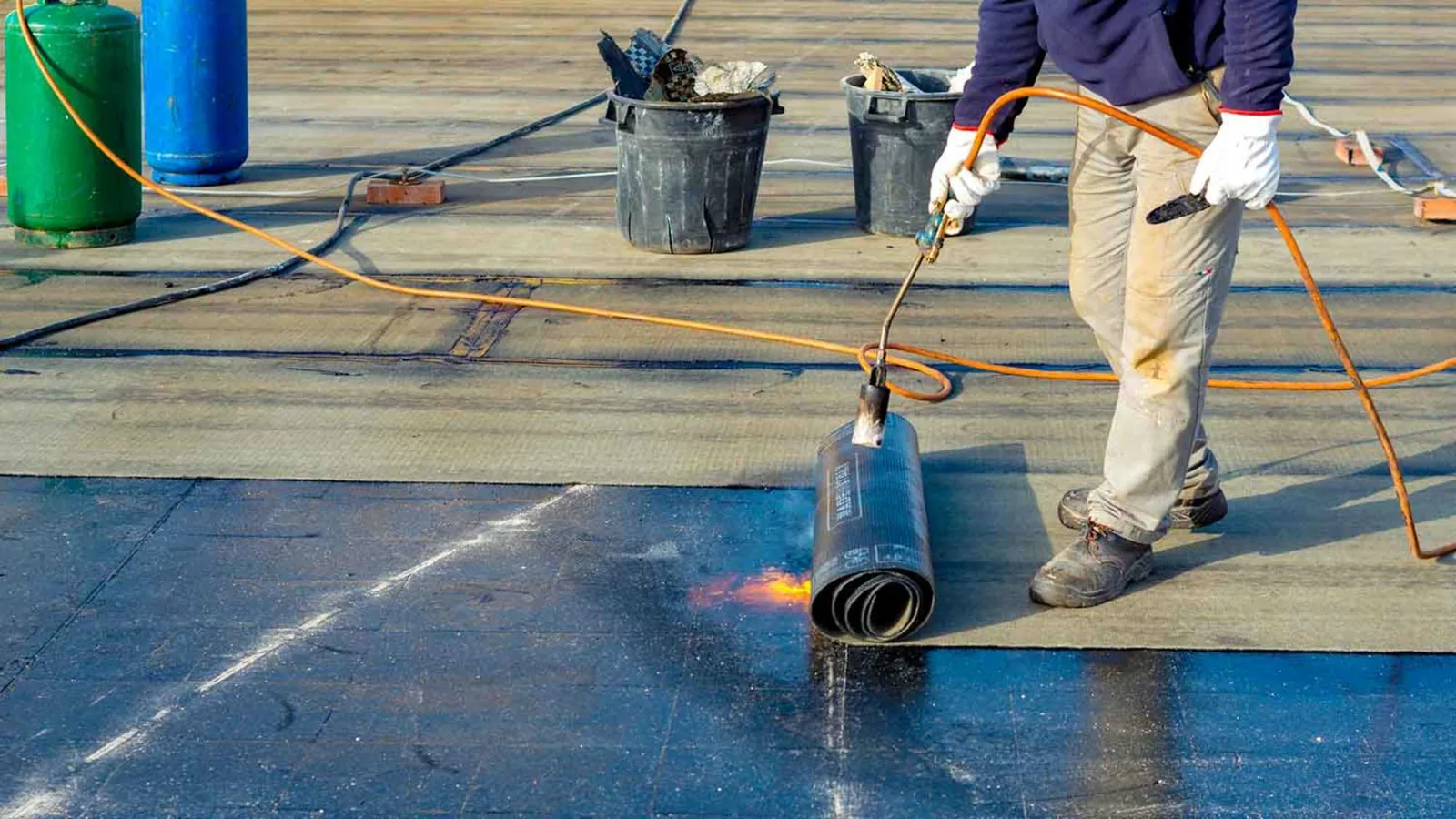
Modified bitumen arrives as rolls with reinforcing carriers and asphalt compounds formulated for flexibility or heat performance. SBS sheets use a polymer that gives the asphalt added flexibility; APP sheets are formulated for heat resistance and are commonly installed with heat-fused techniques. Product details differ, so the selected assembly and installation method follow the manufacturer's instructions and project specification. Systems can include a base sheet, one or more cap sheets, surfacing and separate flashing plies. The number and role of layers matter at roof edges, drains, curbs and walls. We record the layers found in core samples and check whether the deck and insulation support the proposed method.
Field laps and flashing laps have to be closed consistently. We inspect side laps, end laps, patches, corners, penetrations and transitions to vertical surfaces. The perimeter may need new metal or a revised termination before the cap sheet is applied. At roof drains, we check the bowl and plies for a secure tie-in and clear flow. A repair that covers a loose lap without correcting the underlying condition can trap water and move failure to an adjacent seam. If the roof has several generations of asphalt materials, we identify the interface and specify how it will be separated or integrated. A perimeter detail review includes coping, edge metal and gutters where they meet the roof assembly.
Lap Condition and Moisture
A blister or open lap is a location to investigate, not a complete repair plan. We check whether the surface is split, whether the ply below has lost adhesion, and whether moisture has reached the insulation. At a patch, the lap should be clean, bonded and compatible with the surrounding system. We inspect drain sumps and low areas for water that has remained after rainfall, then determine whether blockage or deck slope is involved. Selective openings can confirm layer condition and deck integrity. If water has traveled beyond the visible defect, the replacement boundary should include the wet layers and a sound transition.
At Brandon Road Dam, Joliet's annual precipitation baseline is 38.03 inches; snowfall averages 16.9 inches. On modified bitumen, a low-area map, lap probe and drain-sump check show where water may remain before a patch is sized. The July 2023 tornado route ran through Minooka, Shorewood and Joliet, while hail and wind reports referenced I-80 and the Kankakee River Valley. Those reports are regional context only. We document this roof's actual blister, split, lap opening or perimeter change, then specify a repair compatible with the existing plies and the day's dry-in conditions. Related project details: tornado damage inspection
Safe Installation and Repair Methods
Modified bitumen work may involve torch application, hot asphalt, cold adhesive or self-adhered sheets, depending on the selected system. Each method has a different staging and safety plan. Torch work requires a controlled area, trained handling, fire watch and inspection of concealed spaces before and after application. We review the building use, roof penetrations, combustible materials and access with the GC before setting the work sequence. Where the project cannot support open-flame work, the specification and substrate need to allow an alternate method. The choice affects crew setup, weather limits, odor controls, material storage and the amount of roof that can be opened at once.
For repairs, we remove unsound material, expose a firm surface and rebuild the lap or flashing with compatible plies. At a broad replacement, the scope identifies tear-off limits, deck review, base sheet, cap sheet, surfacing and perimeter work. A recover is possible only after checking moisture, attachment, added height and code requirements; a recover assessment lays out those conditions. If new insulation is required, we specify the layer build-up and fastening plan before rolls arrive. Cost and schedule change with access, hot-work controls, tear-off depth, deck repairs, penetrations, drain count and disposal route. A replacement scope lists these items separately so allowances and known work stay clear.
Work Zones and Roof Closeout
Joliet's freight activity includes ten interstate interchanges on I-80 and I-55 and two intermodal terminals in or near the city. For a roof project, the site still determines whether a truck can unload, where a lift can set up and which dock doors must remain open. We confirm delivery windows, staging areas, crane picks and roof access before the first roll is lifted. Work zones are planned so the crew can close the assembly each shift and leave drains unobstructed. If the building operates through the project, interior protection and notification areas are coordinated with the facility contact.
Mechanical and electrical trades need a clear handoff at curbs, supports and service paths. We mark openings awaiting equipment work, cover them as specified and identify who restores the permanent flashing. If a roof section must stay available for service access, we protect it and schedule the return detail. The closeout includes photographs of laps, flashings, drains and perimeter work, with any incomplete trade item assigned for follow-up. A maintenance program can revisit those details and note changes after the roof has gone through seasonal conditions. Commercial Roofers Joliet can review the phasing plan with the GC and fit the roof work to the site's loading pattern.
Commercial Roofing Questions
How do SBS and APP modified bitumen differ on an active building?
The polymer formulation and permitted application methods differ, and those details affect flexibility, heat handling and the work plan. We review the selected product, deck, building use and site safety conditions before setting installation scope. The approved system documents govern the final specification.
Can a modified bitumen leak be repaired with a surface coating?
A coating may not correct an open lap, wet insulation or damaged flashing below it. We first identify the failure layer and confirm whether the surrounding surface can accept a repair. The scope may call for a rebuilt ply detail or a larger replacement area when the assembly is unsound.
What changes the schedule for torch-applied roofing?
Hot-work controls, fire watch, wind and temperature conditions, roof access and the areas that can be opened safely all shape production. We confirm permits and protection requirements before mobilizing, then set work zones with a secure daily dry-in point.
How do you handle hidden deck damage during tear-off?
We stop at the affected area, photograph and measure what the opening shows, then review the change with the GC before covering it. The scope identifies any deck allowance and the material needed to restore the roof layers after structural work is complete.
What does a modified bitumen closeout record?
It records the installed plies, repair locations, laps, flashing, drains and perimeter details, with photos and any outstanding trade work. A marked roof plan helps the facility team locate each area during maintenance and compare later conditions.
Set the Modified Bitumen Work Sequence
Arrange a roof walk with Commercial Roofers Joliet. We will inspect the existing plies, hot-work constraints and roof transitions, then map a scope that accounts for dry-in and site operations.
