
Roof Systems
ROOFING SERVICES
Commercial Roof Leak Repair
Emergency Commercial Roof Repair
Commercial Roof Repair
Commercial Roof Inspection
Commercial Roof Maintenance
Commercial Roof Coating
Commercial Roof Replacement
ROOF SYSTEMS
TPO Roofing
EPDM Roofing
PVC Roofing
Modified Bitumen Roofing
Standing Seam Metal Roofing
PROPERTY TYPES
Warehouse Roofing
Distribution Center Roofing
Office Building Roofing
School Roofing
INDUSTRIES
DAMAGE REPAIR
CAPABILITIES
MANUFACTURERS
SERVICE AREAS
TPO Roofing in Joliet, IL
Roof Systems
Plan TPO roof installation, repair or replacement in Joliet with seam, drainage and staging details tied to your building schedule and field condition.
TPO Roofing
A distribution shift can keep the floor busy while a roof project waits for a clear crane pick. On Joliet warehouses, TPO is often considered for broad low-slope areas where a heat-welded membrane can be installed in planned runs. We begin with the existing assembly, edge conditions, rooftop equipment and drain pattern, then map the work sequence against loading doors and tenant access. Joliet's logistics and manufacturing activity, together with Elwood, makes roof access and material staging part of the scope. Snow, freeze-thaw and summer heat place different demands on seams, flashings and drainage. We inspect the field and transitions before setting a repair boundary or replacement limit. A commercial roof inspection records the visible condition, while moisture testing helps determine which insulation can remain. The result is a construction plan for a warehouse roof that states what opens first, how the building stays dry, and where work can proceed without crossing the active loading pattern.
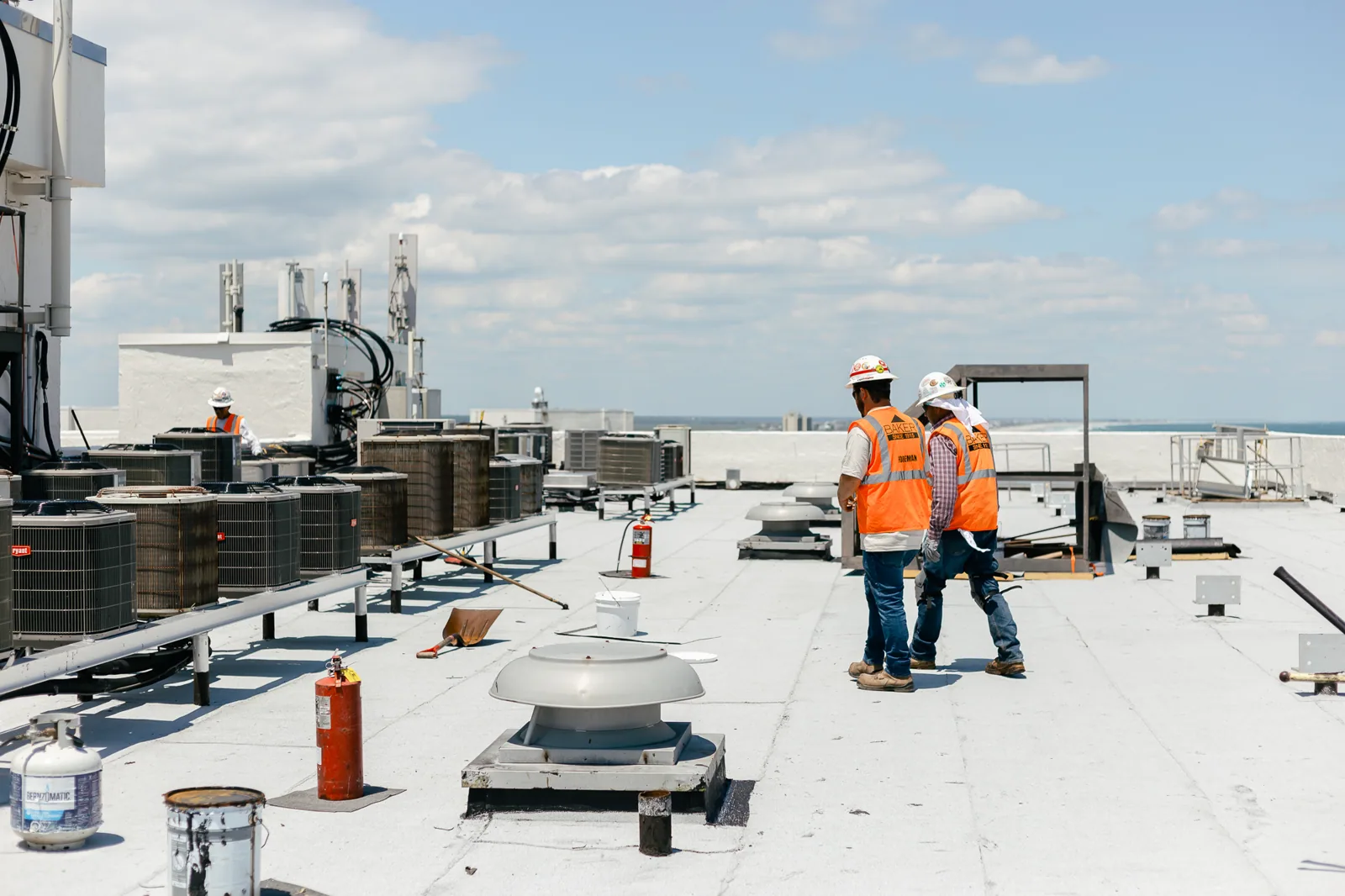
Membrane, Seams, and Attachment
TPO is a thermoplastic single-ply membrane. Sheets are joined with hot-air welds, while plates or adhered methods secure the assembly according to the roof design. The finished performance depends on more than the white surface: substrate condition, insulation layout, fastening pattern, perimeter restraint and flashing details all matter. At a site walk, we check existing seams, repairs, penetrations, drains, curbs and edge metal, then identify representative areas for closer review. A new PVC membrane uses a related heat-welded approach but has different formulation and compatibility considerations, so the selected system needs to match project requirements. For a different single-ply approach, EPDM uses adhered or mechanically attached details rather than heat-welded seams. We also review insulation and cover board needs, because a firm, dry surface gives welds and attachment points a stable base. When a roof has mixed additions or prior patches, the scope should identify where each material begins and ends. That prevents a crew from carrying one preparation method across surfaces that require different treatment.
Roof layout should locate units, conduit, skylights and access paths before rolls arrive. We plan seams and staging to protect completed work and coordinate lifts with the general contractor. Wall terminations, drain bowls and curb corners each need a defined detail. Photographs and marked plans give the foreman a shared reference as the roof is divided into zones. Where a full replacement is not justified, a recover option can be evaluated after moisture, attachment and added-height conditions are checked.
What the Existing Roof Tells Us
At Joliet’s Brandon Road Dam station, annual precipitation is 38.03 inches and snowfall is 16.9 inches. After rain or melt, we trace water through bowls, low areas, seams and transitions; a restricted outlet calls for a different correction than a failed lap. Roof observations, moisture readings and approved openings mark the affected insulation and membrane. A moisture survey may help select test openings when roof and weather conditions support useful readings.
Joliet records 14.9 annual days with highs at or above 90°F. We schedule welds by actual surface conditions and the selected system’s instructions, then close each zone at a defined dry-in point. After hail or wind, photographs of seams, flashings, edge metal and rooftop units show what belongs in the repair scope. Test readings or approved openings document the layers that remain concealed.
Repair, Recover, or Replace
A sound TPO field with one failed seam may call for repair, while widespread wet insulation or repeated detail failures can move the decision toward replacement. We identify the repair boundary in measurable locations, list the preparation and compatible materials, and photograph the completed lap. For replacement, the scope describes tear-off limits, deck review, insulation build-up, membrane attachment, flashing, edge restraint and closeout. Those items influence procurement and labor sequencing as much as the membrane selection. A general contractor can compare options more clearly when the estimate separates known work from concealed conditions that will be confirmed after opening. When deck repair is possible, we record how the work pauses and who confirms the revised scope before the roof is covered. Our roof condition report can organize photos and findings for a capital review. A replacement plan should also state how temporary dry-in protects each active zone while materials and approvals are coordinated.
Cost changes with access, tear-off depth, insulation condition, curb and drain count, edge length, attachment requirements and disposal logistics. A large open field may install quickly, but complex rooftop equipment or limited staging can add trade handoffs and lifts. We walk the perimeter and roof access route with the project team, confirm where rolls and insulation can be staged, and identify areas that cannot be blocked during operations. The selected TPO assembly must follow the project design and applicable approvals. We compare thermal, fire, wind and drainage requirements with the building documents, then state the assumptions that govern scope and timing.
Dry-In and Trade Handoffs
The roof can be ready for membrane while the mechanical scope is still moving. Curbs may be replaced, conduit shifted or units lifted, and each change can interrupt a completed seam or flashing. We set a roof zone plan with the general contractor, mark the trade handoff points and confirm who is responsible for restoring each temporary opening. A crane pick should be scheduled before membrane placement where practical, with protection specified for any work that follows. Joliet's freight corridors and intermodal activity put a premium on keeping delivery windows clear; material trucks, lifts and active dock traffic need a coordinated staging zone. For buildings near the Joliet-Elwood freight study area, we can review property access and roof sequencing with the site team without assuming that every property has the same operating pattern.
Commercial Roofing Questions
How do you decide whether an older roof can take a TPO recover?
The existing layers have to be dry, attached and suitable for the added assembly. We use inspection findings, moisture testing and selective openings to establish that boundary, then check height at curbs and edges, fastening reach and drainage. If concealed conditions remain unknown, the scope states how they will be handled after opening.
Can TPO seams be repaired without replacing the full membrane?
A localized repair may work when the surrounding membrane is clean, weldable and firmly attached. We test the seam area, look for wet insulation or movement below it, and extend the repair to sound material. Repeated openings or widespread substrate problems can make a larger scope more practical.
What tends to move the schedule on a Joliet TPO project?
Crane picks, mechanical work, weather, roof access, material delivery and the amount of tear-off all affect the work sequence. Freeze-thaw conditions and summer heat create different installation windows. We lay out zones and daily dry-in points with the GC so active docks and trades can keep their planned access.
Does hail damage mean the TPO roof needs replacement?
We inspect membrane, flashings, edge metal, rooftop equipment and exposed insulation or deck, then mark any impact by roof zone. A July 2023 tornado track ran from Minooka through Shorewood to Joliet; hail and wind were also reported across the I-80 and Kankakee River Valley. Photographs and any required test opening support the repair boundary.
What should the TPO closeout record include?
A useful closeout identifies the membrane and insulation installed, repaired areas, tested seams, unresolved trade items and drainage observations. We pair photographs with a roof plan so a facility manager can locate each detail later. That record also gives future maintenance visits a clear starting point.
Review the TPO Work Sequence
Arrange a roof walk with Commercial Roofers Joliet. We will map seams, drains, transitions and staging constraints so the TPO scope matches the building condition and construction schedule.
