
Roof Damage Repair
ROOFING SERVICES
Commercial Roof Leak Repair
Emergency Commercial Roof Repair
Commercial Roof Repair
Commercial Roof Inspection
Commercial Roof Maintenance
Commercial Roof Coating
Commercial Roof Replacement
ROOF SYSTEMS
TPO Roofing
EPDM Roofing
PVC Roofing
Modified Bitumen Roofing
Standing Seam Metal Roofing
PROPERTY TYPES
Warehouse Roofing
Distribution Center Roofing
Office Building Roofing
School Roofing
INDUSTRIES
DAMAGE REPAIR
CAPABILITIES
MANUFACTURERS
SERVICE AREAS
Commercial Hail Damage Roof Repair in Joliet, IL
Roof Damage Repair
Inspect commercial roofs after hail in Joliet, document impact by zone, and set repair limits from membrane, flashing and moisture evidence.
Commercial Hail Damage Roof Repair
After hail, a commercial roof may show bruised membrane, punctures, damaged edge metal or no visible change at all. A quick look from the parking lot cannot establish whether the assembly lost service life or whether water entered. We inspect the roof in zones, photograph representative conditions and compare them with the system type, age and maintenance history. The record distinguishes hail impact from foot traffic, dropped tools, prior repairs and normal wear. Severe-weather climatology for Will County and the Joliet region includes county-level tornado and severe-hail records; that regional context is a reason to document a reported event, not proof of damage at a specific building. We can provide a roof inspection in Joliet and a prioritized repair scope based on the actual surface and assembly.
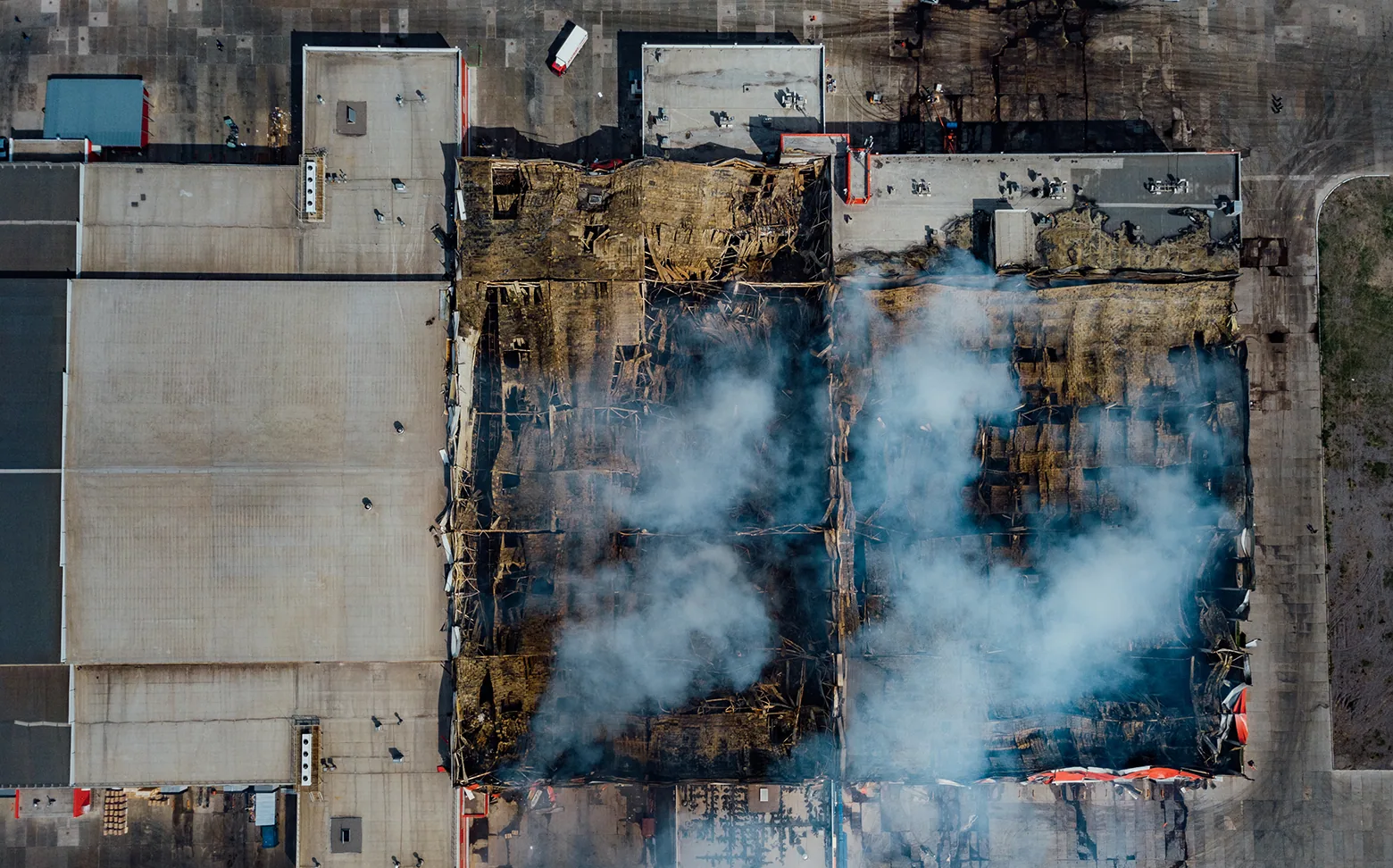
Establish the Event and Inspection Boundary
We start with the reported date, affected rooms, leak timing and any available photographs taken soon after the storm. A facility contact can identify roof zones above equipment, inventory or tenant areas that require attention first. We confirm roof access, fall protection, weather conditions and whether other trades have already moved materials or performed temporary work. The walk then follows a marked route so the crew can inspect without creating new punctures. If the roof is wet, winds remain high or lightning is nearby, we pause rather than compromise safety or produce unreliable observations.
Hail damage depends on the roof assembly and the impact pattern. We inspect membrane, seams, flashings, roof curbs, skylights, vents, metal panels and edge details. On a low-slope membrane roof, an indentation is not automatically a puncture; on a metal roof, a dent does not by itself establish a failed coating or seam. We document the observed condition, location and extent, and note where the surface is inaccessible. The findings remain limited to the inspected areas and do not promise an insurer’s coverage decision.
Separate Impact Marks From Functional Damage
Photographs show both close detail and context, with each area labeled by roof zone. We look for cuts, fractures, displaced ballast, fractured coatings, open seams and impact to metal accessories. Representative samples help avoid treating every small mark as a separate failure, while repeated patterns can support a broader review. We check below suspected openings for moisture and compare those observations with reported leaks. Readings may identify areas for selective cores, but one test does not describe an entire roof section. A related tornado damage inspection can address another documented event scope. A moisture survey can help map suspected wet insulation before a repair boundary is set.
Regional records provide context without replacing site evidence. The regional NWS Chicago file lists a 2023 tornado path touching Minooka, Shorewood and Joliet. A hail review still relies on the roof's own dated photographs, measured zones and test results, not a regional event record. That regional record can help frame a reported inspection date; only marks verified on the building enter the roof scope. The roof report stays tied to observed conditions and the affected zones. The same distinction applies to a property near Plainfield's 119th Street/IL 59 commercial trade area: location in a business district does not establish that hail struck its roof or caused a leak.
Trace Leaks and Protect Exposed Areas
A ceiling stain can appear far from the roof opening because water may move along insulation or deck flutes. We compare the reported interior point with laps, drains, penetrations and low areas above it. If water is active, a temporary dry-in can limit further entry while the roof is safe to access and a compatible repair is prepared. We define its perimeter and revisit conditions, then record which rooms or equipment remain protected below. Interior containment and roofing work are coordinated with the facility contact; electrical isolation or equipment restart remains with the responsible trade.
When hail damage overlaps wind displacement or a separate puncture, we document those findings independently. A wind-damage roof review can distinguish lifted edges from impact marks, while a separate repair record can identify a puncture or seam defect. This avoids an estimate that blends unrelated causes or applies one repair method to different materials. The work order lists temporary protection, permanent work and any further testing as distinct tasks.
Select Repairs by Roof System and Zone
We identify TPO, PVC, EPDM, modified bitumen, coatings or metal before selecting a repair. Thermoplastic membrane may need cleaning and a tested weld; EPDM often calls for compatible primer and splice materials; metal work can involve panel seams, fasteners, coatings or flashings. Previous overlays may change what is bonded to the substrate, so we verify the layers at a safe test point. Wet insulation is removed only where the findings support it, then the assembly is restored to a sound boundary. The scope names material, location, preparation and closeout rather than promising a generic patch for every mark.
For work in Joliet, the adopted 2015 International Building Code and local amendments form part of the review context; projects may call for sealed documents from an Illinois-licensed professional. The owner can confirm whether the planned repair or a wider assembly change falls into that review path. For widespread hail impact or recurring leakage, we compare localized repair with recover or replacement options using measured quantities and unresolved questions. A roof condition report can preserve inspection photographs, readings and core results for capital planning and claim discussions.
Coordinate Access With the Building Team
Joliet's economy includes logistics and manufacturing activity, and commercial roofs often sit above buildings that must keep people, inventory and equipment moving. We confirm delivery windows, roof access, staging and lift locations with the facility representative rather than assume a dock or work area is available. If repairs occur above a production or distribution area, the site contact can plan an interior hold while the crew opens the assembly. Work is divided into weather-tight zones so crews do not leave a broad exposed area at the end of a shift.
Nearby work may also involve travel through Plainfield or Minooka, but dispatch is based on the specific property address and site requirements. We keep a single contact informed about schedule changes, material substitutions and conditions that expand the documented boundary. The crew removes loose fasteners and cutoffs, protects drains from debris, and checks that temporary cover will not redirect water toward another opening. Those steps reduce avoidable disruption while preserving a useful record of what was changed.
Deliver Findings the Owner Can Use
The closeout shows inspected and repaired zones, materials used, photographs before and after work, and any inaccessible section. We list moisture tests or cores by location and explain what remains uncertain. If an additional trade or design professional must review a condition, that handoff appears as an open item rather than an assumed roofing task. The facility contact receives temporary-cover care instructions and a recommended date or weather trigger for follow-up.
That record supports a practical comparison between immediate repairs and longer-term roof planning. It also prevents a regional storm report from being mistaken for property-level proof. For commercial properties around Joliet, including the Plainfield trade area and Minooka, recommendations still come from the inspected assembly, the owner's priorities and the building's operating constraints. A commercial roof repair visit can move from event review to a defined work order once the scope is confirmed.
Commercial Roofing Questions
Does every hail mark mean the roof needs replacement?
Replacement is not automatic. We document the roof system, impact pattern and functional condition, then consider broader work only when the assembly or repair history supports it.
Can you inspect a roof while it is still wet?
A wet surface can obscure details and create fall risk. We may record limited observations once safe, then schedule close inspection when conditions support reliable findings.
Will the inspection determine whether insurance covers the damage?
Coverage depends on the policy and claim review. Our role is to provide roof observations, photographs and a defined repair scope for the owner and insurer to consider.
How do you find hail-related leaks?
We compare interior reports with roof zones, seams, penetrations and drainage details. Readings or selective cores can help confirm whether moisture reached the assembly.
Can you make an emergency repair first?
If access is safe, temporary dry-in can limit exposure while permanent materials and limits are confirmed. The closeout identifies follow-up work.
Document Hail Findings by Roof Zone
Arrange a roof inspection to record impact conditions, trace reported leaks and separate temporary protection from permanent repairs. We will identify confirmed limits and any testing still needed.
