Roof Systems
ROOFING SERVICES
Commercial Roof Leak Repair
Emergency Commercial Roof Repair
Commercial Roof Repair
Commercial Roof Inspection
Commercial Roof Maintenance
Commercial Roof Coating
Commercial Roof Replacement
ROOF SYSTEMS
TPO Roofing
EPDM Roofing
PVC Roofing
Modified Bitumen Roofing
Standing Seam Metal Roofing
PROPERTY TYPES
Warehouse Roofing
Distribution Center Roofing
Office Building Roofing
School Roofing
INDUSTRIES
DAMAGE REPAIR
CAPABILITIES
MANUFACTURERS
SERVICE AREAS
EPDM Roofing in Joliet, IL
Roof Systems
Review EPDM roof repairs and replacement in Joliet with seam, flashing, drainage and attachment details matched to the building and work schedule.
EPDM Roofing
Steel joists, roof drains and equipment paths set the first boundaries for an EPDM project. This rubber membrane system uses adhered, mechanically attached or ballasted assemblies, with seams and flashings completed using compatible materials and methods. In Joliet, logistics buildings, manufacturing facilities and commercial properties often need roof work sequenced around deliveries and operating hours. We inspect the existing membrane, insulation, perimeter, curbs and drain bowls before setting a repair or replacement limit. Joliet station normals record 16.9 inches of annual snowfall and frequent freezing conditions. For an EPDM assembly, we review the perimeter, drain tie-ins and wall transitions after seasonal movement, then document whether the membrane remains relaxed and the outlet clears. A commercial roof inspection identifies the field condition, and a TPO comparison can help evaluate attachment, exposure and construction requirements. We mark roof zones and access points so the general contractor can coordinate the scope with material delivery, rooftop trades and the dry-in sequence.
EPDM Layers and Attachment
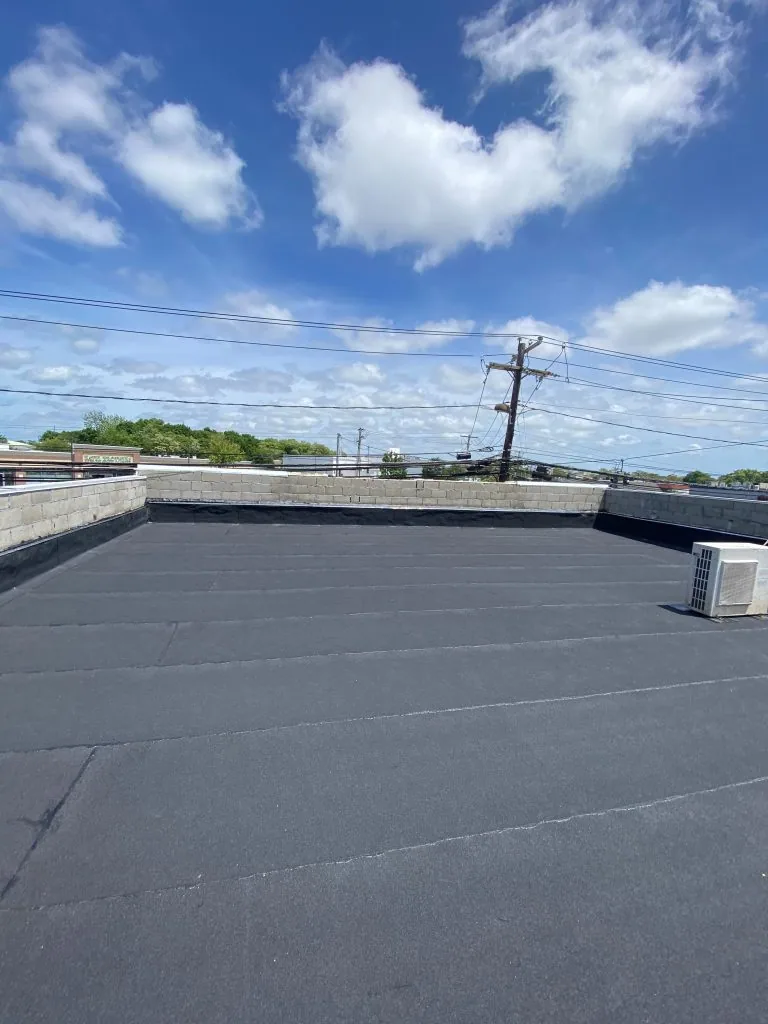
EPDM is a flexible synthetic rubber membrane that can cover broad low-slope areas. The selected assembly may bond the membrane across the surface, fasten it at planned rows, or hold it with ballast where the structure and design allow. The method affects material staging, seam layout, edge restraint and future access. At the roof walk, we inspect seams, patches, curb flashings, penetrations and edge conditions, then determine whether existing layers are stable enough to remain. Soft insulation, loose plates, damaged deck or widespread trapped moisture changes the boundary. An infrared moisture survey can help locate areas for closer testing when conditions permit useful readings.
Seams depend on clean, compatible surfaces and correct preparation. We check laps for separation, contamination, shrinkage or damage from service work. Flashing at pipes and curbs needs to move with the field without exposing a corner or leaving a path behind the membrane. At the perimeter, an EPDM sheet may terminate beneath metal or use a secure bar and compatible sealant; the attachment needs to resist movement and direct water outward. Drain transitions require a secure clamping detail and a clear bowl. If an older roof mixes materials or patch products, the work plan notes those interfaces before a repair crew carries a standard detail across the entire field. For a different elastomeric option, KEE membrane has a distinct formulation and welding method, so the choice follows the design and exposure conditions.
Seams, Shrinkage, and Ponding
EPDM can shrink as it ages, pulling at walls, curbs and corners. We look for tension lines, loose terminations and flashing that has drawn away from its vertical surface. A patch placed across a stressed sheet can split again if the underlying movement remains. The repair boundary must reach membrane that can accept the new detail, and the termination needs secure backing. At penetrations, we examine the boot, sealant, clamp and surrounding field rather than applying sealant over a moving joint. Drain bowls and low spots receive the same attention because standing water can reveal an obstruction, deflected deck or insulation issue. We document which condition is visible and whether an opening is needed to set the permanent scope.
The Brandon Road Dam record gives Joliet a 16.9-inch annual snowfall reference and 125.8 days when minimum temperatures reach freezing or lower. On EPDM, that seasonal context points us to drain bowls, seam edges and wall terminations where water or movement can matter. In July 2023, a tornado crossed Minooka, Shorewood and Joliet; hail and wind were also reported around I-80 and the Kankakee River Valley. Those regional reports do not identify a damaged roof. We inspect this membrane for open seams, pulled terminations or punctures, mark any test area, and set the repair tie-in on material that can accept a compatible splice. Related project details: snow and ice review
A Repair Boundary That Holds
For a localized EPDM repair, we remove loose or unsound material, clean and prepare the surface, and install a compatible patch with edges that can be inspected. Flashing work may require rebuilding the vertical transition or adding secure termination instead of simply sealing the exposed edge. We record the dimensions and photograph the completed detail. Where moisture has reached insulation, we identify how far the assembly must open and replace wet layers before new membrane closes the area. If openings show widespread deterioration, repeated patching can cost schedule without correcting the underlying condition. The scope then compares repair zones with full replacement, stating the evidence and the next decision point.
Cost and timing shift with roof height, access, membrane attachment, tear-off depth, insulation replacement, deck repair, curb count and perimeter detail. Ballast may require careful removal and staging; adhered systems need substrate preparation; mechanical fastening needs a secure deck and clear fastening pattern. These conditions affect the number of roof zones that can be completed in a shift. A recover review checks moisture, attachment and added height before any new assembly is placed. A full replacement scope can include cover board and insulation where the condition calls for it. We confirm field changes with the GC before covering the area.
Installation Around Joliet Operations
An EPDM delivery plan starts with roll dimensions, the roof's carrying route and the facility's own receiving rules. Regional freight access can offer alternatives, but the parcel's gate, dock occupancy and crane setup govern the sequence. We verify those constraints with operations, then place material and debris routes on the roof plan so no roll blocks a drain, edge or trade path. We confirm how EPDM rolls, insulation and removed materials reach the roof, where they can be staged, and how material movement avoids loading doors. If an equipment lift is planned, it should occur before final flashing where practical. The roof map assigns zones, termination points and daily dry-in lines so a crew can stop without leaving a loose sheet or open assembly.
On occupied properties, the plan also covers interior protection and notice to the people working below. We coordinate with mechanical trades on curbs, service lines and equipment that remain live.During rain or snow delays, the exposed area is secured and drains remain clear. A phased reroof plan helps align this sequence with facility hours and interior needs. Later maintenance can follow seams, perimeters and penetrations by zone. We serve Elwood and Joliet, and can arrange a roof walk to confirm access and staging before finalizing the scope.
Commercial Roofing Questions
How can you tell whether EPDM shrinkage caused an edge leak?
We inspect the membrane's pull at walls, corners and curbs, then check whether the termination remains secure and the substrate is sound. A durable repair needs enough sound sheet for a compatible connection and a corrected edge detail. If the membrane has pulled across several zones, we map those locations before deciding between repair and replacement.
Can a wet section of EPDM remain while the rest is replaced?
A defined wet area can sometimes be removed separately when surrounding insulation and deck remain dry and secure. We use readings and selective openings to set that boundary. The scope states how the transition will be rebuilt and what allowance applies if the opening shows a wider condition.
What attachment method should an EPDM replacement use?
The roof design, deck, wind requirements, building use and project specifications guide that choice. Adhered, mechanically attached and ballasted assemblies carry different substrate and staging requirements. We review those conditions with the GC and confirm the selected detail at the perimeter and around rooftop equipment.
What does a Joliet EPDM schedule need to account for?
Delivery access, active docks, crane picks, roof moisture and weather windows affect when each zone can open and close. Snowfall and freeze-thaw add seasonal constraints, while occupied space below may need protection. We set staging and daily dry-in points before materials arrive.
Which details are included in the EPDM closeout?
The closeout records seams, flashings, drain bowls, perimeter terminations, installed layers and any open trade items. Photos and a marked plan help maintenance staff find repaired zones later. We also note any concealed condition that changed the scope while the assembly was open.
Map the EPDM Repair Boundary
Arrange an EPDM roof walk with Commercial Roofers Joliet. We will inspect seams, shrinkage, drains and attachment, then set a repair or replacement sequence that fits the building's access and operating hours.
