Commercial Roofing Services
ROOFING SERVICES
Commercial Roof Leak Repair
Emergency Commercial Roof Repair
Commercial Roof Repair
Commercial Roof Inspection
Commercial Roof Maintenance
Commercial Roof Coating
Commercial Roof Replacement
ROOF SYSTEMS
TPO Roofing
EPDM Roofing
PVC Roofing
Modified Bitumen Roofing
Standing Seam Metal Roofing
PROPERTY TYPES
Warehouse Roofing
Distribution Center Roofing
Office Building Roofing
School Roofing
INDUSTRIES
DAMAGE REPAIR
CAPABILITIES
MANUFACTURERS
SERVICE AREAS
Infrared Roof Moisture Survey in Joliet, IL
Commercial Roofing Services
Map suspected roof moisture in Joliet with infrared imaging, selected core cuts and a marked report that helps define repair or replacement boundaries.
Infrared Roof Moisture Survey
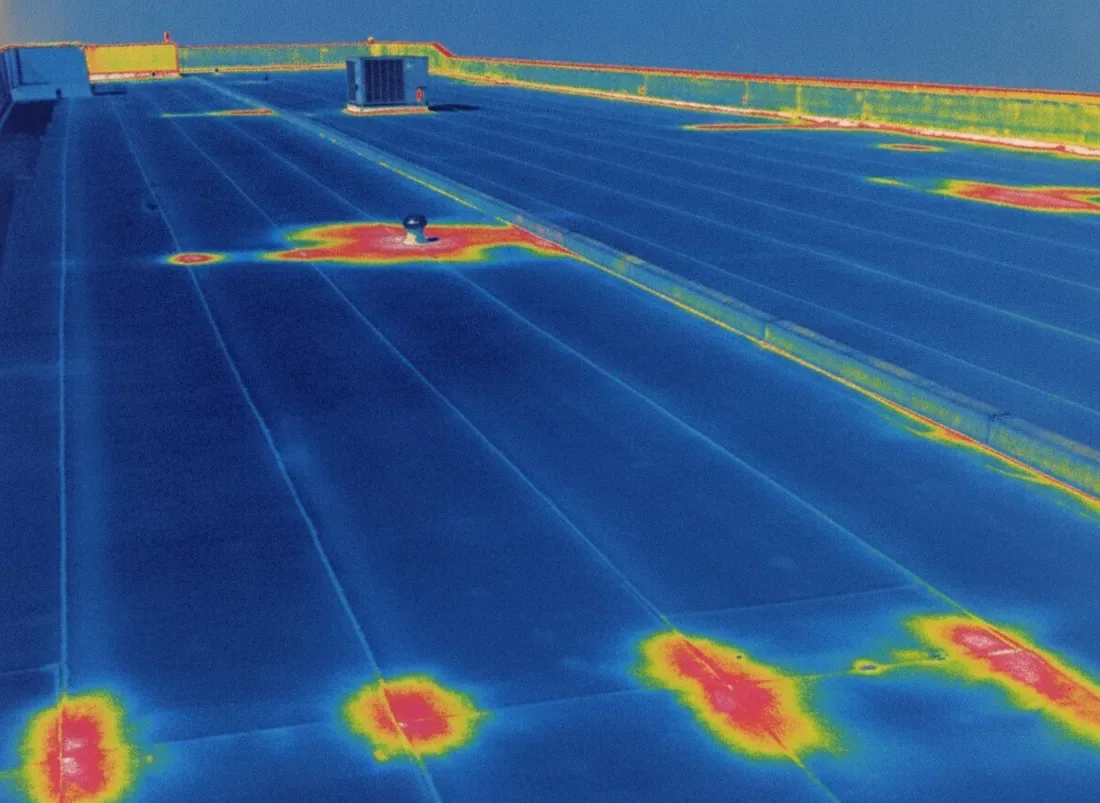
A roof with several leak reports needs a moisture map before the owner prices a broad removal area. Infrared imaging can help locate temperature patterns that deserve a closer check, especially across a large low-slope field. We review roof construction, surface condition, recent weather and access before surveying, then select core locations to verify suspected wet areas. The instrument does not see through the membrane and cannot confirm moisture by itself. In Joliet, winter freeze-thaw, snowfall and summer heat create different operating conditions for the roof surface, so survey timing and interpretation matter. A dry-looking membrane can hide wet insulation, while a temperature contrast can have another cause. We mark each suspected area, document the scan conditions and confirm representative locations with a core cut. That gives the general contractor a defensible boundary for selective repair or replacement planning. For large roofs near logistics and manufacturing operations, a useful survey can also reduce unnecessary disruption by showing where additional field investigation should begin. We coordinate survey access for nearby commercial properties across the Joliet service area before setting scan and sampling windows.
Surface Conditions and Survey Timing
At Joliet's Brandon Road Dam station, long-term averages include 38.03 inches of annual precipitation, 16.9 inches of snow, and freezing minimums on 125.8 days in a typical year. These averages help frame survey timing but do not determine whether insulation is wet. We record recent rain, sun and wind on the survey date, note roof sections with shade or ponding, and distinguish temperature patterns from confirmed moisture. Representative cores test suspected zones and their edges. If a pattern does not align with the roof assembly or sample results, the map calls it uncertain rather than extending the removal boundary. That gives the estimator a documented basis for replacement planning without turning a thermal image into a diagnosis. The crew records the depth and layers at each core so later pricing can use the sampled build-up rather than a roof-wide assumption.
Sampling also requires a clear restoration method. Before cutting a core, we confirm the assembly can be repaired with compatible materials and identify who will review the exposed layers. The opening is photographed, measured and closed after inspection. If conditions differ from the expected build-up, the report records that variance before the next sample location is selected. This keeps the moisture map useful to estimators and prevents a guessed assembly from becoming a bid assumption.
Core Cuts and Moisture Boundaries
A core cut confirms the layers and moisture condition at one selected point. We record the location, membrane, insulation and deck observations, then restore the opening with materials compatible with the roof system. Several samples may be needed when a broad anomaly crosses different roof sections or construction types. We choose locations to test whether the wet area is isolated, connected to a drain or seam, or part of a larger pattern. A single core cannot be applied to every part of the roof. At an industrial property in the Elwood/Joliet freight subregion, loading schedules can limit access to a sample point, so we coordinate each core and restoration around operations. If a sample shows damaged insulation, the removal boundary follows field evidence and the agreed scope. Our hands-on inspection records nearby seams and flashing, while a leak investigation can trace water entry when the interior report points to a specific area.
From Survey Map to Repair Scope
The report groups findings by roof section and labels each scanned or sampled location. Confirmed wet areas are separated from suspected anomalies and from sections that could not be accessed. That distinction helps the estimator define selective insulation replacement, a repair boundary or a broader reroofing allowance. We include photographs, core results, relevant assembly observations and the remaining questions for the design team. Joliet code review is project-specific, and commercial work may require locally determined approvals or sealed documents. A moisture survey does not replace that review, but it can help prepare a scope that describes the existing assembly and proposed work accurately. If the owner plans a recover, the map can show whether wet insulation must be removed first. If replacement is selected, it helps coordinate tear-off limits and dry-in points. We can connect the findings to a roof condition report. If the survey shows a drainage pattern, our ponding-water repair review can examine slope and outlets. For a compatible membrane detail, we also review TPO assembly options. Where water entry remains active, the first scope may be a targeted roof repair.
Working Around Equipment and Freight Access
Survey access must be planned around the roof and the building below. We coordinate ladders or lift locations, equipment clearances, escorts, interior access and any loading area affected by setup. Joliet's interstate and intermodal connections support freight-oriented activity, so we arrange the survey route to stay clear of active truck and dock movements. A survey crew may need a different staging zone from a reroofing contractor, especially where trucks and dock doors remain active. We identify the safe walking route, sample locations and any roof area that cannot be reached. The survey map records those limits so a later bid does not assume full coverage. If a drone image would help locate broad anomalies before coring, we can coordinate drone roof imaging as a separate visual tool. The next step is a review with the facility or general contractor to choose the repair and procurement sequence based on confirmed conditions. Between I-80 in Joliet and the county line at Godley, the IL Route 53 corridor tracks Historic Route 66. For a property in Plainfield, the IL 59/119th Street trade node is one nearby reference point, but the facility's loading pattern controls sample access. We still locate every sample against roof measurements and the actual assembly below it. We note where the scan began, what sections were sampled and which areas need another visit.
Commercial Roofing Questions
Does infrared imaging prove a roof is wet?
No. It identifies surface temperature patterns that may be consistent with moisture, but other conditions can create similar contrasts. We use selected core cuts to confirm the assembly and moisture at representative locations. The report distinguishes suspected areas from confirmed findings.
How many core cuts are needed?
The number depends on roof area, assembly changes and how the infrared pattern is distributed. We select locations that test both the suspected zone and its boundary. If results differ across sections, additional samples may be needed before a removal line can be set.
Will core sampling leave openings in the membrane?
Each sample opening is restored after the assembly is examined. We use compatible materials and record the location so the repair can be inspected later. The sample method and closeout are coordinated with the property contact before work begins.
Can a moisture survey show whether the roof should be replaced?
We compare confirmed wet areas with deck condition, membrane attachment, drainage, repair history and project requirements. The survey contributes evidence about insulation, but it does not alone determine replacement. We describe options for selective work or renewal after those conditions are reviewed.
When should a Joliet roof be surveyed?
The survey window should provide suitable surface conditions and safe access. Recent rain, sun, wind and temperature changes affect interpretation, so we review those conditions before setting the date. A survey after a leak report may help prioritize sampling, while capital planning can schedule broader work during an appropriate window.
Map Moisture Before Setting the Removal Line
Arrange a survey review with our team. We will discuss scan timing, core locations and access so the report can distinguish suspected moisture from confirmed assembly conditions.
