
Industries We Serve
ROOFING SERVICES
Commercial Roof Leak Repair
Emergency Commercial Roof Repair
Commercial Roof Repair
Commercial Roof Inspection
Commercial Roof Maintenance
Commercial Roof Coating
Commercial Roof Replacement
ROOF SYSTEMS
TPO Roofing
EPDM Roofing
PVC Roofing
Modified Bitumen Roofing
Standing Seam Metal Roofing
PROPERTY TYPES
Warehouse Roofing
Distribution Center Roofing
Office Building Roofing
School Roofing
INDUSTRIES
DAMAGE REPAIR
CAPABILITIES
MANUFACTURERS
SERVICE AREAS
Commercial Roofing for General Contractors in Joliet, IL
Industries We Serve
Coordinate Joliet roof scopes with clear repair limits, curb details, crane picks and trade handoffs. Plan dry-in around construction sequencing.
Commercial Roofing for General Contractors
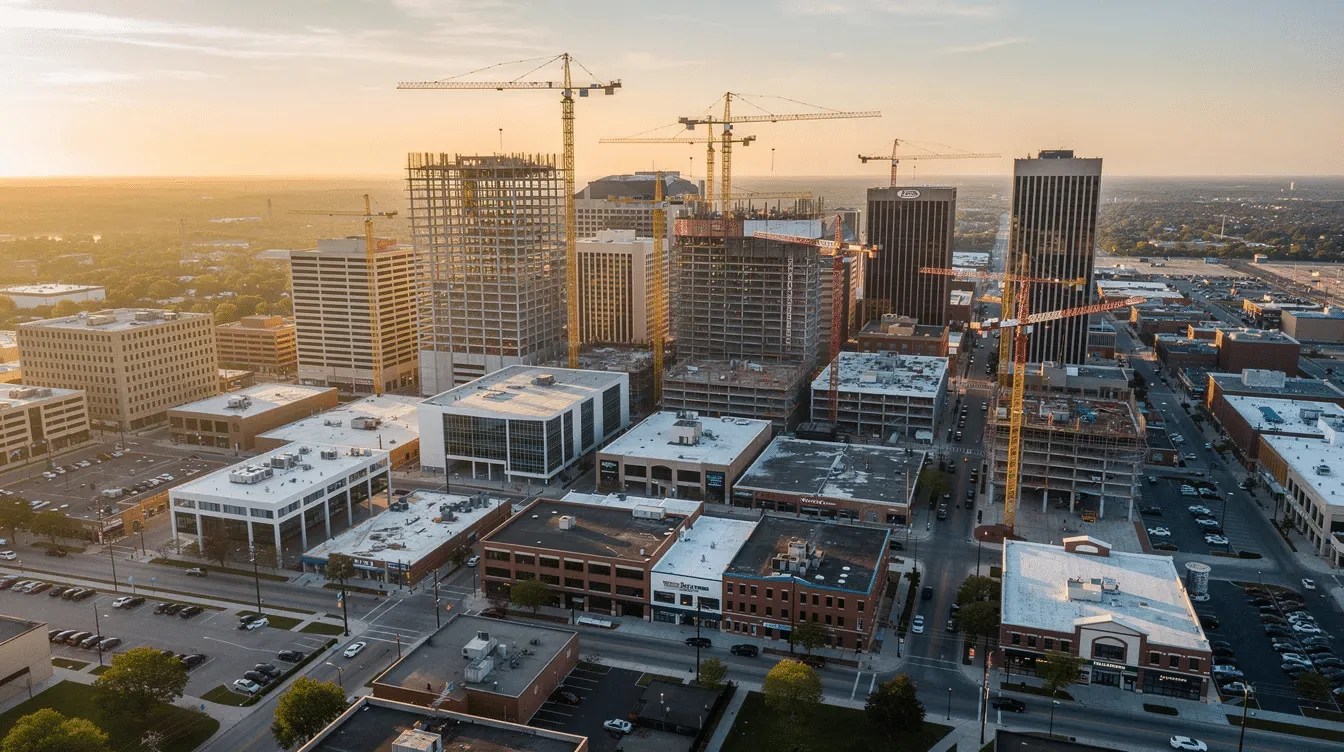
A roofing scope can hold up the next trade when the curb, deck repair or dry-in point is not assigned. General contractors working in Joliet need a roof partner who can walk the field, mark the boundary and carry each handoff into the schedule. We inspect the membrane or metal system, drains, parapets, curbs, penetrations and existing repairs, then separate confirmed work from items needing design review or a test opening. Joliet's logistics and manufacturing base sits beside freight routes and intermodal access, so loading and staging can be active even while construction is underway. A public-project roof scope may carry additional approvals, and the work sequence should state who supplies each document. We can review a site in Joliet with the GC and identify the roof decision that controls the next activity.
Draw a Repair Boundary the Trades Can Use
We mark each roof condition against a location plan: membrane seam, drain bowl, edge, curb, penetration or wall transition. The scope distinguishes temporary protection from permanent repair and identifies whether insulation or deck needs further review. When multiple sheets or trades describe the same area differently, the roof walk reconciles those notes against the field. A photographic roof report can tie the description, quantity and repair limit to the same location. That helps the estimator carry the same assumption into subcontractor pricing and the look-ahead schedule.
The City of Joliet adopts the 2015 International Building Code with local amendments; certain commercial scopes may call for sealed documents from an Illinois-licensed professional. GC and design teams should assign that review before procurement. For a privately funded commercial reroof, the GC should resolve Illinois energy-conservation requirements with the design lead; Joliet's 2024 code amendment became effective on November 30, 2025. We record the existing assembly and identify insulation or deck questions that affect the roof scope. The architect or engineer can resolve design items before the crew is scheduled, while the roofer prices the defined installation and details.
Dry-In, Crane Picks, and Daily Closure
The daily work limit depends on weather, roof area, materials, access and the number of details a crew can close. We plan tear-off and installation in zones, identify temporary protection and set a secure dry-in point for each shift. Crane picks need a location, load path, exclusion zone and time that works with the GC's site logistics. Material staging should not block the lift route or the next trade's delivery. For an occupied project, a phased building plan coordinates access and notification with facility operations.
The city's highway and rail connections provide regional context. For the job schedule, the GC confirms gate hours, truck turns, loading docks, lane closures and laydown space with the site team. The contractor still needs to confirm site gate hours, truck turns, loading docks, lane closures and laydown space. Near Romeoville's Weber Road and I-55 corridor, industrial access can be a discussion point, but the site logistics plan comes from that project's GC. We confirm how roofing deliveries fit the master schedule and which area is protected for emergency access. Where a façade lift, slab pour or ceiling closure is scheduled below, we identify whether the roof zone must finish first. That sequence can keep rework out of the look-ahead plan and give the superintendent a release point for each area.
Curbs, Drains, and Trade Handoffs
A roof is interrupted by equipment, supports, conduit, pipe, skylights and walls. Each one needs a detail that matches the roof assembly and the work sequence. We review curb dimensions and elevations before membrane installation, note equipment that must be lifted and identify who is responsible for the final flashing. A curb and support scope can be coordinated with mechanical work before the roof is closed. At drains, we verify bowl condition, connection, slope and overflow path; a new insulation build-up can change drain height and should be checked in design.
System compatibility matters at patches, transitions and tie-ins to existing work. TPO, PVC, EPDM, modified bitumen, built-up roofing and metal systems use different repair materials and detail methods. We confirm the existing surface before specifying a tie-in and document substrate conditions that could change the repair. If a replacement is planned, a roofing replacement scope can identify tear-off limits, cover board, insulation, perimeter work and trade allowances. For membrane choices, a TPO assembly review should be tied to project requirements rather than a generic substitution.
Local Exposure and Weather Holds
Joliet climate normals list 16.9 inches of annual snowfall; our look-ahead ties dry-in limits and outlet checks to the actual forecast and roof condition. We map outlets and daily dry-in limits before freeze-thaw periods or summer heat changes the safe work sequence. A regional storm log from July 2023 lists a tornado track through Minooka, Shorewood and Joliet and separate hail and wind impacts along the freight corridor. The GC can use the date to schedule a requested inspection; roof-level findings still come from the property. Those conditions give the GC a date for a requested review, not a roof-level damage finding. We inspect the property and record the actual condition before assigning repair or replacement scope.
A weather hold needs an agreed response: the area that can be closed, temporary materials, drain protection and the person who confirms return to work. We coordinate that with the GC's superintendent and document the daily roof status. If a storm occurs, a roof damage review can inspect the membrane, edge metal, rooftop units and flashing as separate items. The report can identify new damage, existing wear and any question needing a closer opening.
Subcontractor Record and Punch Work
Roof closeout should show completed field areas, edge and curb details, drain checks, photographs and any item waiting on another trade. We mark the work that is accepted for the next phase and list unresolved penetrations or equipment tasks. A property management roof record can keep those notes available to the owner after the GC demobilizes. If a public owner is involved, school district closeout planning raises related access and record questions; the project's own contract documents set the deliverables.
Will County's freight planning treats the Elwood-Joliet subregion as a connected area with investment focused on freight clusters and roadways. The regional context can affect delivery assumptions, while the construction site determines the actual truck path and crane area. Commercial Roofers Joliet can walk the roof with the superintendent, compare the field with the current drawings and identify the next trade handoff. That turns a roof line item into a sequence with a boundary, closure point and named responsibility.
Commercial Roofing Questions
What should the GC provide before a roof scope walk?
Current roof plans, equipment schedules, known leaks, access rules and the construction look-ahead help us identify the field questions. We still verify the roof assembly and repair boundary on site before finalizing quantities.
Who owns flashing after mechanical equipment is installed?
The contract scope should assign the curb and final flashing handoff before equipment work begins. We confirm curb dimensions, temporary protection and the return detail with the GC and mechanical contractor so the completed roof has a defined responsible trade.
How do you price concealed deck repairs?
We mark visible conditions and identify where tear-off or a test opening may reveal additional work. Known quantities and allowances are listed separately, with the approval and change process following the project's contract requirements.
Can roofing work be phased with the master schedule?
We divide the roof into work zones, set dry-in points and coordinate deliveries, crane picks and access with the superintendent. The sequence depends on building use, material arrival, weather and how much roof can safely remain open.
What does a useful roofing closeout include?
A marked roof plan, photographs of seams, drains, curbs and edge details, completed quantities and open trade items give the owner a clear record. We identify any return work and the area ready for the next phase.
Resolve the Roof Trade Handoff
Arrange a roof walk with Commercial Roofers Joliet and the superintendent. We will mark the repair boundary, identify detail responsibilities and confirm the dry-in and delivery sequence that affects the project schedule.
