
Commercial Roofing Services
ROOFING SERVICES
Commercial Roof Leak Repair
Emergency Commercial Roof Repair
Commercial Roof Repair
Commercial Roof Inspection
Commercial Roof Maintenance
Commercial Roof Coating
Commercial Roof Replacement
ROOF SYSTEMS
TPO Roofing
EPDM Roofing
PVC Roofing
Modified Bitumen Roofing
Standing Seam Metal Roofing
PROPERTY TYPES
Warehouse Roofing
Distribution Center Roofing
Office Building Roofing
School Roofing
INDUSTRIES
DAMAGE REPAIR
CAPABILITIES
MANUFACTURERS
SERVICE AREAS
Rooftop Equipment Curb and Support Roofing in Joliet, IL
Commercial Roofing Services
Repair roof flashing around rooftop units, pipe supports and equipment curbs in Joliet. We coordinate clearances, trade access, drainage and weather protection.
Rooftop Equipment Curb and Support Roofing
A rooftop unit replacement can leave the curb and roof in different stages of readiness. We check curb height, base flashing, support loads, access clearances and the membrane around the equipment before setting the roofing scope. In Joliet, freight, manufacturing and warehouse schedules make crane picks and shutdown windows part of the work sequence. The roof detail needs to be closed before the equipment trade resets the unit, but only after both scopes agree on dimensions and access. Our repair boundary identifies what the roofer will remove, what the mechanical contractor will handle and when the roof can be dried in.
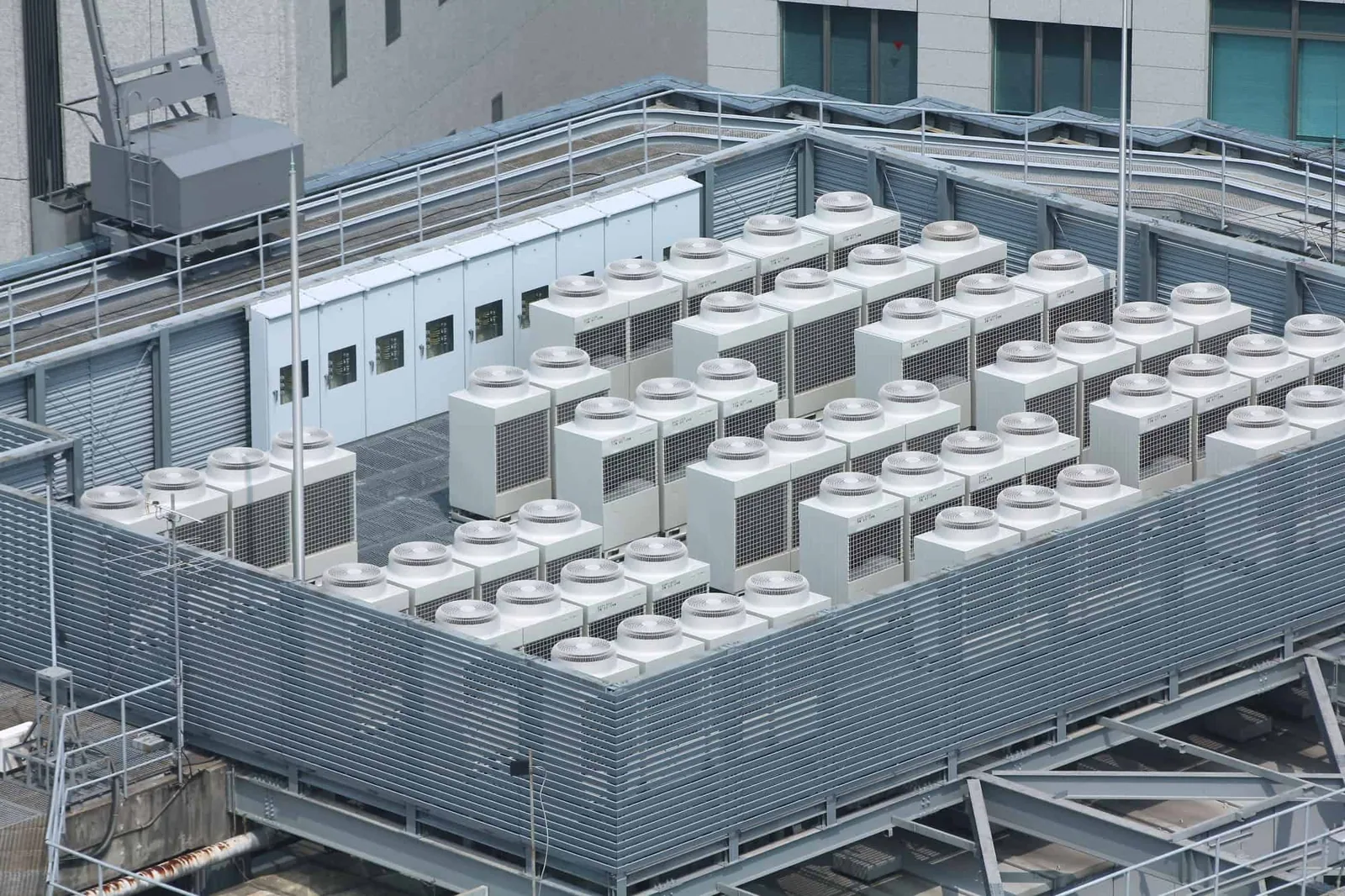
Curb Height and Membrane Transition
We start by measuring the curb and checking its condition at each side and corner. A curb that is too low for the new roof assembly may not leave enough flashing height once insulation and cover board are installed. We also look for rot, loose fasteners, deflection, open joints and previous patches that stop short of a sound transition. Pipe supports receive the same attention: their feet must not crush the membrane or leave a gap where water and debris can collect. Photographs record each support, curb and termination before equipment is moved.
Joliet's industrial base includes logistics and manufacturing, and the city describes multimodal infrastructure supporting those activities. That building mix can put several units, exhausts and service paths on one roof. We map equipment locations against drains and walkways, then mark which curb or pipe support needs adjustment. If the equipment vendor supplies a new curb, the dimensions and roof system must be reviewed before it is set. Our penetration flashing work uses the same discipline at transitions, but equipment curbs also require a clear handoff with the mechanical scope.
Mechanical Handoff and Crane Pick
A crane plan changes roof access, staging and the order in which the curb can be flashed. We confirm pick timing, equipment weight and lift paths with the general contractor and mechanical trade, then establish who disconnects lines and protects the opening. The roofing crew should not seal a detail that another trade still needs to adjust. Before the unit is reset, we verify the curb dimensions, insulation height and required service clearance. Those measurements reduce the chance of a field change after the roof has been closed.
Romeoville identifies distribution, e-commerce, food manufacturing, education and municipal operations among its employment sectors. Those uses can depend on active rooftop ventilation, so the site schedule may not allow an open-ended shutdown. We coordinate an agreed work window, temporary cover and interior protection before the pick begins. A phased occupied-building plan can sequence work above an operating facility, while a focused repair scope may be appropriate when only a curb detail has failed. The scope states which trade provides the lift, who disposes of removed materials and who verifies that the unit is ready for service.
Drainage Around Supports and Units
Water should move around the curb without collecting behind its uphill side or at the foot of a pipe support. We inspect the drain path, crickets and low areas before adding curb insulation or replacing flashing. A new curb can change local flow, and a support placed in a traffic path can become a point of repeated membrane damage. We plan the detail so service personnel can reach the unit while keeping the roof assembly protected. After the work, we check that fasteners, flashing and walk pads do not obstruct a drain or scupper.
Joliet's long-term record includes 16.9 inches of annual snowfall and 125.8 days with freezing-range minimum temperatures. Around a curb or pipe support, we look for seal movement, sheet separation and water held at the uphill side, then follow the drainage route to the nearest outlet. The weather baseline frames seasonal review; the property detail determines whether repair is needed. If equipment must move, the mechanical contractor and roofer agree on dimensions, lift timing and temporary cover before the unit is reset. Photos identify the completed flashing and any nearby condition left for follow-up. Related project details: leak tracing wind damage repair
What Goes in the Roofing Scope
The proposal identifies each curb or support, the material to be removed, the flashing method, membrane tie-in and temporary protection. It also lists equipment moves and trade work that are excluded or assigned elsewhere. If the deck beneath a curb is damaged, we photograph it and define the added work before the opening is closed. This boundary helps the general contractor compare bids without assuming that a roofer will disconnect equipment or that the mechanical contractor will restore the membrane.
Joliet requires locally determined approvals under adopted codes, and commercial work may call for documents sealed by an Illinois-licensed professional. We flag design questions about curb height, structural support or assembly changes so the project team can resolve them before procurement. The roof detail and mechanical submittal should agree on equipment dimensions and clearance. A photo-based condition report can track existing curbs and recurring repairs, while drainage detail work addresses low areas beside supports. For work across the Joliet business and industrial park network, consistent scope notes help carry the same trade handoff to each property.
Return the Equipment Area to Service
Before sign-off, we inspect the finished flashing, membrane seams, support bases and nearby drains. The mechanical trade confirms the unit is set and connected; the roofer verifies the weathering detail is complete. We remove loose materials, close temporary openings and photograph the completed transition. If a support must remain accessible for future service, we note its path and the protection around it. The record identifies any remaining condition that needs owner approval rather than leaving an undefined item in the closeout.
Near Elwood and the Joliet freight subregion, delivery and lift schedules can change with facility operations. We coordinate the final inspection with the general contractor so a unit does not return to service before the roof detail is ready. The owner receives a location-based photo record and a clear description of the repair. Schedule a roof walk in Joliet before equipment replacement or after a curb leak. We will confirm the flashing boundary, access needs and trade sequence that keep the roof work aligned with the lift.
Commercial Roofing Questions
Who should provide the new equipment curb?
The mechanical and roofing scopes need to agree on curb dimensions, height and support before procurement. The equipment contractor typically supplies a curb designed for its unit, while we review how the roof assembly will flash to it. We identify that handoff in the proposal so the curb is not set before the roofer can confirm the needed membrane and insulation clearances.
Can a rooftop unit be reset the same day the curb is opened?
The work window depends on lift timing, weather and whether the curb and deck are sound. We coordinate an order that lets the mechanical trade remove or reset the unit while the roofing crew protects the opening and completes the flashing. If concealed damage changes the scope, the project team needs to approve the added work before the detail is closed.
What if water ponds behind an equipment curb?
We check the roof slope, drain path and curb position before changing the flashing. A cricket or drainage adjustment may be needed, but the detail should be based on the field condition and project design. We also verify that equipment supports and service paths do not create a new low point or block an outlet.
Do pipe supports need roofing work when lines are replaced?
They do when the work disturbs the membrane, flashing or support bases. We inspect for compressed roofing, loose feet and punctures, then repair the assembly with a compatible detail. The trade replacing the line should coordinate support height and service clearance with the roofing contractor before setting the new run.
Can you repair a leaking curb without replacing the whole roof?
A focused repair can work if the surrounding membrane, attachment and deck remain sound. We inspect the curb, adjacent seams and interior signs, then set a boundary that reaches stable material. If wet insulation or widespread separation extends beyond that detail, the proposal identifies the larger area that needs removal or further testing.
Coordinate the Curb Before the Lift
Arrange a roof walk with the general contractor and mechanical trade. We will confirm curb dimensions, flashing limits, drain paths and the work window before equipment moves.
