
Roof Damage Repair
ROOFING SERVICES
Commercial Roof Leak Repair
Emergency Commercial Roof Repair
Commercial Roof Repair
Commercial Roof Inspection
Commercial Roof Maintenance
Commercial Roof Coating
Commercial Roof Replacement
ROOF SYSTEMS
TPO Roofing
EPDM Roofing
PVC Roofing
Modified Bitumen Roofing
Standing Seam Metal Roofing
PROPERTY TYPES
Warehouse Roofing
Distribution Center Roofing
Office Building Roofing
School Roofing
INDUSTRIES
DAMAGE REPAIR
CAPABILITIES
MANUFACTURERS
SERVICE AREAS
Commercial Tornado Damage Roof Repair in Joliet, IL
Roof Damage Repair
Assess tornado-related commercial roof openings, edge loss and water entry in Joliet, with documented limits and coordinated restoration.
Commercial Tornado Damage Roof Repair
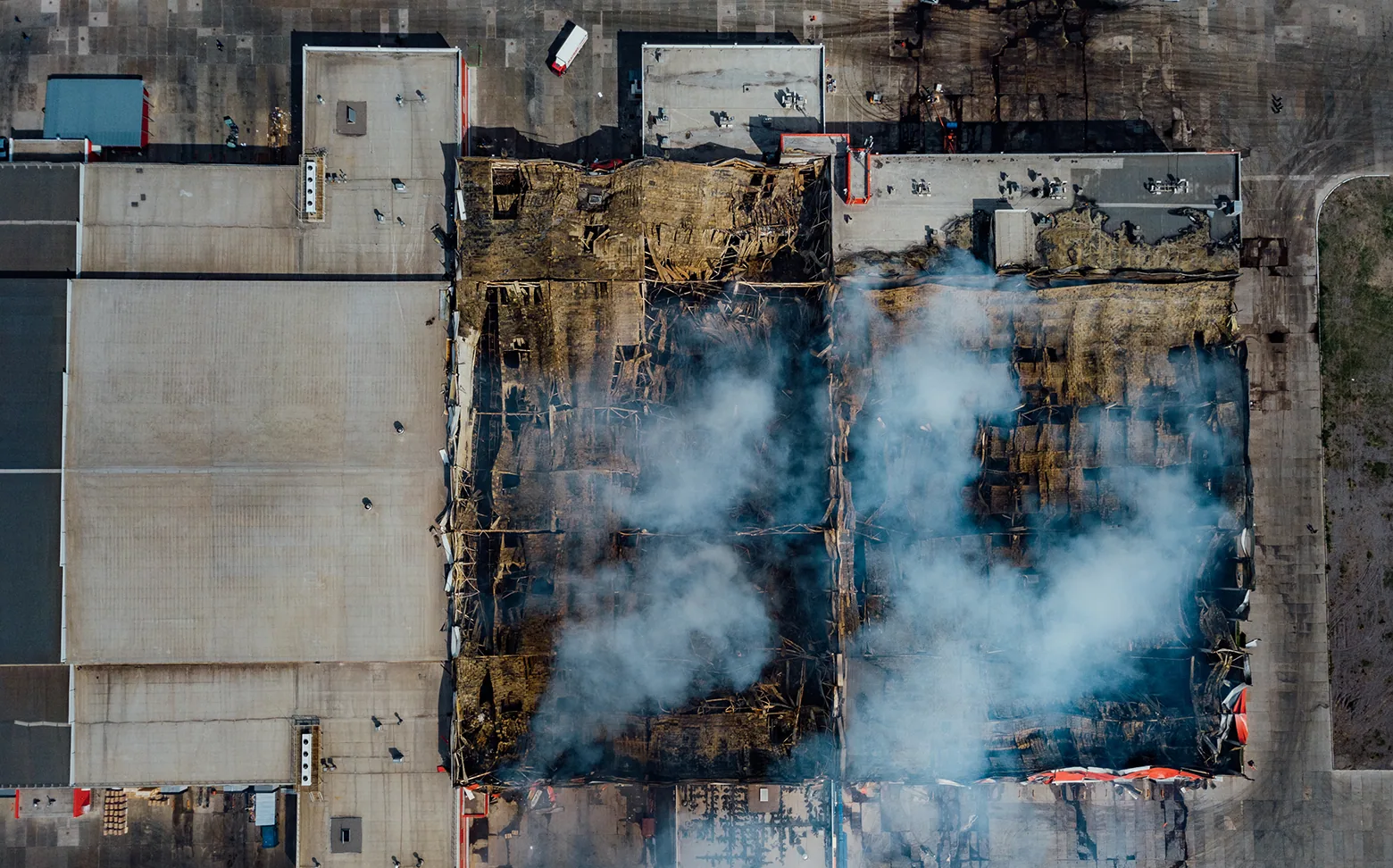
A tornado can leave a commercial roof with missing edge metal, displaced membrane, damaged rooftop equipment, debris impact or an opening that is difficult to see from the ground. The first roofing task is to establish safe access and protect any exposed interior; a permanent scope follows after the affected zones can be inspected. We document the membrane, seams, insulation, deck and perimeter details separately, then report what is confirmed and what needs another trade. The regional NWS Chicago record for July 2023 lists a tornado track touching Minooka, Shorewood and Joliet, along with separate damaging hail and wind reports in the I-80/Kankakee River Valley area. A Joliet walk can set the next step: arrange a Joliet roof inspection to establish a repair boundary.
Make Access Safe Before the Roof Walk
After a tornado warning or impact, roof access may be affected by broken glazing, loose panels, unstable equipment, downed utility lines or damage to the building below. We coordinate with the site contact and emergency officials before entering, and follow any restricted-zone instruction. The approved route, ladder or hatch, staging area and fall-protection needs are recorded. If structural stability or electrical safety is uncertain, the proper engineer or utility trade must clear that issue first. A roofing inspection does not replace a structural assessment.
When entry is permitted, the crew begins with a visual scan from the safe route. We identify loose material that could move, mark open roof areas and avoid disturbing debris that another responder needs to review. Wind can lift a membrane edge while a nearby impact cuts the field; these are documented as separate observations. We take overview and detail photographs before temporary materials cover the condition. If weather prevents a full walk, the report names the zones reached and the ones that remain for follow-up rather than implying full coverage.
Trace Displacement From the Perimeter Inward
The perimeter receives close attention because wind can peel edge metal, loosen coping, open a termination or pull on a corner. We check attachment and continuity where safely visible, then follow the affected edge inward to inspect membrane, seams and rooftop penetrations. Debris can puncture the field or obstruct drains; we document its position before removal when appropriate. Mechanical units and screens are recorded for visible movement or damaged supports, but electrical and mechanical operation is referred to the responsible trade. The repair record distinguishes displaced components from unrelated aging or prior patching.
In the field, we inspect laps for separation, blisters and torn reinforcement, and note whether insulation or cover board is exposed. Water may enter at a small opening and travel before it appears inside. We compare leak reports with roof zones and drainage paths, using readings or selected cores only where justified. A separate wind-damage roof review can document uplift apart from impact. A moisture survey can help identify candidate areas for testing; it does not establish hidden conditions without confirmation. In Joliet, adopted code requirements and local review may apply if repair scope expands into a larger assembly alteration.
Keep Tornado, Hail and Wind Findings Distinct
Keep event evidence sorted by type: the documented tornado path included Minooka, Shorewood and Joliet, while the report separately records hail and wind damage around I-80 and the Kankakee River Valley. We log only marks and openings seen on this roof. On an individual roof, we identify suspected impact, uplift, puncture, water entry and equipment damage separately rather than attach every defect to one cause. A hail-damage inspection can document impact patterns apart from wind displacement. This separation helps the owner compare the roofing observations with other event records and claim documents without treating a regional storm path as property proof.
Interior reports are useful when tied to room, date and roof zone. We photograph any active drip or stained ceiling and compare it with seams, drains, curbs and openings overhead. Water can travel along the deck, so the visible ceiling location may not align with the entry point. Temporary protection may be needed while the roof remains open; its footprint and inspection interval are recorded. If there are multiple openings, each receives its own reference so one patch does not mask another condition.
Stabilize Exposed Areas and Set Return Conditions
Temporary dry-in is selected for the actual opening, roof surface and expected conditions. We identify a secure perimeter, compatible material, attachment method and a path for water to drain without loading another weak area. The facility contact receives the protected-zone description and instructions for reporting movement, leakage or a change in weather. If permanent restoration cannot proceed because the substrate is wet, debris remains or access is restricted, the temporary measure is treated as an interim step with a planned reassessment.
Where the membrane has separated over a wider area, simply fastening a loose flap may transfer stress to a new edge. We map the stable boundary and decide whether a localized repair, secured temporary cover or broader removal is appropriate after reviewing the assembly. A emergency roof response can help limit water entry while a permanent scope is coordinated. Any lifting equipment, traffic control, shutdown or debris handling is planned with the building representative before work begins.
Rebuild the Roof Assembly at a Verified Boundary
Permanent repair starts by identifying the roof system and the condition of material around the affected area. We remove only enough to reach sound membrane, secure attachment and stable substrate. Replacement may include insulation, cover board, deck section, membrane, flashing and edge metal; the scope lists each layer and tie-in. Fastening or welding is performed according to the assembly and manufacturer requirements. If the damaged area reaches structural components, the roofing contractor documents the interface and coordinates with the design professional responsible for that work.
Joliet's locally enforced code list includes the 2015 International Building Code with amendments. City guidance also notes that some commercial submissions need a seal from an Illinois-licensed professional. Before a larger assembly change, the owner and project designer can confirm the applicable review with the City. Plainfield's 119th Street/IL 59 intersection is an existing commercial trade area. At any property, the inspected roof and owner's access limits define staging and the repair boundary. A roof condition report records quantities, photographs and remaining questions for the property file.
Coordinate Recovery and Record What Remains
Joliet's industrial and logistics activity includes buildings with active loading and equipment movement. We ask the facility contact about delivery windows, protected routes, staging and any interior space that needs a temporary hold. If the repair is above a tenant or operating line, the work is divided into manageable zones where each day's open area can be closed securely. Changes to access or scope are reported before a crew enters a new part of the roof. For nearby Minooka and Plainfield properties, travel is planned around the actual site address and approved entrance rather than assumptions about a district.
At closeout, photographs show the finished edge, seams, flashing and restored field. The report identifies temporary work, permanent repair, replaced layers, tested areas and anything inaccessible. It also distinguishes roof observations from structural or mechanical decisions made by another professional. The owner receives a practical list of follow-up items, including any moisture check, interior observation or warranty discussion that remains open. This record lets the next maintenance visit compare conditions to a known repair boundary instead of starting from an undocumented patch.
Commercial Roofing Questions
Can the crew inspect a tornado-damaged roof immediately?
Access depends on building stability, roof conditions and the response team's clearance. We coordinate with the site contact, then note any zone that must wait.
What is checked first after roof edges are displaced?
The first pass records safe access, exposed openings and perimeter conditions. We then inspect terminations, membrane and penetrations along the affected edges.
Does a regional tornado track prove a building was damaged?
A regional weather record gives context but cannot establish damage at one address. Property findings come from inspection and photographs.
Can temporary protection be left in place?
Temporary cover has a defined boundary and return condition. The site contact receives instructions for monitoring movement or leakage while permanent work is arranged.
Will you repair rooftop equipment damaged by wind?
Visible equipment impacts are recorded for the responsible mechanical or electrical trade. Roofing work addresses roof interfaces and openings within its scope.
Document the Roof After Severe Wind
Arrange a safe inspection to map openings, perimeter loss and water entry. We will separate temporary protection, permanent roofing work and any review assigned to another trade.
