Roof Damage Repair
ROOFING SERVICES
Commercial Roof Leak Repair
Emergency Commercial Roof Repair
Commercial Roof Repair
Commercial Roof Inspection
Commercial Roof Maintenance
Commercial Roof Coating
Commercial Roof Replacement
ROOF SYSTEMS
TPO Roofing
EPDM Roofing
PVC Roofing
Modified Bitumen Roofing
Standing Seam Metal Roofing
PROPERTY TYPES
Warehouse Roofing
Distribution Center Roofing
Office Building Roofing
School Roofing
INDUSTRIES
DAMAGE REPAIR
CAPABILITIES
MANUFACTURERS
SERVICE AREAS
Wind Damage Roof Repair in Joliet, IL
Roof Damage Repair
Repair wind damage on commercial roofs in Joliet with a documented roof walk, temporary dry-in and a clear boundary for permanent work.
Wind Damage Roof Repair
A loading schedule in Joliet, IL cannot wait on an open roof while a wind report is being sorted out. We first check where the membrane, metal edge or flashing has moved, then decide what must be secured before the next weather window. The repair boundary comes from the field: lifted seams, displaced coping, loose termination bars, punctures from debris, or a detail that has opened at a curb. The July 2023 storm tracked from Minooka through Shorewood to Joliet, with damaging wind and hail also recorded in the I-80 and Kankakee River Valley region. A storm report helps set the inspection priority, but it does not establish what happened on one roof. We photograph each affected area and separate immediate dry-in from permanent repair. That lets a facility contact protect operations while a general contractor prices the actual work. For active water entry, our emergency roof response can address the opening while we document what remains.
Roof Areas That Take the Wind
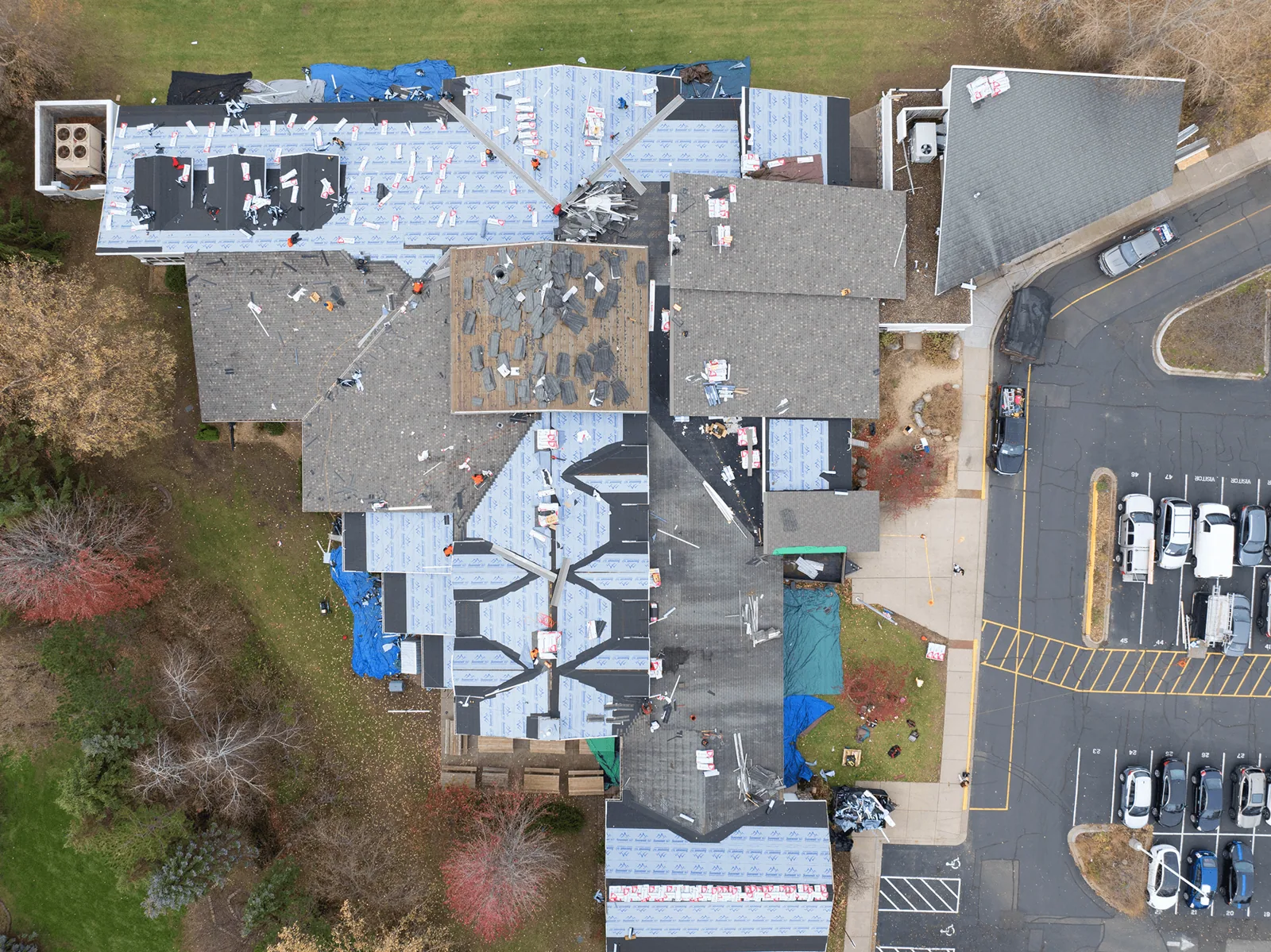
At the roof edge, we look for movement in coping, fascia, gravel stops and metal cleats, then follow the condition back to the membrane termination. The repair limit depends on what we verify at the field and fastening line. On membrane roofs, we check laps, corners, patches and transitions near rooftop units. On metal roofs, we inspect panel seams, fasteners and closures. We mark each location so the crew can return without reopening unaffected sections. Our commercial roof inspection can review older repairs and nearby drainage concerns.
The Elwood/Joliet freight subregion has active industrial and logistics uses, so staging may need to fit truck movements and secured entries. We confirm the approved roof route. A damaged wall or curb flashing is checked at its vertical leg and membrane termination; replacing a metal cover alone may leave that interface exposed. The field record identifies what needs restraint or opening before materials are ordered. The crew follows visible movement, fastening and moisture evidence on the building.
Dry-In Before Permanent Repair
Temporary protection needs a defined edge and a return condition. We remove loose debris, keep water moving toward drains and cover an opening with a method suited to the surface and forecast. Wet membrane or high wind may make a permanent patch unsafe. We record the temporary materials and protected area, then schedule work for a suitable preparation window. The facility contact helps protect any affected ceiling, inventory or equipment. The report distinguishes water control from completed restoration. We identify the protected roof section and nearby drains that must remain open.
Brandon Road Dam's normal snowfall is 16.9 inches, and its yearly record includes over 125 freezing-or-colder minimum days. If wind has opened an edge or shifted a cover, we note whether snowmelt could reach the exposed layers and schedule the permanent tie-in for suitable conditions. After a storm, we check the drain bowl, scuppers, insulation at the opening and adjacent seams. If readings point to a wider wet area, moisture mapping with selective confirmation may define removal limits. A damaged detail alone does not justify expanding the work past roof evidence. We mark any sample opening so the estimator can carry the correct removal area.
Match the Repair to the Assembly
Once the roof system is identified, we choose compatible materials and prepare a sound surface. A TPO field repair needs a clean area and a welded patch; EPDM uses compatible splice materials; metal may need panel, fastener or flashing work. We verify existing layers where records do not match the roof. Wet or displaced insulation and deck are removed to a stable line before closing the surface. The scope names each transition and termination. A broader recover needs assembly and fastening review before a TPO system decision or replacement is priced. We check that new material ties into the existing field without trapping moisture or leaving an exposed edge.
Wind can lift material without a clean tear. We test suspected repairs and check whether the deck can take new fastening. Joliet enforces the 2015 International Building Code with local amendments. Commercial building projects may require documents sealed by an Illinois-licensed professional. We flag design questions if the scope reaches structural work or a larger assembly. Separate hail findings can remain in a hail damage assessment rather than be combined with wind repairs. If the roof has multiple layers, we verify what can remain before setting the patch detail.
Work Sequence for an Active Facility
Repair timing depends on safe access, wind, materials and operations below. A lift can conflict with a trailer route; a production area may need a hold before wet insulation is opened. We divide the work into secure, open, restore and inspect steps with the general contractor and site contact. Joliet has five Class I railroad tracks and ten I-80/I-55 interchanges, but each property still needs its own delivery and staging plan. We confirm the gate, laydown area and crane pick before scheduling. If rooftop equipment must remain available, we coordinate the repair boundary with its service route.
The Brandon Road Dam station records 14.9 annual days reaching at least 90 degrees. For wind repairs, that is a work-window reference; the installed membrane's temperature limits and current substrate condition govern each tie-in. Heat changes the work window and handling of adhesives and membranes. We select a start time that permits preparation around equipment. If procurement delays permanent repair, the dry-in stays a separate condition to inspect. A written roof condition report records the damage, temporary control and remaining decision.
Close the Roof Record
After repair, we photograph the seam, edge or flashing transition and compare it with the opening record. The closeout names installed materials, preparation and any area left for a later phase. If damage exceeds the original scope, we stop at a safe boundary, document the condition and price added work for approval. For a Joliet property, we coordinate the return visit with the building operator around deliveries and occupied space. The record identifies any panel needing another trade or detail that could not be inspected.
We confirm debris is removed, drains are clear and interior protection can be released. The report lists repaired locations and the next inspection item. A planned maintenance program can revisit weak details before another storm. The owner receives a distinction between repaired damage and future capital work, with photos that support the handoff.
Commercial Roofing Questions
What should be secured first after wind lifts a roof edge?
We check the metal, termination and membrane interface, then secure or dry in the area if it is safe. The repair limit follows verified fastening and membrane conditions. We document interior protection and return work for the permanent edge repair.
Does the July 2023 storm report prove my Joliet roof was damaged?
No. It identifies a regional event, not a building condition. We inspect the roof, photograph displaced metal, seams, punctures and wet areas, then write the scope from those findings.
Can a roof be permanently patched during high winds?
The crew needs safe access and a surface that can take the selected material. If wind or moisture prevents preparation, we secure the opening and record the return condition for permanent work.
How do you decide whether to repair or replace a wind-damaged section?
We compare damage with seam, edge, insulation and deck conditions. A sound surrounding field may support repair; widespread wet material can change the boundary. The report separates confirmed work from testing or design questions.
Can work be scheduled around Joliet freight operations?
We plan staging and lift access with the facility contact. The Elwood/Joliet freight area has active logistics uses, so a property may need a clear delivery route or roof-access window. We record those limits before scheduling.
Set the Wind Repair Boundary
Arrange a roof walk to document lifted edges, opened seams and water entry. We will identify the temporary protection needed and the permanent work sequence that fits your building's access and operating hours.
