
Roof Damage Repair
ROOFING SERVICES
Commercial Roof Leak Repair
Emergency Commercial Roof Repair
Commercial Roof Repair
Commercial Roof Inspection
Commercial Roof Maintenance
Commercial Roof Coating
Commercial Roof Replacement
ROOF SYSTEMS
TPO Roofing
EPDM Roofing
PVC Roofing
Modified Bitumen Roofing
Standing Seam Metal Roofing
PROPERTY TYPES
Warehouse Roofing
Distribution Center Roofing
Office Building Roofing
School Roofing
INDUSTRIES
DAMAGE REPAIR
CAPABILITIES
MANUFACTURERS
SERVICE AREAS
Flashing Failure Roof Repair in Joliet, IL
Roof Damage Repair
Repair failed commercial roof flashing in Joliet by tracing the water path, checking adjacent membrane and setting a clear replacement boundary.
Flashing Failure Roof Repair
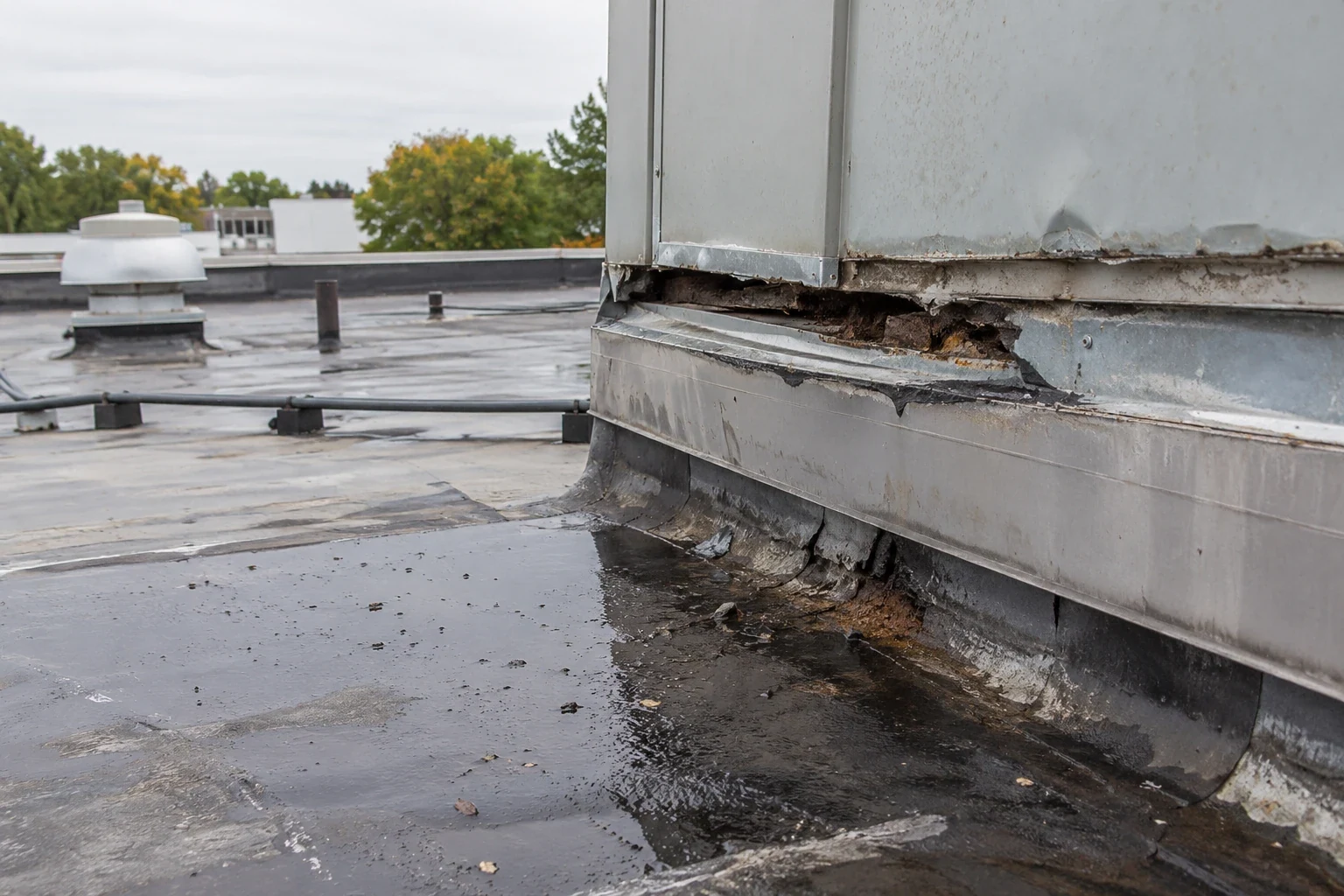
A rooftop curb replacement in Joliet, IL can leave a leak where the new metal meets the old membrane. We inspect the flashing leg, termination, counterflashing and nearby seam before deciding whether the defect is limited to one transition. The indoor drip may follow a deck flute or insulation joint, so the repair boundary comes from tracing the water path above and below the opening. We document loose metal, split sealant, open fasteners and any wet insulation that affects the work. A focused commercial roof repair can restore a sound transition without wrapping an unrelated roof area into the scope. The July 2023 severe-weather track from Minooka through Shorewood to Joliet is useful context for scheduling a roof review after a storm, but the flashing at each building still needs direct inspection. We photograph the detail and state whether it needs temporary dry-in, a compatible patch or removal and replacement.
Follow the Flashing Termination
At a wall, curb or pipe penetration, the flashing has to connect the vertical face to the roof field and remain secure through movement and weather. We look for a termination bar that has pulled away, counterflashing with an open joint, a split corner or a patch that ends before it reaches sound material. At rooftop equipment, we check whether curb height, service clearance or vibration has affected the membrane turn-up. At parapets, the coping and membrane edge are reviewed together because water can travel behind one component and emerge at another. Our roof inspection records each transition by location and notes whether the adjacent field is dry and bonded.
A flashing failure can sit above a wet section that extends beyond the visible metal. We take moisture readings where appropriate and use selective openings when the assembly needs confirmation. Local station normals count 125.8 freezing-minimum days annually and 16.9 inches of snow. After water entry, revisit the counterflashing lap and membrane edge once the surface is safe and suitable for repair. Movement through freeze-thaw periods makes a sound counterflashing lap and a closed membrane edge important details to revisit after water entry. If the nearby field seam has also separated, we keep that line distinct and can scope seam failure repair beside the flashing work.
Separate the Opening from the Interior Stain
Water may pass behind a metal counterflashing, travel beneath the membrane and appear inside several feet from the opening. We begin with the room report, roof level and weather timing, then inspect the transition above that area and nearby drains. The report marks the tested locations, moisture readings and any portion hidden by equipment or finishes. If the assembly is wet, we identify whether the insulation can remain or needs removal before closing the roof. A detail repair should not cover wet material and call the leak resolved. For a larger roof or an area difficult to reach safely, moisture survey work can help locate suspect zones before selected cores confirm the boundary.
At a parapet or curb, we open only enough material to see how the components meet and whether the deck provides a sound substrate. Old sealant can conceal a gap without restoring the original water-shedding path. We remove failed material, prepare the surface and connect new flashing to compatible membrane or metal. If the wall assembly or structural support needs another trade, that handoff is recorded before the roofing edge is closed. A drain and scupper review may be included when ponding or overflow has exposed the same wall transition, but we keep outlet correction separate from the flashing repair boundary.
Restore the Lap, Not Just the Cover
The repair depends on the installed roof system and the condition of the metal. A membrane turn-up may need a new flashing piece welded or adhered into the field, while a metal roof may need a panel closure, formed trim or fastener correction. We verify compatibility and prepare the substrate before installing replacement material. If a termination bar is reused, we check its attachment line and do not rely on a surface bead to make a failed connection sound. The scope names the removed components, new tie-in and finished edge. For a standing seam roof, the panel and flashing interface is reviewed as one assembly so movement at the ribs is not locked by an incompatible seal.
Commercial work in Joliet follows locally adopted building codes, and some project documents may require an Illinois-licensed professional. We flag design or approval questions when replacement changes curb height, drainage, insulation or structural attachment. After severe weather, a focused wind damage review can assess the roof perimeter, but each transition is inspected on its own condition.
Plan the Opening and Dry-In
Before removing flashing, we confirm how water will be controlled if the assembly must stay open overnight. The facility contact identifies rooms or equipment that need protection, roof access limits, and times when a lift or ladder can be placed. Across Joliet and Elwood freight corridors, a delivery window or secured entry may control when metal and membrane can be brought to the roof. We set the work sequence with the general contractor: protect the interior, remove the failed edge, inspect the substrate, install the tie-in and photograph the closeout. If material procurement extends the schedule, temporary protection is labeled as interim and assigned a return condition rather than treated as final work.
Cold weather, precipitation and surface moisture can change whether an adhesive or sealant is appropriate for the selected system. We check the substrate and use the installation method that fits its condition. If the weather window is unsuitable, the opening is secured and the permanent step is rescheduled. At properties in the Joliet service area, those details are coordinated at the building rather than assumed from a corridor. A condition report can carry the photos and remaining decisions into the owner's maintenance or capital file.
Document the Repaired Transition
When the new flashing is installed, we check that its vertical leg, membrane turn-up, termination and counterflashing form a continuous path. We review nearby seams and fasteners, remove scrap, and confirm that the repair has not blocked a drain or service route. Photographs show the condition before opening, the concealed substrate when exposed and the completed edge. Any wet insulation, inaccessible space or secondary trade item stays on the closeout list with a location and next step. This prevents a finished sheet-metal cover from being mistaken for a verified dry assembly below.
Joliet's industrial and logistics base includes activity across the city and the Elwood/Joliet freight subregion. The final scope distinguishes the corrected flashing from future replacement or deck work, giving the owner a clean work sequence for the next budget or contractor handoff.
Commercial Roofing Questions
Can failed flashing cause a leak several feet away?
Yes. Water can travel behind a counterflashing or beneath the membrane before reaching the ceiling. We trace the path from the interior report, inspect nearby transitions and mark the wet boundary before setting the repair limit.
Is new sealant enough to repair a loose termination bar?
Not if the attachment or membrane connection has failed. We inspect the fasteners, substrate and tie-in, then replace or resecure the components needed to restore the water-shedding detail. Sealant is used only where the system calls for it.
How do you check whether insulation is wet near a curb?
We use moisture readings to identify suspect areas and selective cores when the layers need confirmation. Each result is marked by location. Removal follows the confirmed wet boundary, then the substrate and flashing are rebuilt before the roof is closed.
Can flashing be replaced while rooftop equipment stays in service?
We review service clearances and coordinate the access window with the facility contact. A curb detail can be opened and restored in a planned sequence, but equipment shutdown or another trade may be needed if the support or wall assembly is damaged.
What belongs in the Joliet flashing repair closeout?
The record should show the original opening, materials removed, substrate condition, new tie-in and any area left for follow-up. We include photographs and state whether temporary dry-in, interior protection or design review remains open.
Review the Failed Transition
Schedule a roof walk to trace the water path, check the flashing attachment and set the opening boundary. We will document the repair sequence and any access or trade coordination needed to close the assembly.
