
Roof Damage Repair
ROOFING SERVICES
Commercial Roof Leak Repair
Emergency Commercial Roof Repair
Commercial Roof Repair
Commercial Roof Inspection
Commercial Roof Maintenance
Commercial Roof Coating
Commercial Roof Replacement
ROOF SYSTEMS
TPO Roofing
EPDM Roofing
PVC Roofing
Modified Bitumen Roofing
Standing Seam Metal Roofing
PROPERTY TYPES
Warehouse Roofing
Distribution Center Roofing
Office Building Roofing
School Roofing
INDUSTRIES
DAMAGE REPAIR
CAPABILITIES
MANUFACTURERS
SERVICE AREAS
Seam Failure Roof Repair in Joliet, IL
Roof Damage Repair
Repair split or open commercial roof seams in Joliet with a verified system match, moisture check and documented repair boundary today.
Seam Failure Roof Repair
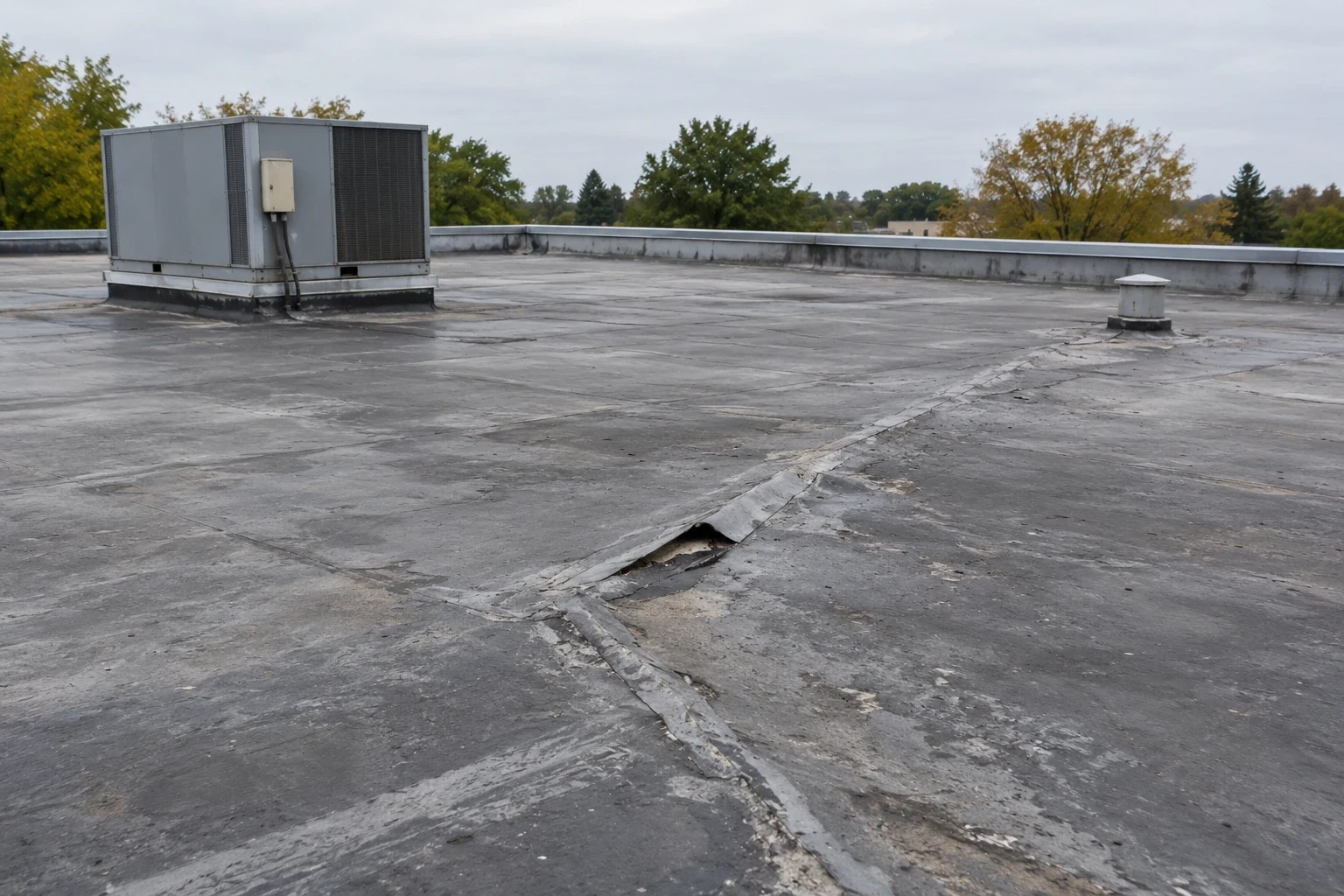
A roof seam on a Joliet, IL warehouse can separate where a forklift route below must remain in service. We first check the full lap, its termination and nearby penetrations, then set a repair boundary on sound membrane. A split weld, lifted splice tape or open metal panel joint needs a repair matched to the installed assembly; surface sealant across the seam may only hide the gap. The field review records whether insulation is wet, whether the deck holds the fastening, and what access will be needed for preparation. Brandon Road Dam normals record 14.9 days with highs of 90 degrees or more and over 125 freezing-minimum days. The seasonal range prompts a seam check; observed adhesion and weld condition set the repair limit. Those seasonal changes make edge movement and bond condition useful parts of a seam inspection. We can arrange a roof inspection to distinguish a local opening from repeat separation across several runs.
Trace the Open Lap
At a thermoplastic membrane seam, we check the weld width, consistency and edges, then probe locations where the two sheets do not appear fully joined. On EPDM, we inspect splice tape, primer preparation and the way water reaches the lap. Modified bitumen seams are checked for movement, adhesion and exposed reinforcement. On standing seam metal, we follow the joint across its length and inspect clips, fasteners and closures. These systems have different repair procedures, so we verify the roof type before materials are specified. We mark the beginning and end of the failed section, photograph the transitions and note any repair that has already been placed over the joint. A related membrane puncture can admit water nearby, but it remains a separate line if the seam itself still tests sound.
Water can travel below an open lap before appearing inside. We compare the roof location with the interior report, inspect insulation and check nearby drains, curbs and perimeter details. Where readings suggest moisture beyond the seam, selective confirmation helps define removal rather than extending the patch by guesswork.
Prepare a Compatible Tie-In
Once the assembly is identified, we remove loose or contaminated material to a firm edge and prepare the surfaces required by that system. A TPO or PVC seam may need cleaning and hot-air welding with a correctly sized patch; an EPDM splice requires compatible primer and tape. A metal joint may need a clip or fastener correction before any sealant or closure is installed. We check the patch perimeter after preparation and avoid trapping dirt, water or old loose material beneath the repair. The work order names the repair method, material transition and any area that needs a core or removal. For a TPO assembly, a compatible heat-welded seam detail can tie into the existing field.
A seam that has opened at a curb or wall may share a failure with its flashing termination. We inspect the vertical leg and counterflashing rather than stop at the membrane lap, and scope flashing repair separately when that edge has also failed. Joliet records annual snowfall and recurring below-freezing conditions, which make a water-holding repair line worth checking after cold weather. We confirm the area can drain and that the new patch will not create a small dam. If several repairs overlap, photos and a marked plan help the general contractor price each work line without mixing a membrane seam with metal or wall work.
Confirm What Sits Beneath the Seam
A seam can be open while the insulation below remains dry, or it can admit water along a longer path. We use readings to identify suspect areas and recommend a selective core when the layers need direct confirmation. The sample shows conditions at that location. We compare it with nearby readings and interior observations before setting an insulation removal limit. We remove separated layers to sound material, check the exposed deck and rebuild the assembly before sealing the tie-in. A wider wet area can change the repair from a surface patch to a section rebuild, so the scope marks what is confirmed and what still needs investigation.
The July 2023 weather event tracked through Minooka, Shorewood and Joliet, with damaging wind and hail also noted in the I-80 and Kankakee River Valley region. After a severe-weather call, we inspect the seam direction, edge condition and nearby roof penetrations instead of assuming the storm caused every opening. A separate wind damage review can document displaced metal or lifted membrane outside the seam boundary. The repair record preserves the difference between a confirmed event-related defect and a prior condition discovered during the same roof walk.
Set the Work Window
Seam repair needs a clean, dry surface and a safe interval for the selected material. We coordinate the roof access point, work zone, material delivery and any lift with the facility contact. On an operating warehouse, a staging area cannot block a loading door; in an office or clinic, an interior hold may be needed if insulation is opened above an occupied room. We agree on the opening limit and dry-in method before cutting back material. If procurement or weather prevents the permanent repair on the first visit, the temporary protection is photographed and assigned a return date or condition. That keeps an interim cover from being counted as a closed repair.
Wind and hail were documented in the Joliet region in July 2023, but the repair window still depends on current roof conditions and access. We confirm that no loose material remains, the drain route is clear and the completed lap has been checked. The closeout includes before-and-after photographs, the seam length addressed and any neighboring weakness left for follow-up. A condition report can carry those items into the owner's maintenance file. For work in the Joliet service area, the return visit is scheduled with the building contact so deliveries and rooftop service routes remain available.
Repair a Run or Revisit the Assembly
A localized seam failure can be repaired when the surrounding sheets remain bonded and the substrate supports a sound tie-in. Repeated openings along one run, widespread wet insulation, brittle material or deck movement may call for a broader scope. We compare the repair area with the remaining roof condition and explain whether monitoring or replacement planning should proceed. Joliet's code review may involve project-specific approvals, and some commercial documents need an Illinois-licensed professional. We flag those questions when a larger assembly change is under consideration rather than treating the patch as a design approval. For a planned repair program, commercial roof repair can address the confirmed openings while capital decisions are prepared.
The closeout separates work completed from areas that were inaccessible or left for another phase. It lists the seam location, moisture findings and next decision. The closeout gives the next estimator a record for the follow-up roof walk.
Commercial Roofing Questions
How do you tell whether a membrane seam is fully open?
We inspect and probe the lap, compare its edge condition with adjacent sheet and check the system-specific bond. Photos mark the failure length and transitions. If water has entered, readings or a selective core help determine whether insulation also needs removal.
Can sealant stop a split seam on a commercial roof?
A surface bead may cover the gap without restoring the membrane connection. We identify the installed system, prepare the sheets and use a compatible splice, weld or metal correction. The repair boundary reaches sound material and is checked after installation.
Does Joliet's freeze-thaw weather affect seam repairs?
The station normals include many freezing days and seasonal snowfall. We check drainage, moisture and surface preparation after cold periods, then choose a work window supported by the material requirements and actual field conditions.
Will a seam repair require shutting down the building?
Most planning begins with roof access and staging, but an opening above equipment or occupied space may need an interior hold. We coordinate the work zone with the facility contact and define any temporary protection before removing material.
When should repeated seam failures lead to a replacement review?
We look at the number and distribution of openings, wet insulation, substrate condition and the remaining membrane field. If repairs are crossing multiple runs or sections, the report compares focused work with a larger renewal scope and identifies any design questions.
Mark the Open Seam
Arrange a roof walk to test the lap, check moisture and identify the repair limit. We will document the system match, access needs and whether repeated openings call for a wider assembly review.
