Roof Damage Repair
ROOFING SERVICES
Commercial Roof Leak Repair
Emergency Commercial Roof Repair
Commercial Roof Repair
Commercial Roof Inspection
Commercial Roof Maintenance
Commercial Roof Coating
Commercial Roof Replacement
ROOF SYSTEMS
TPO Roofing
EPDM Roofing
PVC Roofing
Modified Bitumen Roofing
Standing Seam Metal Roofing
PROPERTY TYPES
Warehouse Roofing
Distribution Center Roofing
Office Building Roofing
School Roofing
INDUSTRIES
DAMAGE REPAIR
CAPABILITIES
MANUFACTURERS
SERVICE AREAS
Ponding Water Roof Repair in Joliet, IL
Roof Damage Repair
Correct ponding water on commercial roofs in Joliet by tracing drainage paths, checking wet insulation and defining the right repair area.
Ponding Water Roof Repair
A roof walk in Joliet, IL after rain starts at the water line, not at the first dark mark on the membrane. We check how far water extends, how quickly it reaches a drain, and whether the same area remains wet after surrounding surfaces have dried. Ponding can point to blocked drainage, a low deck area, compressed insulation, a deflected structural member or a detail that holds water at its edge. Each cause changes the repair. We measure the boundary, inspect nearby laps and penetrations, and look below the surface where moisture is suspected. The Brandon Road Dam station's annual precipitation normal is 38.03 inches. For this repair, the measured water boundary and the drain elevations, rather than the regional total, determine whether cleaning, slope work or an outlet correction belongs in scope. At the 119th Street and IL 59 commercial area in Plainfield, retail and service roofs can have different access limits from a distribution building near Weber Road in Romeoville. We can coordinate a commercial roof inspection to identify what is holding water before a patch or drainage correction is priced.
Standing Water and the Roof Surface
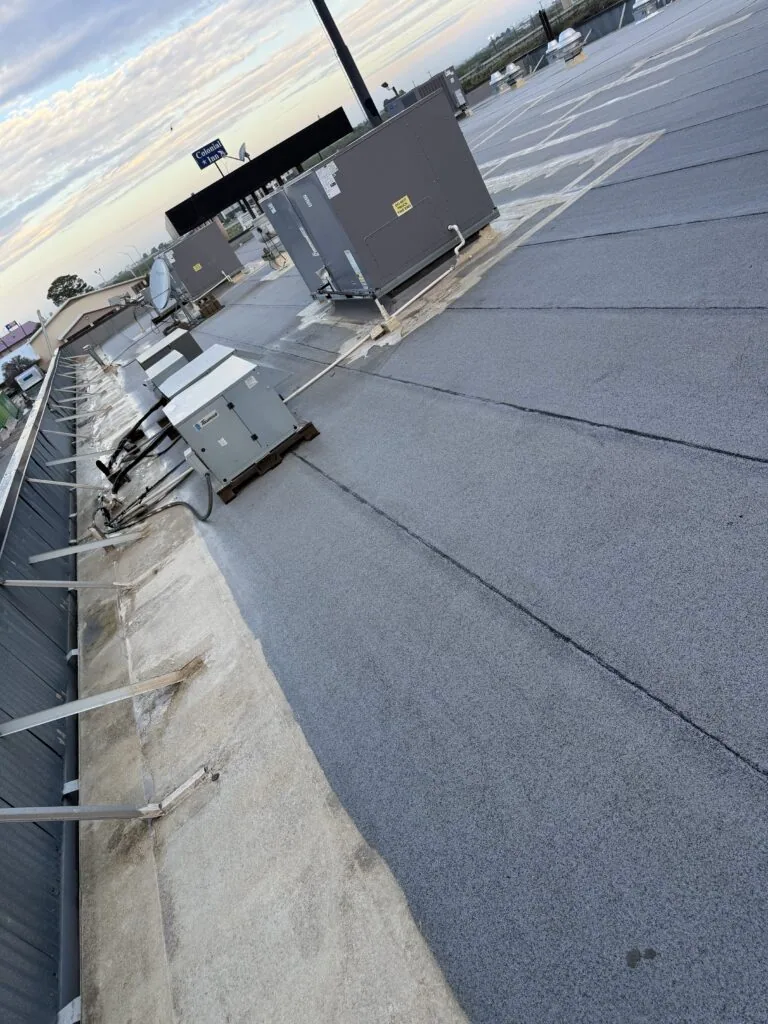
Water that remains after a rainfall can reveal a low point, but a single observation does not show whether the condition is structural, insulation-related or caused by a restricted outlet. We mark the ponding boundary and return after drainage has had time to work. The survey checks membrane seams, roof slope, drain bowls, scuppers, overflow paths and nearby mechanical curbs. On a metal roof, we follow panel profile and eave discharge. We compare measurable depth and spread with the field and interior reports. That gives the estimator a defined area to investigate instead of a general allowance for drainage.
The water line also shows where debris gathers and whether previous patches create small dams. We record loose material before removing any component. If the water crosses a lap or sits against a curb, we test that transition for separation and trapped moisture. A suspected opening at a drain can require flashing repair as well as cleaning or adjustment. Fixed-reference photos let a return visit compare water depth and extent.
Drainage Routes and Outlet Details
A working drain begins at the roof surface and continues through the bowl, leader and discharge point. We inspect the strainer, clamping ring, membrane termination and accessible piping condition, then check for a higher obstruction or a crushed segment that may be slowing flow. At a scupper, we look at the opening, counterflashing and path away from the wall. A roof can have a clean bowl and still retain water if slope has been lost around the outlet. Our drain and scupper service can clear or repair a defective outlet detail.
Joliet's normals show 125.8 days with freezing-or-colder minimums and 16.9 inches of annual snow. At a safe follow-up, compare the low-area water mark with the outlet and overflow elevations to see whether the repair changed the boundary. We inspect the roof once surfaces are safe and note where water is routed after it leaves the building. Plainfield identifies the 119th Street and IL 59 intersection as an existing commercial trade area; nearby roof work may need access coordinated around customers and deliveries. A Plainfield roof visit is still planned from the property entrance, outlet layout and safe staging area, not the corridor name alone.
Check the Insulation Before Closing the Surface
A membrane can hold water above insulation that is already wet, and the visible pond may not match the full moisture boundary. We use appropriate moisture tools to identify suspect areas, then recommend selective openings where a reading needs confirmation. A core shows the layers at that point. We compare samples with interior reports and the ponding outline. Wet insulation that cannot remain is removed to a stable edge, the deck is checked, and replacement materials restore the intended slope where the scope allows. If a broader area is affected, we define that limit before installing a new membrane layer.
Prior repairs can create several elevations that interrupt the drainage path. We document patches, overlay layers and curb heights, then test whether a local correction can restore positive flow without burying a weak seam. A repair to the field may use system-compatible material, while a low section may need tapered insulation or a larger assembly decision. When a split seam borders the wet area, a separate seam repair can be scoped with the drainage work. We keep these repair lines distinct so the owner can see which item controls water movement and which closes a membrane opening.
Repair the Cause, Not Just the Water Mark
A blocked strainer, damaged drain ring or loose scupper can often be addressed as a focused repair after the assembly is checked. A low spot caused by compressed insulation needs a different removal and rebuilding detail. A deflected deck needs design review before roofing work is prescribed. We explain the repair boundary, compatible materials, drain test and any interior protection before work begins. A membrane repair that uses modified bitumen details must account for the installed layers and nearby transitions. We confirm that the patch ties into sound material and leaves the outlet open.
For recurring ponding across several bays, we compare the cost and disruption of local work with a broader reroofing or recover. Joliet's code review requirements are project-specific, and some commercial documents may need an Illinois-licensed professional. Changes that affect insulation, roof height, drainage or structural loading may require more than a patch sketch. The scope can include a condition report with photos, moisture findings and open design questions. The record separates drainage, insulation and membrane work for the estimate.
Schedule the Work Around Water and Operations
Repair timing depends on dry conditions, the extent of wet material, access to the drain and what the building needs to keep operating. After rainfall, we allow the surface to drain and dry enough for the selected material. If an occupied space sits beneath the work, we coordinate protection before opening the roof. A restaurant, retail suite or warehouse may need a different access route and staging zone.
During repair, we protect the open assembly from new water, remove only the wet or failed material in the approved boundary, then rebuild the slope or outlet detail. We test drainage with an appropriate controlled flow where conditions permit and photograph the result. If temporary protection is needed while materials are procured, the report states what is covered and what must be inspected on return. A maintenance visit can later check the same low area, strainer and overflow after seasonal debris or freezing conditions. The follow-up record should show whether the repair changed the ponding boundary or whether a larger slope decision remains.
Commercial Roofing Questions
How long can water remain on a Joliet commercial roof?
We measure the ponding area and check drainage after rain, then compare it with the roof slope and outlet condition. The repair decision depends on why the water remains, whether insulation is wet and whether the roof detail is compromised. A fixed time rule does not diagnose those conditions.
Will cleaning the drain solve ponding water?
It can restore flow when debris or a blocked strainer is the cause. We also check the bowl, piping, membrane termination and surrounding slope. If the roof surface has settled or the insulation is compressed, cleaning alone may leave the low area in place.
Does standing water mean the roof needs replacement?
Not by itself. We inspect the membrane, moisture boundary, deck and outlet, then compare a focused correction with broader renewal. The scope separates confirmed repairs from any structural or code review needed before changing the assembly.
How do you confirm wet insulation beneath a pond?
Moisture readings identify areas for closer review, and selective cores confirm the layers at chosen points. We map those locations against the ponding outline and interior reports. Removal follows the confirmed wet boundary, not the visible water mark alone.
Can drainage repairs be done while a business stays open?
We coordinate roof access, interior protection, deliveries and staging with the property contact. A repair may be divided into dry-in, removal, slope correction and membrane closure so the building can plan around each open-roof period.
Trace the Ponding Area
Arrange a roof review to map the water boundary, inspect outlets and check for wet insulation. We will define whether the next step is a drain repair, local rebuild or a larger assembly review.
