
Service Areas
ROOFING SERVICES
Commercial Roof Leak Repair
Emergency Commercial Roof Repair
Commercial Roof Repair
Commercial Roof Inspection
Commercial Roof Maintenance
Commercial Roof Coating
Commercial Roof Replacement
ROOF SYSTEMS
TPO Roofing
EPDM Roofing
PVC Roofing
Modified Bitumen Roofing
Standing Seam Metal Roofing
PROPERTY TYPES
Warehouse Roofing
Distribution Center Roofing
Office Building Roofing
School Roofing
INDUSTRIES
DAMAGE REPAIR
CAPABILITIES
MANUFACTURERS
SERVICE AREAS
Commercial Roofing in Route 171 Corridor, Lockport, IL
Service Areas
Plan commercial roof work in Lockport’s Route 171 corridor with a field review of access, drainage, repair limits, and construction timing for each property.
Commercial Roofing in Route 171 Corridor, Lockport
Site staging follows two maps: the roof plan and the route a delivery truck can use. Lockport’s Route 171 corridor study spans New Avenue to Interstate 355 and includes land west toward the Metra station at 135th Street. That boundary describes a planning area, not one property or roof condition. We verify each authorized building, current entrance, staging zone, and roof assembly before mobilization. For roof work, a Lockport building and a property in the Lockport downtown State Street commercial corridor each need current roof and access records before mobilization.
Lockport has completed opportunity analysis and a preferred strategy for the Route 171 study, while the final master plan remains unfinished. Those planning steps do not establish current construction or access at a particular property. The site contact confirms current conditions, work hours, deliveries, and approvals. Our roof inspection records seams, drains, penetrations, edge details, and any test needed before a repair boundary is set.
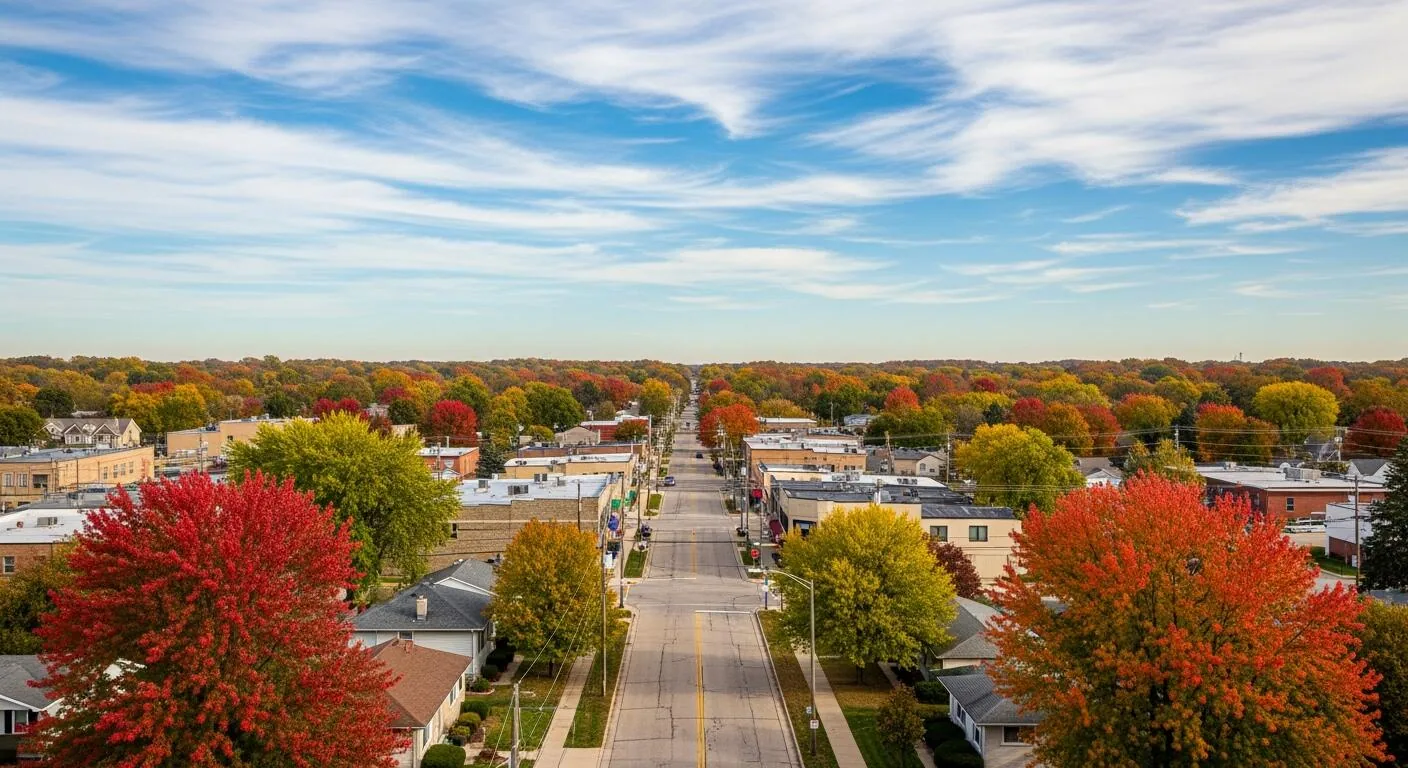
Access from New Avenue to I-355
New Avenue, Route 171, Interstate 355, and the area west toward the Metra station at 135th Street locate the corridor study. They do not establish a current truck route or a construction restriction at an individual property. Before work, the general contractor checks which entrance is authorized, where materials can be unloaded, and whether a lift or crane can reach the roof without crossing an active work zone. We mark those limits on the site plan and set a staging zone that can be maintained through the shift.
Roof work may also share space with façade, paving, utility, or equipment trades. The superintendent identifies who releases each area and when a roof opening can be closed. A crane pick or mechanical replacement changes the order of work and may affect the amount of membrane that can be opened safely. An occupied-building sequence defines separate work areas, interior protection, and daily dry-in points when the property remains in use. The crew receives the same handoff plan as the project lead.
Leak Paths and Roof Details
We begin near the reported leak and follow the membrane to seams, walls, curbs, pipes, and drains. A ceiling stain can appear away from the entry point, so the interior location is compared with the roof plan rather than treated as the repair limit. Photographs identify each observed condition. If moisture may be concealed, we note where an opening or additional survey would answer the question before pricing removal.
Outlet details get separate notes. We distinguish a clogged strainer from a split drain flange or a low roof plane, then mark ponding and the route toward the edge. A drain and scupper repair addresses a defect that the walk confirms. An infrared moisture survey can help select a test area if concealed water remains a question. The report names the roof zone and keeps untested areas outside the confirmed quantity.
Freeze, Snow, and Heat Windows
Joliet Brandon Road Dam station normals record 16.9 inches of annual snowfall, 125.8 days with freezing minimums and 14.9 days with highs of at least 90 degrees. Those seasonal ranges frame nearby work planning, while the roof surface and selected product limits set the daily opening.
A cold-weather freeze can put stress on a seam that retains water; high heat can also affect the way some adhesives are handled. We size each opening to reach a protected stopping point before the shift ends, following the selected product instructions. If wind or hail leads to a review, we photograph edge movement, punctures and flashing changes that appear at the property. A wind-damage scope distinguishes temporary protection from permanent repair and keeps the quantities tied to the building.
Repair Boundary and System Choice
A localized repair can fit when the defect is isolated and the surrounding material remains sound. When moisture extends into adjacent insulation or failures recur at several transitions, the owner may need to compare a larger repair with replacement. We mark each option on the roof plan and identify the edge, flashing, and drain work included. A recover is considered only after attachment, substrate, added load, and perimeter height are checked. Coating needs a compatible, dry surface and does not remove wet insulation.
The existing deck, slope, membrane, penetrations, and owner documents guide the assembly. A TPO system can be evaluated with other options after the field review confirms what must be retained or removed. The proposal separates tear-off, insulation, sheet metal, disposal, protection, and equipment work. Those items affect schedule and cost. If the opened area reveals a different deck or hidden moisture, we photograph the finding and request approval before adding scope beyond the agreed boundary.
Planning Status and Property Decisions
Lockport has completed opportunity analysis and a preferred strategy for the corridor, while the final master plan remains unfinished. Those milestones do not establish parcel ownership, current construction, building occupancy or a roof specification. The owner provides approved drawings and identifies the property under contract. We keep the roof report specific to that site, even when a portfolio includes multiple addresses or projects along the same roadway.
That separation matters when schedules change. A project file should carry its own access notes, photographs, approval history, and repair quantities. A condition report can preserve observations for later budgeting, while a replacement scope can be divided by building or roof area. Neither relies on a corridor plan to answer a field question. The decision comes from measured conditions, verified documents, and the work sequence approved by the property team.
Trade Handoffs and Closeout
Before membrane work, the superintendent confirms who moves rooftop equipment and who accepts each curb or penetration for flashing. Temporary covers need an owner and a removal point; permanent details need a responsible trade and a completion check. We list those handoffs so the roofing crew does not close an area before the equipment work is ready. Procurement follows the selected membrane, insulation, attachment, edge metal, and transitions, with open selections resolved before tear-off.
At closeout, the owner receives completed roof areas, installed materials, tie-in locations, photographs, outstanding corrections, and maintenance observations. Any changed condition includes its location and approval. That file gives the next project lead a clear starting point, whether the work is a repair or a capital replacement. Contact us to set a roof walk with the site contact and superintendent. We will verify the access route, water path, assembly, and repair limit, then identify what the field team needs before mobilization.
Commercial Roofing Questions
Does the Route 171 study confirm road access for a roofing crew?
No. The study defines a planning area and project phases. The property contact and superintendent confirm the current entrance, truck route, and staging permission for the scheduled work date.
How do you keep a roof opening protected at the end of a shift?
We set the daily removal limit around the dry-in point and product requirements. The crew records the temporary protection and confirms the area is secure before leaving the roof.
Can an interior leak location set the patch size?
Not by itself. We compare the ceiling report with seams, drains, penetrations, and transitions, then identify testing or an opening if the water path remains uncertain.
What if corridor work changes the planned delivery route?
The general contractor checks current conditions with the site contact and adjusts the approved route or delivery time. We update staging and equipment placement before material is dispatched.
When should a repair become a replacement comparison?
Repeated failures, wider moisture, failing perimeter details, and a deteriorated assembly may justify comparing larger alternatives. We document the observed condition and separate it from concealed assumptions.
Set a Route 171 Corridor Roof Walk
Arrange a field review with the property contact and project lead. We will document access, drainage, roof condition, and trade handoffs before the scope is priced.
