Roof Systems
ROOFING SERVICES
Commercial Roof Leak Repair
Emergency Commercial Roof Repair
Commercial Roof Repair
Commercial Roof Inspection
Commercial Roof Maintenance
Commercial Roof Coating
Commercial Roof Replacement
ROOF SYSTEMS
TPO Roofing
EPDM Roofing
PVC Roofing
Modified Bitumen Roofing
Standing Seam Metal Roofing
PROPERTY TYPES
Warehouse Roofing
Distribution Center Roofing
Office Building Roofing
School Roofing
INDUSTRIES
DAMAGE REPAIR
CAPABILITIES
MANUFACTURERS
SERVICE AREAS
Metal Roof Retrofit in Joliet, IL
Roof Systems
Restore exposed-fastener metal roofs in Joliet with fastener, panel, seam and coating repairs planned around drainage, access and site operations.
Metal Roof Retrofit
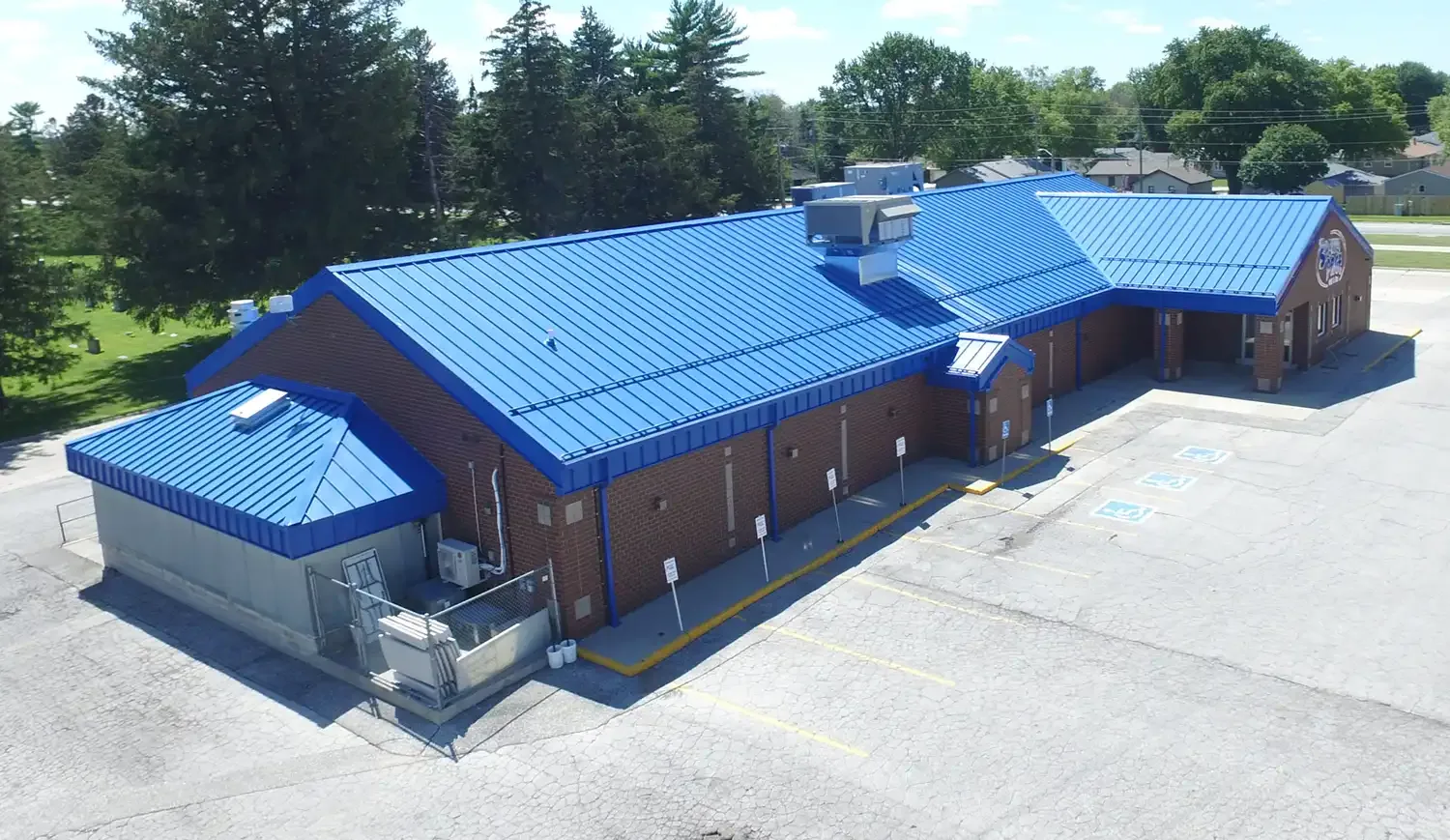
Fasteners loosened along a roof run can turn a small repair into a repeating water path. Exposed-fastener metal roofs move through seasonal temperature changes, and washers, panel laps and penetrations need to remain secure. In Joliet, property operations affect access, but each building's panel layout, rooftop equipment and loading routes determine staging. We inspect the fastener pattern, panel condition, seams, ridge, eaves, valleys and drainage before recommending a restoration boundary. If the metal is sound enough to retain, a retrofit can address fasteners, laps, flashing and protective coating without removing every panel. We confirm corrosion and attachment before setting that scope. For a new panel system, standing seam roofing is a different assembly with concealed clips. An inspection records the actual roof condition and identifies which details can be restored. In Joliet, the lift and work sequence should fit the building's operation as well as the roof.
Fasteners, Laps, and Corrosion
Exposed fasteners can back out as panels expand and contract, leaving a washer that no longer seals firmly against the metal. We check representative fasteners for movement, corrosion, missing washers and enlarged holes. Replacing hardware without checking the panel around each opening can leave a weak connection in place. Panel side laps, end laps and ridge caps need a continuous path that sheds water over the next surface. We inspect sealant for separation, identify rust or coating loss, and note where water can travel underneath a lap. The repair plan identifies whether screws can be replaced, holes need a designed repair, or a panel section must come out.
Penetrations are another common failure point. Pipe boots, curbs, conduit, antenna supports and HVAC openings each interrupt the panel's drainage and movement. A boot must fit the pipe and remain secure as the roof moves. Curbs need flashing at corners and a clear connection to the panel ribs. We review abandoned penetrations and determine whether they can be removed and closed. At valleys, eaves and gutters, debris or corrosion can slow drainage and push water back toward a seam. A edge and gutter assessment can include those transitions with the panel repair. The scope records which areas need cleaning, new flashing or metal replacement.
Can the Existing Panels Stay?
Retrofit feasibility depends on panel thickness and condition, attachment, framing, corrosion, roof geometry and the number of prior repairs. We look for perforation, widespread rust, oil canning, loose clips or fasteners, damaged ribs and areas where the substrate has shifted. Where a roof has been coated before, we test adhesion and identify peeling, chalking, blistering or thin spots. A coating cannot restore a structurally weak panel or correct active water trapped below the assembly. We define the repair work needed first, then decide whether a coating can protect the prepared surface. If the panel field or framing is compromised, replacement may be the clearer option.
The local baseline lists 16.9 inches of yearly snow and 125.8 days with freezing-range minimums. A July 2023 weather record places a tornado route through Minooka, Shorewood and Joliet; separate hail and wind reports reference the I-80 and Kankakee River Valley area. Neither record diagnoses this exposed-fastener roof. We inspect washer seating, panel dimples, ridge and eave closures, then compare observed changes with any pre-event photos available. The repair boundary ends at the last affected panel or detail supported by the survey; intact runs remain outside the work quantity. Related project details: wind damage review
Retrofit Scope and Coating Sequence
A restoration usually starts with tightening or replacing fasteners, repairing panel laps, replacing damaged flashing and closing abandoned penetrations. We remove loose coating and corrosion, prepare the metal and apply the specified primer or treatment to the required areas. Seams and fastener heads may need reinforcing fabric or additional coating, depending on the chosen system. The roof plan marks each repair zone and describes the preparation standard before the coating work begins. A silicone coating system can be considered where the prepared roof and project requirements support it. Coating selection follows slope, water exposure, substrate compatibility and expected maintenance, not color preference alone.
Cost and timing depend on panel replacement, fastener count, corrosion extent, surface preparation, penetrations, access, weather window and coating cure requirements. A crew needs a dry, prepared surface and enough time to complete each area before rain. We schedule material staging and roof access with the GC, then set daily boundaries for repairs and coating. If testing shows a weak panel or concealed condition, we pause at that zone and confirm the change before coating covers it. A roof restoration scope separates metal repairs from coating preparation and application. If replacement is required, the proposal identifies demolition, new panels, insulation and perimeter details as separate work items.
Keep Freight and Roof Work Moving
Joliet has five Class I railroad operating tracks and ten I-80/I-55 interchanges, while the greater Elwood/Joliet area supports intermodal freight. Those regional routes do not set a particular site's delivery path, so we confirm truck access, lift location and material staging with the GC. On an active industrial property, the plan should preserve dock access and emergency routes. We identify where roof equipment or a crane can be placed, and coordinate any temporary closure with the facility schedule. If crews need access over a production or warehouse area, the site contact marks interior protection zones before panels are opened.
Trade coordination protects the completed retrofit. HVAC and electrical teams identify service work before new flashing is installed, and the handoff assigns responsibility for restoring each disturbed detail. At each daily stop, the crew secures the roof, leaves drainage open and records which work is complete. Closeout photos show fastener replacement, lap repairs, flashing, surface preparation and coating coverage. An ongoing roof maintenance visit can revisit those areas and note early changes. We also serve Elwood, where the property access plan can be reviewed with the operations team before a retrofit is scheduled.
Commercial Roofing Questions
How do you know if an exposed-fastener roof can be restored?
We inspect the panels, fasteners, washers, seams, penetrations, framing and any previous coating. Corrosion, perforation or loose attachment may require metal replacement before restoration can be considered. The scope states the repairs needed and the roof areas that are suitable for coating.
Can you coat over rust on a metal roof?
Loose corrosion has to be removed and the surface prepared according to the selected system. A coating does not rebuild a perforated panel or stabilize a loose fastener. We map corroded zones, test the surrounding metal and identify panel replacement where the substrate is no longer serviceable.
Will replacing exposed fasteners stop all roof leaks?
New fasteners can correct loose attachment at suitable holes, but leaks can also come from side laps, curbs, valleys or failed flashing. We inspect the whole water path and separate fastener work from other repairs. The completed scope identifies each detail addressed.
How long does a metal roof coating need before rain?
The selected product instructions, surface condition, temperature and humidity govern cure and recoat timing. We plan work around those conditions and close each prepared area in sequence. The scope identifies the forecast window and protection method if weather changes before application is complete.
What changes the price of a metal roof retrofit?
Fastener quantity, panel damage, rust removal, coating preparation, flashing, penetration count, roof access and staging all affect the work. We inspect these items before setting the repair boundary. If opening a detail shows concealed damage, the GC reviews that change before the area is closed.
Check the Metal Retrofit Boundary
Arrange a roof walk with Commercial Roofers Joliet. We will inspect fasteners, panel laps, corrosion and penetrations, then define a restoration scope and a practical delivery sequence.
