Roof Damage Repair
ROOFING SERVICES
Commercial Roof Leak Repair
Emergency Commercial Roof Repair
Commercial Roof Repair
Commercial Roof Inspection
Commercial Roof Maintenance
Commercial Roof Coating
Commercial Roof Replacement
ROOF SYSTEMS
TPO Roofing
EPDM Roofing
PVC Roofing
Modified Bitumen Roofing
Standing Seam Metal Roofing
PROPERTY TYPES
Warehouse Roofing
Distribution Center Roofing
Office Building Roofing
School Roofing
INDUSTRIES
DAMAGE REPAIR
CAPABILITIES
MANUFACTURERS
SERVICE AREAS
Commercial Fire Damage Roof Repair in Joliet, IL
Roof Damage Repair
Assess fire-affected commercial roofing in Joliet with a safe inspection, documented membrane and deck findings, and a defined repair or replacement boundary.
Commercial Fire Damage Roof Repair
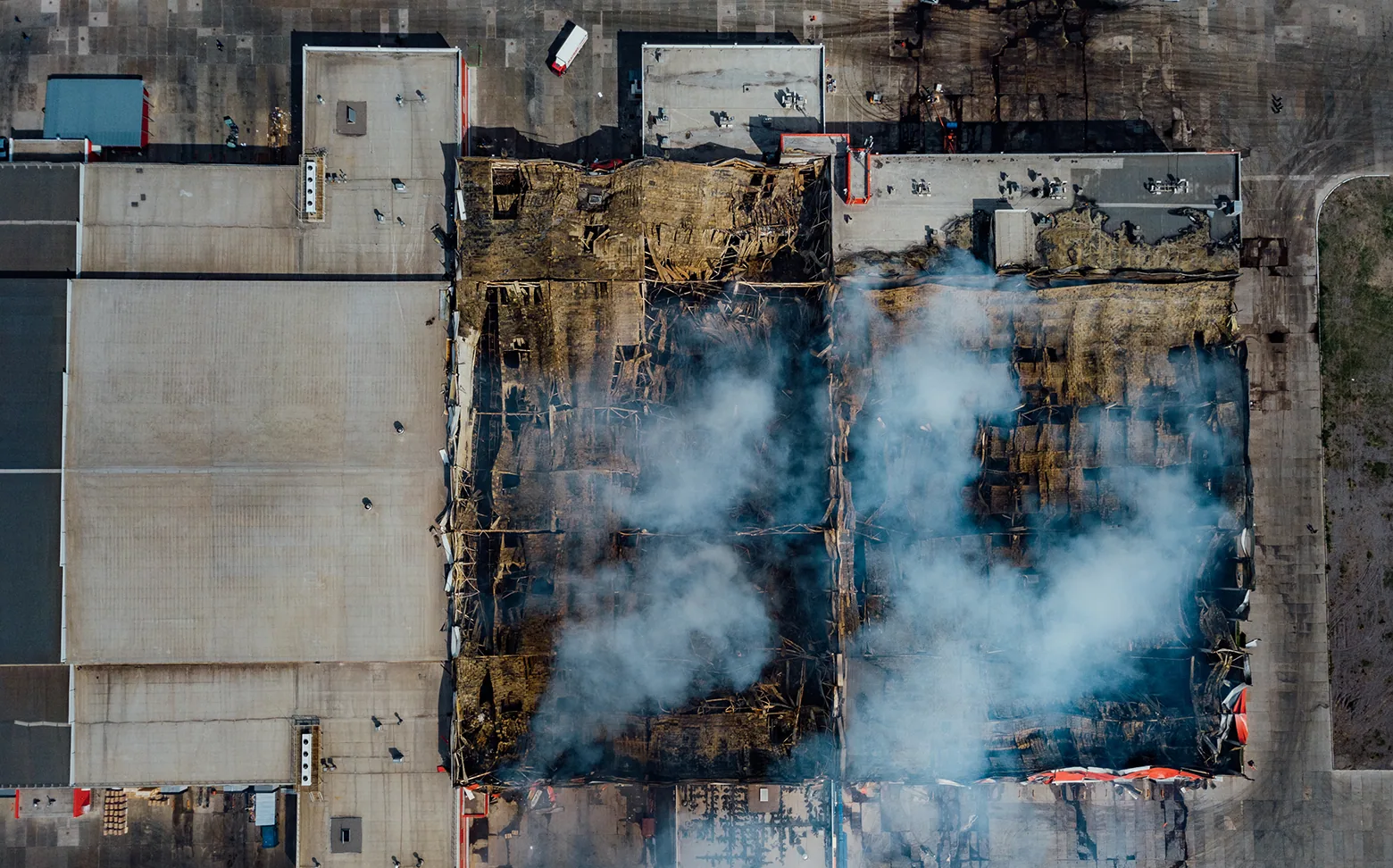
A fire can leave a commercial roof with heat damage, smoke residue, displaced equipment or an opening created during suppression. The visible mark may not show how far the assembly has changed. In Joliet, we coordinate with the facility contact and fire-response team to confirm when the roof is safe to enter, then document the affected zone before material is moved. We separate immediate protection from permanent repair, identify the assembly and record where the deck or edges need review. At operating facilities, access and stock protection shape the sequence. For a documented Joliet service-area visit, we coordinate with the actual property contact. A commercial roof repair assessment gives the owner a clear first scope without assuming that every smoke mark requires replacement.
Confirm the Roof Is Released for Inspection
We do not enter a roof area until the responsible authority and site contact have cleared access. Fire response can affect structural stability, electrical systems, rooftop units, smoke vents and the route from the hatch or ladder. The facility team identifies restricted zones and operating controls; we record the approved path and staging point before opening a roof layer. If release is pending, we document from an approved position and schedule a return.
Fire damage is not a single condition. Direct flame can soften or char materials; radiant heat can change a membrane away from the burn; suppression water can enter through openings or drains; and debris removal can expose new edges. We photograph each condition without making an unsupported cause or structural conclusion. An engineer, electrician or investigator handles questions outside roofing; the report marks those handoffs.
Map Heat, Smoke, Water and Openings
After access is approved, we divide the roof into identifiable zones and record the condition of membrane, seams, flashings, insulation, cover board, deck and edge metal. Heat can change surface flexibility or bond strength, while a cut or puncture from suppression access may create a direct water path. Smoke residue and soot are documented separately from membrane failure. We inspect around rooftop units, curbs, drains and penetrations where water or debris may collect. Joliet receives seasonal freeze and heat exposure, so a fire-related opening should be protected against the current weather while the full assembly review is scheduled.
We compare interior reports with roof-side findings, but do not use a ceiling stain alone to set exterior limits. Moisture readings can help target selective cores; a core confirms the layers only at its sample point. The record lists tested zones, inaccessible areas and remaining uncertainty. If severe weather is also part of the call, keep that scope separate from the fire inspection. A July 2023 NWS Chicago report documents a tornado track touching Minooka, Shorewood and Joliet, plus damaging hail and wind in the wider I-80/Kankakee River Valley. That event does not establish the cause of a fire at a particular property; a wind-damage inspection can document storm-related findings separately.
Protect Open Areas Without Hiding Evidence
When the building is exposed, temporary dry-in can reduce additional water entry while the permanent scope is being developed. We define the protection boundary, material, attachment and return conditions. The facility contact identifies any interior area or stock needing protection. If water is near electrical gear, the building's electrical lead controls isolation and restart decisions. Temporary measures are documented with photographs so the next inspection can distinguish them from original roof layers or fire residue.
Temporary cover does not replace the assembly or justify sealing wet, unstable material. If weather, access or ongoing response activity prevents a permanent repair, the report identifies that limitation and the next decision required. The sequence may include authorized debris removal, substrate inspection, insulation replacement, deck work and a membrane tie-in. A emergency roof response can address immediate exposure while the owner and project team review the complete repair boundary.
Choose a Repair or Replacement Boundary
When wind or hail is also reported, keep that scope separate and use a hail-damage roof review as appropriate. A localized repair can make sense when the membrane outside the affected zone remains sound, attached and compatible with a tested patch. We specify the transition, preparation, flashing and edge detail. Where heat has altered a broader area, repeated patches would create uncertain interfaces, or insulation is wet across connected bays, a larger removal may be more practical. The estimate separates roofing, deck, electrical and structural work by trade. Joliet enforces adopted building codes with local amendments and may require project documents for commercial work; the owner should confirm applicable review with the building department and design professional before expanding an assembly change.
The decision also considers roof access, drainage, curb heights, attachment and how the repair will be inspected after closeout. We label confirmed findings and provisional limits. A roof condition report can carry zone photographs, core results, repair quantities and unresolved questions into the property file. For properties in nearby commercial areas such as the Plainfield 119th Street/IL 59 trade area, the same evidence-led process applies; proximity does not substitute for an inspection of the actual roof.
Plan Work Around Facility Operations
Fire-affected buildings may have limited access while cleanup, equipment checks or production recovery continues. We coordinate the work window, deliveries, lift, protected routes and change notices with the site contact. Joliet's role as a logistics and manufacturing center makes sequencing important at many facilities, but we confirm each building's own operating constraints rather than assume an open dock or available roof hatch. The work plan names the contact who can approve access and the point where materials may be staged.
Roofing crews keep debris, fasteners and removed membrane contained, and they avoid moving through restricted areas. If smoke control or ventilation equipment must stay in service, the facility's responsible trade determines how it operates during the repair. We can split work into zones when a single large closure would interfere with recovery, provided each day ends with a watertight boundary and recorded condition. We report scope changes before entering another zone. Nearby Minooka and Plainfield are distinct communities in the service region; route planning is coordinated by the actual property address and approved access, not by a named district alone.
Document the Restored Roof and Remaining Decisions
Closeout photographs record the substrate, materials, seams and transitions. We list repaired zones, replaced insulation or cover board, any deck condition referred to another trade, and sections that could not be reached. The facility contact receives care instructions for temporary protection and the date or condition that should trigger another inspection. If the roof includes a manufacturer system, we identify the repair materials and discuss any documentation needed for warranty review without promising coverage that has not been confirmed.
Once the roof is stable, the owner can compare completed repair with deferred work and planned capital scope. We can organize the findings by roof zone and distinguish fire-related work from pre-existing defects or unrelated storm observations. The handoff lists inspected and restored areas, open questions and the next decision-maker. For a Joliet-area visit, including a facility near the Plainfield trade area or Minooka, the same closeout standard applies to the actual assembly and approved site conditions.
Commercial Roofing Questions
Can the roof be repaired before fire cleanup is complete?
Only after the responsible authority and site contact approve safe roof access. If entry remains restricted, we can document the limitation and coordinate temporary protection or a later inspection.
Does smoke residue mean the membrane must be replaced?
Not by itself. We record residue separately from changes to membrane, seams, insulation or deck, then recommend testing or removal only where the observed condition supports it.
How do you determine the fire-related repair area?
We map roof zones, inspect assembly layers and compare roof-side findings with interior reports. Readings and selective cores can help confirm moisture, while each sample represents only its location.
Can you work while the facility is reopening?
We can plan access, staging and repair zones with the site contact. Work proceeds only in areas approved for entry, and the daily sequence must leave a safe, weather-protected boundary.
Will insurance pay for the roof repair?
Coverage depends on the policy and claim decision. We provide photographs, scope details and material records for the owner or adjuster to review, without determining coverage.
Document the Roof Before Permanent Repairs
Arrange an approved inspection to map roof damage, protect any open area and define repair limits. We will report confirmed conditions, access restrictions and any trade or design review still needed.
