Property Types We Roof
ROOFING SERVICES
Commercial Roof Leak Repair
Emergency Commercial Roof Repair
Commercial Roof Repair
Commercial Roof Inspection
Commercial Roof Maintenance
Commercial Roof Coating
Commercial Roof Replacement
ROOF SYSTEMS
TPO Roofing
EPDM Roofing
PVC Roofing
Modified Bitumen Roofing
Standing Seam Metal Roofing
PROPERTY TYPES
Warehouse Roofing
Distribution Center Roofing
Office Building Roofing
School Roofing
INDUSTRIES
DAMAGE REPAIR
CAPABILITIES
MANUFACTURERS
SERVICE AREAS
Restaurant Roofing in Joliet, IL
Property Types We Roof
Schedule restaurant roof repairs and reroofing in Joliet, IL. We coordinate exhaust, rooftop units, drains and guest access around the service window.
Restaurant Roofing
Kitchen service can continue while roofing work moves overhead, but exhaust, deliveries and guest entrances need a defined work window. In Joliet, IL, we map the kitchen hoods, make-up air units, grease discharge, drains and membrane transitions before setting a repair boundary. Joliet's local economy includes retail activity, while New Lenox supports restaurants as a local business sector. Those market facts do not tell us how a specific restaurant is built. We inspect the actual roof and coordinate its access with the operator. A commercial roof inspection identifies which flashing and membrane details need work before a kitchen or dining area is affected.
Kitchen Exhaust and Rooftop Equipment
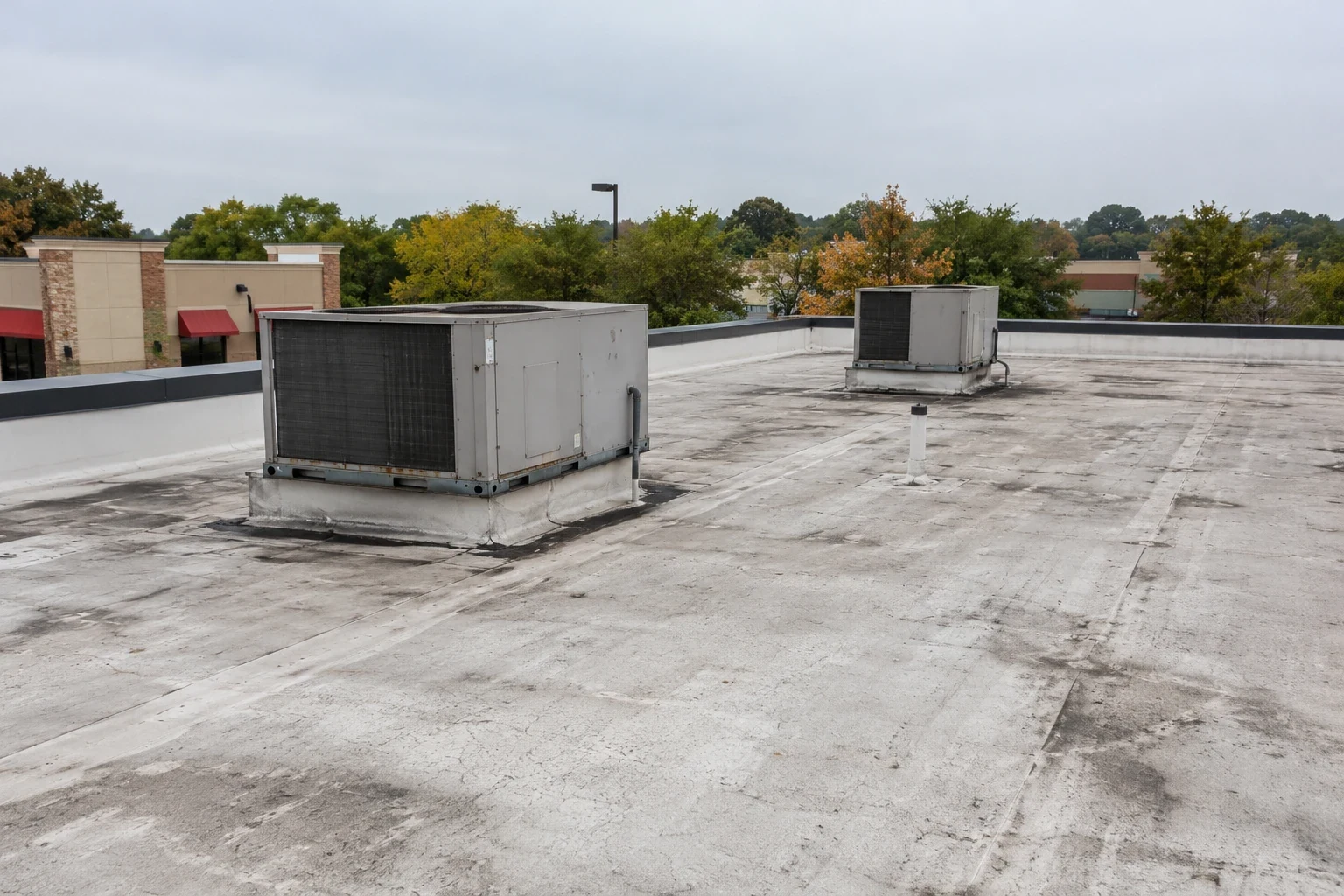
Restaurant roofs concentrate exhaust curbs, fan bases, grease ducts, make-up air equipment, plumbing vents and electrical supports. Grease can collect near an exhaust discharge, while vibration can loosen fasteners or affect a curb connection. We inspect the base flashing, membrane termination and any metal hood or curb that meets the roof. If a fan must be removed, the mechanical contractor and roofer need one agreed lift and return sequence. A temporary cover, weather closure and final test should be assigned before the unit comes off the roof.
For an occupied kitchen, the schedule must identify whether the exhaust or make-up air system will stop and for how long. We coordinate roof openings with the restaurant manager and mechanical contractor, and set a dry-in point that keeps weather out if a shift ends early. A roof phase for an occupied building can separate the exhaust zone from the rest of the field when the system layout allows it. The sequence also identifies noisy demolition, odor-sensitive work and service access for other trades.
Joliet's commercial routes include the 119th Street and IL 59 trade area in nearby Plainfield and the US 30/I-55 commercial node. Those corridors make delivery routing a real question for area properties, but the restaurant's own dock and parking control the lift plan. We confirm where materials can be set down without crossing a guest entrance or delivery path.
Grease, Water Entry and Drain Condition
A stain near the hood may come from an open flashing detail, a seam, a drain backup or condensation from kitchen equipment. We inspect the membrane above the affected room and trace the water path through curbs, pipe supports, wall transitions and low areas. A core sample can confirm whether insulation is wet and whether the deck needs repair. The repair boundary follows the actual wet material and a sound tie-in. Grease at the surface also matters because it can affect cleaning and adhesion for a compatible repair.
Joliet averages 16.9 inches of snowfall each year. That climate context cannot reveal a blocked restaurant-roof strainer or poor slope, so we inspect the actual bowl and overflow path. Meltwater and freeze-thaw expose slow drains, loose strainers and flashing splits around low curbs. We check the drain bowl and overflow path, then determine whether standing water is caused by debris or a roof plane that needs correction. A drain and scupper repair may include membrane work around the outlet instead of a cleaning visit alone. Where water reaches a ceiling, temporary protection can be installed while the permanent detail is prepared.
We photograph exhaust and drain conditions before and after work. The record gives the operator a way to distinguish a roof repair from a later fan, duct or plumbing change. New equipment supports and service paths are marked so another trade does not fasten through a completed membrane without a detail.
Repair, Coating or Replacement
A focused repair fits when failure is local and the surrounding membrane, insulation and deck remain serviceable. We remove loose or contaminated material, prepare the surface and rebuild flashing or seam with a compatible system. Repeated failures, wet insulation or movement at several curbs can support replacement. The work plan identifies which equipment areas stay active and which can be isolated. We record the defect, work performed and any condition requiring follow-up.
A recover is possible only when the existing assembly is dry, attached and able to support another layer. Added height at exhaust curbs, edges, drains and equipment bases must be resolved before material is ordered. A recover review checks those transitions and lists tear-off where they do not work. For replacement, we define membrane, insulation, cover board, attachment, flashing, perimeter metal, drains and walk pads. Cost depends on tear-off, deck repair, equipment lifts, disposal, access, after-hours work and penetrations.
Joliet's locally adopted building requirements and the Illinois Energy Conservation Code may affect design and submittals. A PVC roof assembly may fit when the design and field conditions support it. The scope records compatibility, surface preparation and trade coordination before procurement.
Storm Review and Temporary Protection
A tornado crossed Minooka, Shorewood and Joliet in July 2023. Its regional reports also note hail and wind around the Kankakee River Valley and I-80. After a storm, we inspect the restaurant roof for punctures, lifted flashing, displaced metal, fan damage and debris. The findings are tied to roof zones with photos and a marked plan. Temporary water control can protect food-preparation areas while permanent repairs are arranged. A reported regional event is context; inspection at the building determines what the scope includes.
Hot weather changes the safe handling window for some roof products, and winter freeze-thaw can expose weak transitions. We confirm method and forecast before opening a section, keep the daily dry-in point secure and coordinate any fan interruption with the operator. A storm damage review can separate immediate leak response from the permanent repair and closeout work.
Operator Handoff and Service Record
Closeout should show where the crew opened the roof, how the exhaust and drain details were rebuilt, and which equipment trades returned. We provide photos of concealed layers, completed flashing, membrane seams and any open item. The manager can keep that record with equipment service notes and use it when the next fan or duct change is planned. A maintenance visit can check terminations, clear drains and note new supports before they become leak paths.
For a larger food retailer, refrigeration piping may add another layer of roof coordination. Compare grocery roof planning for cooler lines and condensers, or hotel roof work where guest access and building operations set a different sequence. Commercial Roofers Joliet can walk the roof with the owner and GC, then set a service window through Joliet.
Commercial Roofing Questions
Can a roof crew work without shutting down the kitchen?
That depends on which exhaust or air systems cross the work zone and whether the detail can be isolated. We inventory the equipment with the operator and mechanical contractor, then set any shutdown window before membrane is opened. Where the system remains active, the crew protects it and works to the approved access plan.
Why does the ceiling leak appear beside the exhaust hood?
Water can enter at the curb or travel along a seam, support or deck before it reaches the interior. We inspect the roof above the room, check the drain path and use test openings when the insulation condition is uncertain. The documented boundary follows wet material and a sound transition.
Does grease require replacing the whole restaurant roof?
No. We identify the affected surface, check adhesion and membrane condition, and determine whether cleaning and a compatible detail repair are sufficient. Broader replacement is considered when the substrate, attachment or wet insulation shows a larger failure. The roof walk separates those conditions by area.
How do you plan a fan replacement during reroofing?
We coordinate the lift, temporary opening protection, curb work and final flashing with the mechanical contractor. The plan assigns who disconnects, returns and tests the fan. A date for that handoff keeps the roof section from staying open while the equipment work is pending.
What should restaurant roof closeout include?
Keep a marked roof plan, photos of flashing and drains, material submittals and a list of equipment handoffs. The record should identify open items and who owns them. That helps the next service contractor see the installed roof detail before changing a fan, duct or support.
Set the Kitchen and Roof Work Window
Arrange a roof walk with Commercial Roofers Joliet. We will map exhaust, drains, guest access and equipment handoffs so the operator can confirm the work zone before crews mobilize.
