
Roofing Manufacturers
ROOFING SERVICES
Commercial Roof Leak Repair
Emergency Commercial Roof Repair
Commercial Roof Repair
Commercial Roof Inspection
Commercial Roof Maintenance
Commercial Roof Coating
Commercial Roof Replacement
ROOF SYSTEMS
TPO Roofing
EPDM Roofing
PVC Roofing
Modified Bitumen Roofing
Standing Seam Metal Roofing
PROPERTY TYPES
Warehouse Roofing
Distribution Center Roofing
Office Building Roofing
School Roofing
INDUSTRIES
DAMAGE REPAIR
CAPABILITIES
MANUFACTURERS
SERVICE AREAS
GAF Commercial Roofing in Joliet, IL
Roofing Manufacturers
Plan GAF commercial roof repair or replacement in Joliet with membrane, seam, flashing and dry-in details tied to your building and work schedule.
GAF Commercial Roofing
A GAF roof decision still begins at the drain bowl, edge and seam, not the name on a product sheet. In Joliet, IL, we compare the installed assembly with the building schedule, then decide whether repair, recover or replacement can hold the required dry-in sequence. GAF's EverGuard line includes commercial single-ply membranes such as TPO and PVC; each has its own compatibility and attachment details. We identify membrane, insulation, fasteners, prior patches and rooftop equipment before recommending scope. At the Joliet Brandon Road Dam station, the annual snowfall normal is 16.9 inches; daily lows reach 32 degrees or below on 125.8 days a year. We use that cold-weather pattern to plan a GAF seam test and drain review, then judge the assembly from its field condition. A commercial roof inspection gives the general contractor a field map before procurement begins.
EverGuard Membrane and Attachment
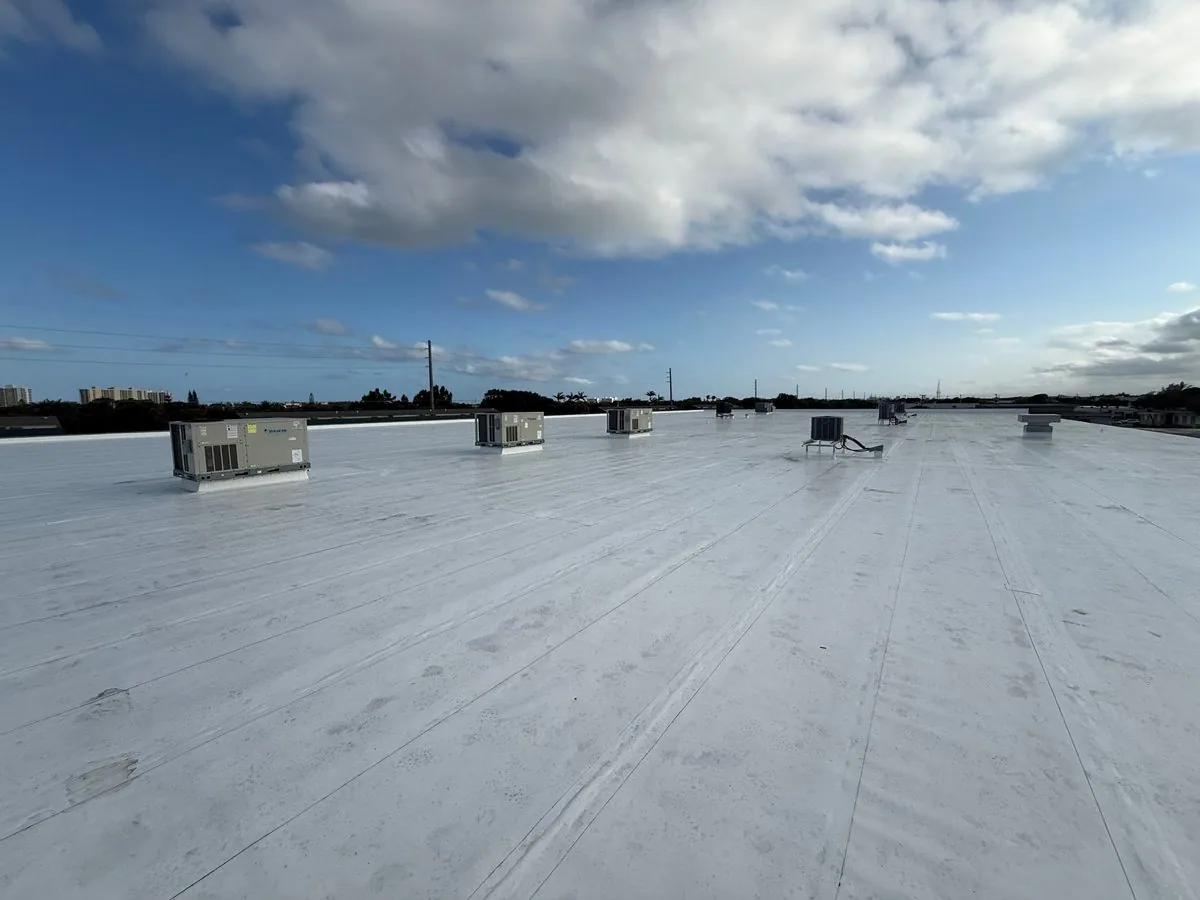
EverGuard TPO and PVC are thermoplastic membranes joined at seams with hot-air welding. The assembly also includes insulation, cover board where specified, attachment, perimeter restraint, flashing and penetrations. A weld can only perform as intended when the substrate, sheet and preparation are right. We inspect sample seams, laps, corners, wall terminations and curbs, then establish whether the field can be repaired or needs broader work. For a separate single-ply approach, EPDM roofing uses a different seam method. A Carlisle system or Johns Manville assembly also has to be judged against its own materials instead of treating all membranes as interchangeable.
Attachment matters at the field and perimeter. Mechanically attached and adhered assemblies place different demands on the deck and wind design. We note the existing pattern and verify the project requirements before pricing replacement. At an occupied distribution building, staging and crane picks can determine which roof zone opens first. The Elwood/Joliet area is a freight subregion with planned links among freight clusters. For GAF membrane staging, the receiving property's own dock schedule and roof-lift route determine the delivery plan. We map that constraint in the sequence so roofing can be scheduled with operations.
Seams, Curbs, and Water Paths
A seam that has pulled apart may be a local weld failure, or it may sit above wet insulation that changes the repair boundary. We probe representative laps, examine membrane tension and trace water around drains, pipes, skylights and equipment curbs. A moisture survey or selective opening can show whether the problem stops at the surface. The same station receives 38.03 inches of precipitation in a normal year, with highs of 90 degrees or more on 14.9 days. For this GAF assembly, those seasonal ranges inform seam-test timing and drain checks at each low point. We photograph the field condition and distinguish repair from replacement. For active water entry, a leak repair scope can state temporary control and permanent detail separately.
Product selection does not replace detail review. We confirm a new membrane can tie into flashing, drains and edge metal, and state where another material requires a transition. After a hail or wind report, we inspect seams, fasteners, units and perimeter metal, then record the damage observed. In July 2023, a tornado moved from Minooka through Shorewood and Joliet. For a GAF roof, we inspect the building's actual seams and edge details before scoping storm work.
Repair Boundary Before Material Order
A localized repair can work when the surrounding sheet remains secure and insulation is dry. We remove loose material, prepare the surface and install compatible membrane and flashing, then record the completed lap. If the assembly contains widespread wet insulation, repeated seam openings or weak attachment, a recover or replacement may suit better. A recover review checks moisture, existing layers, edge height and drainage before another assembly is considered. The replacement scope identifies tear-off, deck review, insulation, attachment, flashing and daily dry-in limits. Concealed conditions become approval points rather than an open-ended field change.
Cost and duration follow access, demolition, disposal, deck repair, curb count, perimeter work and production limits. Joliet's winter freeze days and summer heat create distinct installation windows; the forecast and substrate condition govern preparation on each work date. A large open area may progress in long runs, while equipment or tenant access can split the job into smaller phases. We identify lift zones, staging, procurement timing and each trade handoff. GAF membrane selection then fits the assembly and design instead of setting scope by product name.
Perimeter and Trade Handoffs
Thermoplastic membrane needs a complete route through the field and up each curb, wall and parapet. We inspect termination bars, metal edges, corners and tie-ins where new work meets an existing assembly. If a mechanical trade lifts an HVAC unit after installation, the curb can be disturbed, so the pick belongs before closeout where practical. A coping and edge scope may need to be separated from the field membrane. We identify responsibility for each opening, reset and flashing, then photograph the handoff. Joliet has 22 business and industrial parks. For a GAF reroof, we map the individual property's dock, crane position and work-zone access rather than assuming neighboring facilities share a sequence.
Code and design review affect ordering. For a Joliet GAF replacement, adopted codes and local approvals shape the design review. Certain commercial documents may need a seal from an Illinois-licensed professional, as confirmed by the owner and design team for that project. Design review is complete before materials are purchased. We provide measurements, roof photographs and the proposed assembly for review, then hold procurement at the agreed point. The report identifies whether insulation, edge height or drainage needs design input before a crew is scheduled.
Weld Record and Next Inspection
Closeout ties the specified GAF assembly to what was installed. We mark roof zones, list membrane and insulation, photograph seams, flashings and drains, and note test cuts or exposed deck conditions. A later maintenance visit can compare those details with new observations. We separate permanent work from temporary protection and identify any trade item still open. Plainfield's commercial areas include the 119th Street and IL Route 59 trade area. Minooka's village information separately notes truck and rail connections. We verify site delivery instructions before planning a GAF membrane project in either part of the market. Those facts help frame regional logistics, but the owner's loading route determines access. A Joliet roof walk can establish the building's actual staging zone and maintenance route before work starts.
We can inspect, repair, replace or maintain GAF assemblies. The next decision may be a seam test, drain correction, limited repair or full tear-off estimate. If another membrane or coating is considered over the GAF assembly, we check compatibility and attachment instead of applying a layer by assumption.
Commercial Roofing Questions
Can a GAF TPO seam be repaired without replacing the roof?
A localized weld can be repaired when the surrounding sheet is sound, cleanable and dry enough for the method. We test the seam, inspect the insulation below and set the boundary at material that can be prepared correctly. Repeated openings or wet layers can require a wider scope.
How do you choose between EverGuard TPO and PVC?
The project design, exposure, assembly compatibility, attachment, drainage and detailing guide the choice. We confirm the existing membrane and building requirements before pricing either system. A product name does not establish that the roof can take a recover or a particular flashing detail.
What changes the schedule for a GAF replacement in Joliet?
Tear-off depth, weather, delivery, crane picks, access and the area that can be dried in each shift all affect timing. Joliet's freezing season and hot-weather periods create different preparation limits. We plan zones with the general contractor and state the stop point for each workday.
Does a storm report show that the GAF membrane needs replacement?
No. We inspect the membrane, seams, edges and rooftop equipment, then document observed damage and concealed conditions that need an opening. A regional event is context for inspection; the building's field findings determine repair or replacement.
What belongs in the GAF roof closeout?
Keep the marked plan, membrane and insulation details, dated seam photographs, drain observations and records of open trade handoffs. The closeout distinguishes completed repair from temporary dry-in and lists follow-up items, giving the next maintenance visit a useful starting point.
Review the GAF Roof Assembly
Arrange a roof walk with Commercial Roofers Joliet to check membrane, attachment, drains and trade handoffs. We will map the repair boundary and daily dry-in point before the GAF scope enters procurement.
