Roofing Manufacturers
ROOFING SERVICES
Commercial Roof Leak Repair
Emergency Commercial Roof Repair
Commercial Roof Repair
Commercial Roof Inspection
Commercial Roof Maintenance
Commercial Roof Coating
Commercial Roof Replacement
ROOF SYSTEMS
TPO Roofing
EPDM Roofing
PVC Roofing
Modified Bitumen Roofing
Standing Seam Metal Roofing
PROPERTY TYPES
Warehouse Roofing
Distribution Center Roofing
Office Building Roofing
School Roofing
INDUSTRIES
DAMAGE REPAIR
CAPABILITIES
MANUFACTURERS
SERVICE AREAS
Carlisle SynTec Roofing in Joliet, IL
Roofing Manufacturers
Review Carlisle SynTec roof repair, recover and replacement options in Joliet, with seam testing, attachment and curb details tied to field conditions.
Carlisle SynTec Roofing
A Sure-Weld seam and a Sure-Seal EPDM lap need different preparation, so the first visit confirms what is on the roof. At a Joliet, IL, property, we trace drains, curbs, prior patches and edge conditions before comparing repair or replacement. Carlisle SynTec systems include TPO, PVC and EPDM options; compatibility follows the existing membrane, design and attachment. We mark the zones that can be opened and dried in during the available shift, then coordinate material staging with the loading pattern. Joliet receives 38.03 inches of precipitation and 16.9 inches of snowfall in the annual station normals. On Carlisle seams and drains, we look for water paths and winter movement that could change the repair boundary. That makes drainage observations part of the same field record as seam condition. A commercial roof inspection provides photographs and test locations before a Carlisle assembly is specified.
Sure-Weld, Sure-Flex, and Sure-Seal
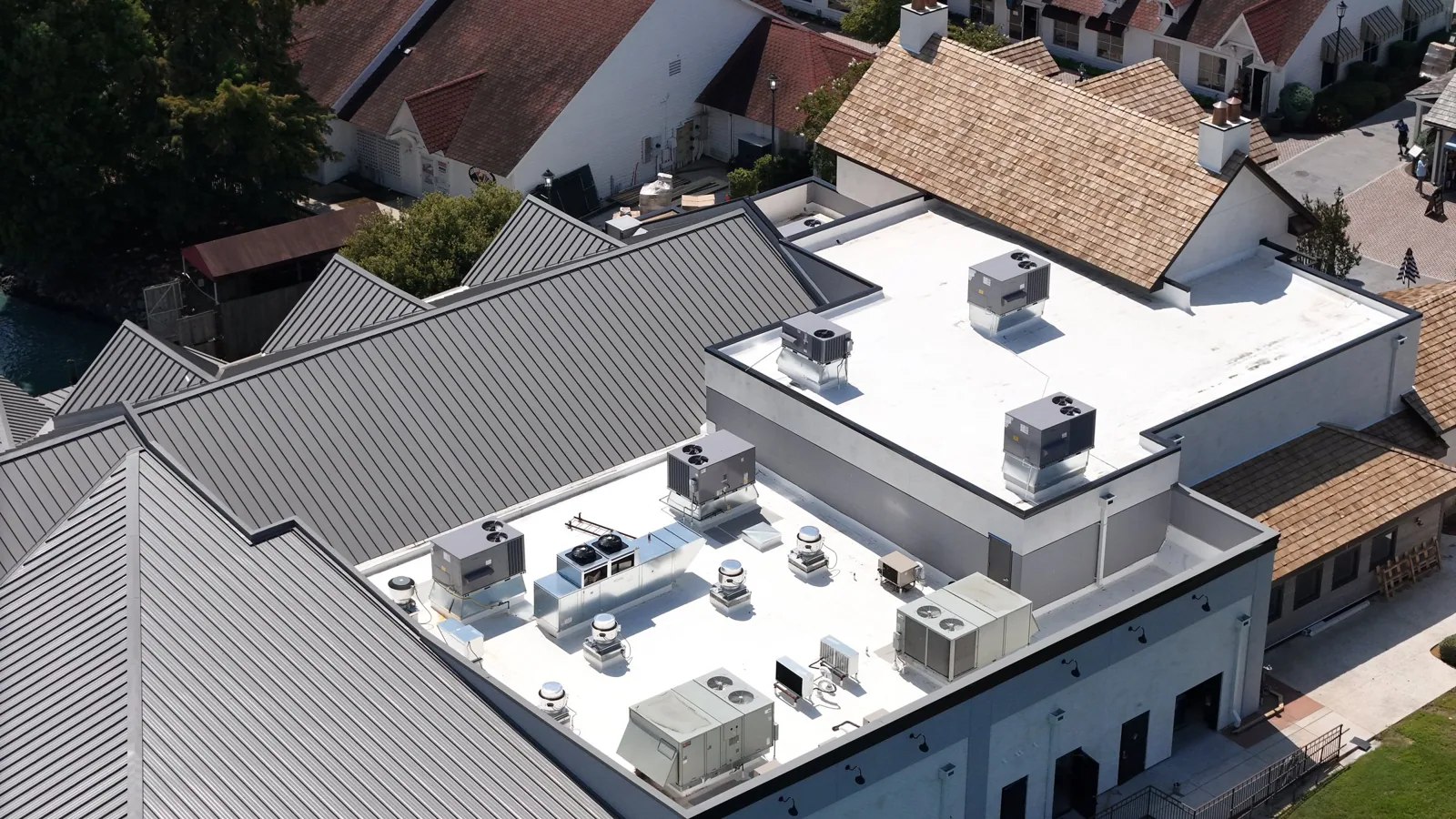
Sure-Weld TPO and Sure-Flex PVC use thermoplastic seams that are hot-air welded; Sure-Seal EPDM relies on a different seam system. We identify the installed membrane, check its condition and verify what flashing, cleaner, adhesive or weld method matches the project. A smooth substrate and secure insulation matter at a patch and a full replacement. For a similar thermoplastic choice, GAF EverGuard systems have their own assembly details, while Versico products need the same careful identification.
Attachment can be adhered or mechanical depending on the specified assembly and deck. We inspect fastener patterns, perimeter zones, cover board and edge restraint, then record any area where uplift or deck condition needs design input. Carlisle membrane is only one part of the roof. Drains, wall terminations, curb corners and metal transitions must connect to it without leaving an open path. A PVC system can be compared with the existing roof when the assembly supports that evaluation.
Test the Seam Before Setting the Scope
A weak seam can peel because of contamination, poor preparation, movement or a substrate that no longer holds the assembly. We probe representative areas, check the lap and sample adjoining details before deciding whether to weld, splice or remove. Joliet's freeze-and-thaw pattern makes drain bowls and Carlisle terminations useful inspection points after winter weather. We trace moisture from low areas into the insulation before deciding whether a seam repair can stay local. A moisture survey helps target openings, while a test cut can confirm the layers. For a localized failure, a repair scope can stay limited to sound membrane around the defect. If wet insulation continues beyond that point, the repair boundary must move with the evidence.
NWS Chicago's July 2023 record notes a tornado track through Minooka, Shorewood and Joliet, with damaging wind and hail reported near the Kankakee River Valley and I-80. On a Sure-Weld roof, we check welded laps, edge metal and rooftop equipment rather than treating the regional report as a property-level damage finding. A reported storm makes edge metal, rooftop equipment and exposed membrane worth inspecting. We do not assign that event to every roof. The record identifies what we found at the property, including open laps, punctures, displaced metal or no observed damage. Where a new assembly is needed, those findings help keep the replacement limits clear.
Compatibility at Transitions
At a Carlisle roof, the edge, curb and wall detail have to match the membrane and termination method. We inspect existing metal, bar terminations, pipe boots and corners, then identify where compatible flashing is available and where dissimilar materials need separation. A loose edge can make a field repair incomplete. A coping and metal-edge review records that scope separately. If rooftop equipment needs a crane pick, the trade handoff should happen before adjacent seams are closed. The general contractor needs a plan for disconnect, lift, reset and final flashing rather than a single allowance with no owner.
Joliet city materials count ten interchanges across I-80 and I-55; two intermodal terminals sit in or close to the city. For a Sure-Weld project, that regional access informs delivery planning, while site gates and lift placement set staging. We map the route for rolls, insulation and removed material, then select roof zones that can be protected at shift end. The scope states the dry-in point and identifies what happens if rain or wind changes the work sequence. Those steps can be coordinated with occupied operations.
Recover or Remove the Existing Layers
A Carlisle recover may be considered when the existing membrane is dry, attached and suitable for added height. We check moisture, edge clearances, drain elevation, curb height and fastening reach before proposing another layer. Wet insulation, repeated seam failure or deck deterioration can make removal more practical. A recover assessment separates those decisions and identifies any concealed condition that could change scope after opening. Replacement should list tear-off, insulation, cover board, attachment, flashing and closeout by roof zone.
Cost depends on assembly layers, access, perimeter complexity, curb count, disposal, substrate repairs and tenant coordination. Timing follows deliveries, crane picks and the amount of roof that can be made watertight each day. For Joliet, NOAA normals list 16.9 inches of snowfall and 38.03 inches of annual precipitation; Sure-Weld welding or a Sure-Seal splice still waits for suitable work-date conditions. The Elwood/Joliet freight subregion shapes regional movement, while the site walk establishes actual loading windows and lift positions. Photographs and open scope questions stay with the estimate.
System Record and Maintenance Route
The closeout should identify whether the installed Carlisle assembly is TPO, PVC or EPDM, with insulation, cover board and attachment noted. We mark roof zones, photograph seams and flashing, and record any test opening or exposed deck condition. Temporary dry-in and permanent work remain separate in the record. Weber Road, Taylor Road and Route 53 are near Romeoville employment centers. Minooka's village materials separately identify truck and rail access along I-80. For Carlisle deliveries, the property contact confirms gate times and roof staging rather than relying on regional connections alone. Those are regional facts, not assumptions about an individual building's delivery access. The actual property sets the maintenance route and gate procedure. A maintenance visit can return to drains and details after seasonal weather.
If a later leak appears, the roof plan helps locate the original repair and compare the new report with the prior condition. We note any seam or curb that needs observation and who owns an outstanding mechanical handoff. For a roof project in Joliet, a field walk can check the field, perimeter and staging zone before setting the next work window. That gives the owner a record tied to the assembly actually installed, not only the membrane brand.
Commercial Roofing Questions
Can Carlisle TPO be tied into an existing EPDM roof?
The transition has to account for membrane compatibility, surface preparation and the approved flashing detail. We identify both materials, inspect the substrate and define the point where one system ends. If the existing EPDM cannot support the tie-in, the scope may need a broader transition or replacement area.
How do you know whether a Carlisle seam needs repair or replacement?
We probe the seam and inspect adjacent membrane, attachment and insulation. A localized opening over sound material can support a repair. Repeated separation, wet layers or deck concerns can move the scope to removal. Test locations and photographs show why the boundary was selected.
What changes the timing of a Carlisle replacement in Joliet?
Joliet weather windows affect when we weld Sure-Weld TPO or Sure-Flex PVC. We confirm published installation limits, substrate condition, crane access and tear-off pace, then set the shift's dry-in point with the project team.
Can a Carlisle roof be recovered instead of torn off?
A recover depends on dry layers, attachment, drain and edge height, curb clearance and the design requirements. We inspect and test representative areas before making that comparison. The estimate states what is confirmed and how concealed conditions will be handled after opening.
What should the closeout say about the Carlisle system?
Record membrane type, insulation and cover board, attachment, repaired zones, photographs and any open trade item. The owner should be able to locate each seam, drain or curb detail and distinguish completed work from temporary protection. That makes future maintenance easier to direct.
Confirm the Carlisle Assembly
Arrange a roof walk with Commercial Roofers Joliet to identify the Carlisle membrane, test representative seams and review drains, edges and access. We will set the repair boundary and dry-in sequence before material is ordered.
