Commercial Roofing Services
ROOFING SERVICES
Commercial Roof Leak Repair
Emergency Commercial Roof Repair
Commercial Roof Repair
Commercial Roof Inspection
Commercial Roof Maintenance
Commercial Roof Coating
Commercial Roof Replacement
ROOF SYSTEMS
TPO Roofing
EPDM Roofing
PVC Roofing
Modified Bitumen Roofing
Standing Seam Metal Roofing
PROPERTY TYPES
Warehouse Roofing
Distribution Center Roofing
Office Building Roofing
School Roofing
INDUSTRIES
DAMAGE REPAIR
CAPABILITIES
MANUFACTURERS
SERVICE AREAS
Cool Roof Installation in Joliet, IL
Commercial Roofing Services
Plan a reflective commercial roof in Joliet around membrane, insulation, drainage and energy-code requirements. Compare system options before procurement.
Cool Roof Installation
A reflective roof starts with a roof that can hold the new assembly, not simply a lighter surface color. We review the existing membrane, insulation, deck, drainage and rooftop equipment before comparing cool-roof options. Joliet climate normals include 14.9 days a year with maximum temperatures at or above 90°F. Snow and freeze-thaw also shape the seasonal load on the same roof. The owner and general contractor need a system choice that fits the building, project documents and procurement window. We mark those conditions first, then define whether the work is a coating, recover or replacement.
Existing Assembly and Heat Exposure
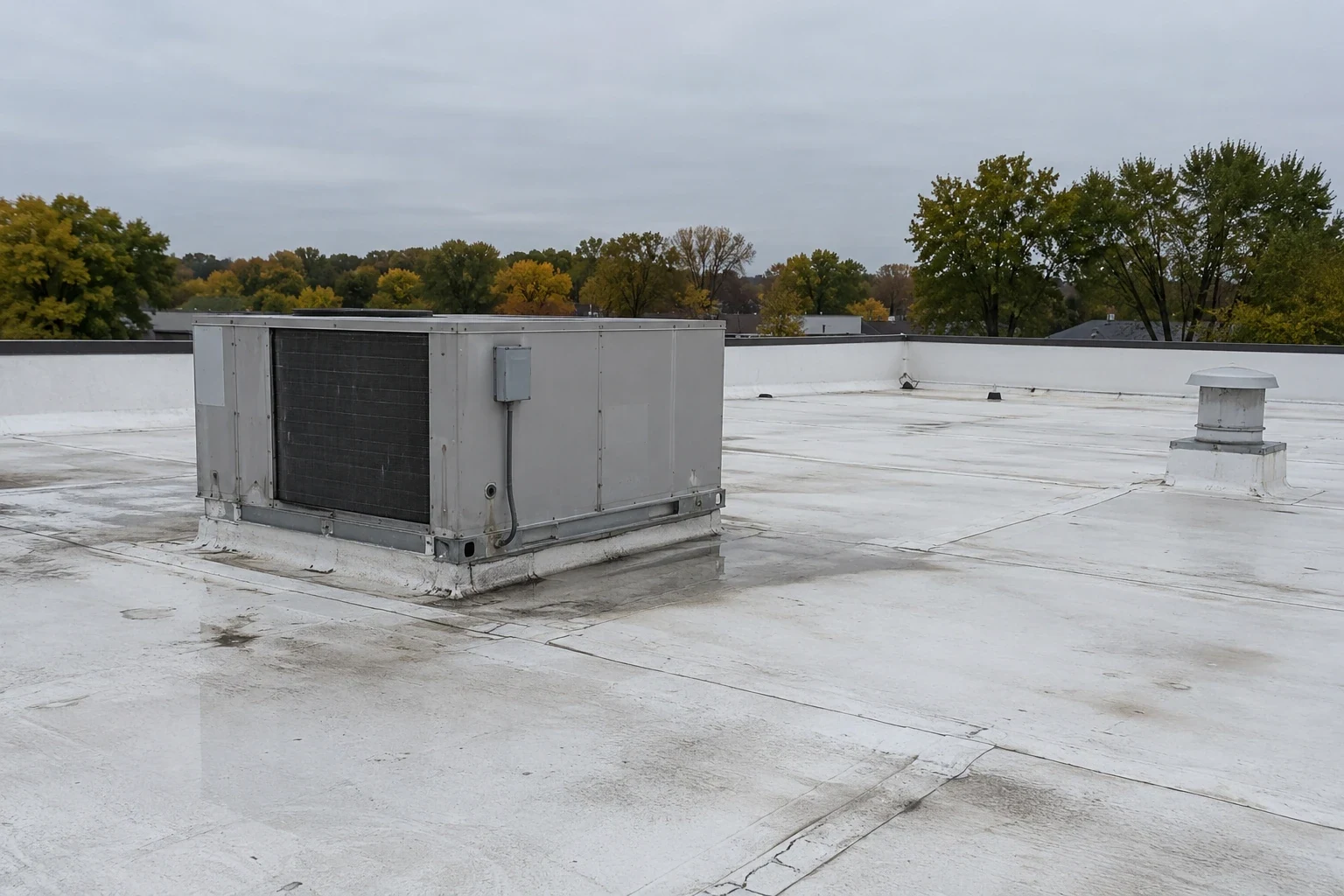
A reflective surface can reduce solar absorption, but it does not correct wet insulation, failed attachment or poor drainage below it. We inspect the roof layers, seams, prior repairs, penetrations and perimeter before discussing material. If the surface is suitable for restoration, the coating system must bond to a clean, stable substrate. If the assembly has widespread moisture or a weak deck, a new roof system may be a better scope. The proposal identifies the roof condition that supports each option instead of treating reflectivity as a stand-alone repair.
Joliet's long-term climate record includes hot summer days as well as winter freezes. That matters when the project team compares surface finish with insulation value and how the roof will shed water after installation. At Elwood International Port and other industrial areas in the Joliet region, equipment access and loading schedules can affect where materials are staged. We plan the work zone with the facility contact and keep service paths available. A reflective TPO assembly may be considered when the deck and system details support it; other membranes and coatings must be evaluated against the same field conditions.
Coating, Recover, or Full Replacement
A coating can restore a compatible surface when the existing membrane is sound, dry and properly prepared. It is not a substitute for replacing saturated insulation or rebuilding failed flashing. A recover places another roof system over an eligible assembly, while tear-off exposes the deck and allows concealed conditions to be corrected. We compare these options by expected repair boundary, insulation scope, curb height, drain elevations and disruption to the building. The owner gets a clear view of what each system retains and what it removes.
Privately funded commercial facilities must comply with the Illinois Energy Conservation Code; the amended 2024 edition became effective November 30, 2025. We coordinate insulation and assembly decisions with the project design and approval path. A reflective finish alone does not establish compliance; the full roof construction and submittal matter. When the chosen option requires a new membrane, PVC roofing or another specified system can be reviewed against roof use, seams and drainage. If the assembly is fit for another layer, we can compare a recover scope with replacement.
Drainage Through Snow and Summer Storms
Joliet receives both summer heat and winter freeze-thaw. Station normals record 16.9 inches of annual snowfall and 125.8 days per year with minimum temperature at or below freezing. A reflective roof still needs sound slopes, clear outlets, secure edge details and stable flashing when snow melts and refreezes. We inspect drain bowls, scuppers and low areas before setting insulation thickness or applying a coating. A roof that holds water can place stress on seams and may not be a good candidate for an overlay until drainage is addressed.
A July 2023 tornado traveled through Minooka, Shorewood and Joliet, with hail and wind reported across the I-80/Kankakee River Valley region. That history can inform an inspection schedule, but it does not show damage on a specific roof. Before installing a reflective finish, we check the property's membrane, perimeter, curbs and equipment for storm-related conditions and complete any supported repairs. A finish should not cover a defect or conceal unresolved moisture. The hail damage review can document impact concerns, while drainage corrections address standing-water paths that would otherwise remain beneath the new surface.
Installation Sequence and Site Access
Reflective systems need a prepared surface and a weather window suited to the specified materials. We confirm roof access, cleaning and repair scope, equipment protection, staging, drainage and work hours before installation. Coatings may require multiple passes and cure time; membrane work requires seams and flashings to be completed before the area is returned to service. The sequence should identify what happens at curbs, pipe supports and terminations, since those transitions can be harder to access after equipment work begins.
On an operating roof, the daily plan should show which areas are receiving coating or membrane work, which routes remain open below, and where tools or materials may be staged. The crew lead records each released section so a delayed delivery or weather hold does not blur the work boundary. We coordinate crane picks, material drops and temporary dry-in with the general contractor, then divide the roof into sections the crew can secure in sequence. For a building that stays in operation, an occupied-building schedule can help preserve access below the work area. We keep a photo record of concealed repairs and system transitions for closeout.
Specification, Approval, and Budget
The budget depends on existing layers, wet insulation, deck repair, edge metal, equipment movement, access and the chosen roof system. We itemize those drivers so a lower initial coating price is not compared with a replacement that includes different work. The bid package should identify reflectivity requirements, insulation, attachment, flashing, drain adjustments, preparation and maintenance assumptions. If the existing assembly is unknown, test cuts or other inspection may be needed before quantities are final.
Locally determined approvals apply under adopted codes, and commercial projects may require documents sealed by an Illinois-licensed professional. The project team should confirm the approval path and energy-code details before ordering materials. Near Plainfield's Route 30 and I-55 commercial node, active commercial development can make coordination around site access and procurement timing useful, but the roof assembly remains the basis for the system choice. A capital planning review can separate urgent roof repairs from future reflective-roof work. Arrange a roof walk in Joliet, and we will identify the field conditions and documents needed to compare the options.
Commercial Roofing Questions
Will a reflective roof lower the building's energy use?
A reflective surface can reduce solar heat absorption at the roof, but building energy use depends on insulation, HVAC equipment, controls, occupancy and other conditions. We can describe the roof assembly and its reflective properties, while avoiding a savings promise unsupported by the project data. A design professional can model expected building performance.
Can a coating be applied over an older membrane?
Only when the existing surface is compatible, clean, dry and stable enough to receive the specified coating. We inspect seams, flashing, repairs, moisture and attachment first. Wet insulation or widespread failures need a different response. The proposal identifies preparation and repairs required before the coating work begins.
Does a cool roof replace insulation requirements?
No. Surface reflectivity and insulation perform different roles in the roof assembly. We review insulation, attachment and system details with the design team and applicable code path. The selected finish alone does not establish whether the complete assembly meets project requirements.
How does Joliet winter weather affect the roof choice?
Snow, freezing temperatures and thaw cycles make drainage, seams and edge details important alongside summer heat. We check low areas, drains, flashing and the roof's ability to move water away before specifying a reflective system. A coating or new membrane cannot correct a blocked outlet or weak transition by itself.
What should be settled before materials are ordered?
Confirm the roof assembly, moisture boundary, insulation, attachment, curb details, drain elevations, reflectivity specification, approval documents and staging plan. If tests are needed, complete them before fixing quantities. The general contractor and roofing team can then align the system submittal with the work sequence and procurement window.
Compare Reflective Roof Options
Arrange a roof walk with the general contractor. We will review the existing assembly, drainage, insulation and approval path before setting the cool-roof scope.
