
Roofing Manufacturers
ROOFING SERVICES
Commercial Roof Leak Repair
Emergency Commercial Roof Repair
Commercial Roof Repair
Commercial Roof Inspection
Commercial Roof Maintenance
Commercial Roof Coating
Commercial Roof Replacement
ROOF SYSTEMS
TPO Roofing
EPDM Roofing
PVC Roofing
Modified Bitumen Roofing
Standing Seam Metal Roofing
PROPERTY TYPES
Warehouse Roofing
Distribution Center Roofing
Office Building Roofing
School Roofing
INDUSTRIES
DAMAGE REPAIR
CAPABILITIES
MANUFACTURERS
SERVICE AREAS
Sika Sarnafil Commercial Roofing in Joliet, IL
Roofing Manufacturers
Plan a Sika Sarnafil roof repair or replacement in Joliet, IL with documented membrane identification, seam checks, transitions and dry-in sequencing.
Sika Sarnafil Commercial Roofing
A product name is useful only after the installed roof matches it. On a Sika Sarnafil commercial roof in Joliet, IL, we identify the membrane, inspect the seams and transitions, and check the layers below before defining repair or replacement. The field may include previous patches or repairs from another project, so the scope needs to distinguish observed material from assumptions in an old file. We map drains, curbs, wall flashings and roof zones, then connect each work item to a location the building team can revisit. Joliet Brandon Road Dam normals record 14.9 days a year at or above 90°F. That is context for Sarnafil scheduling; roof temperature and the approved installation method set the usable work window. That seasonal pattern is a scheduling cue, not a substitute for the membrane manufacturer's temperature limits or the conditions at the roof on installation day. A commercial inspection can establish that baseline before procurement.
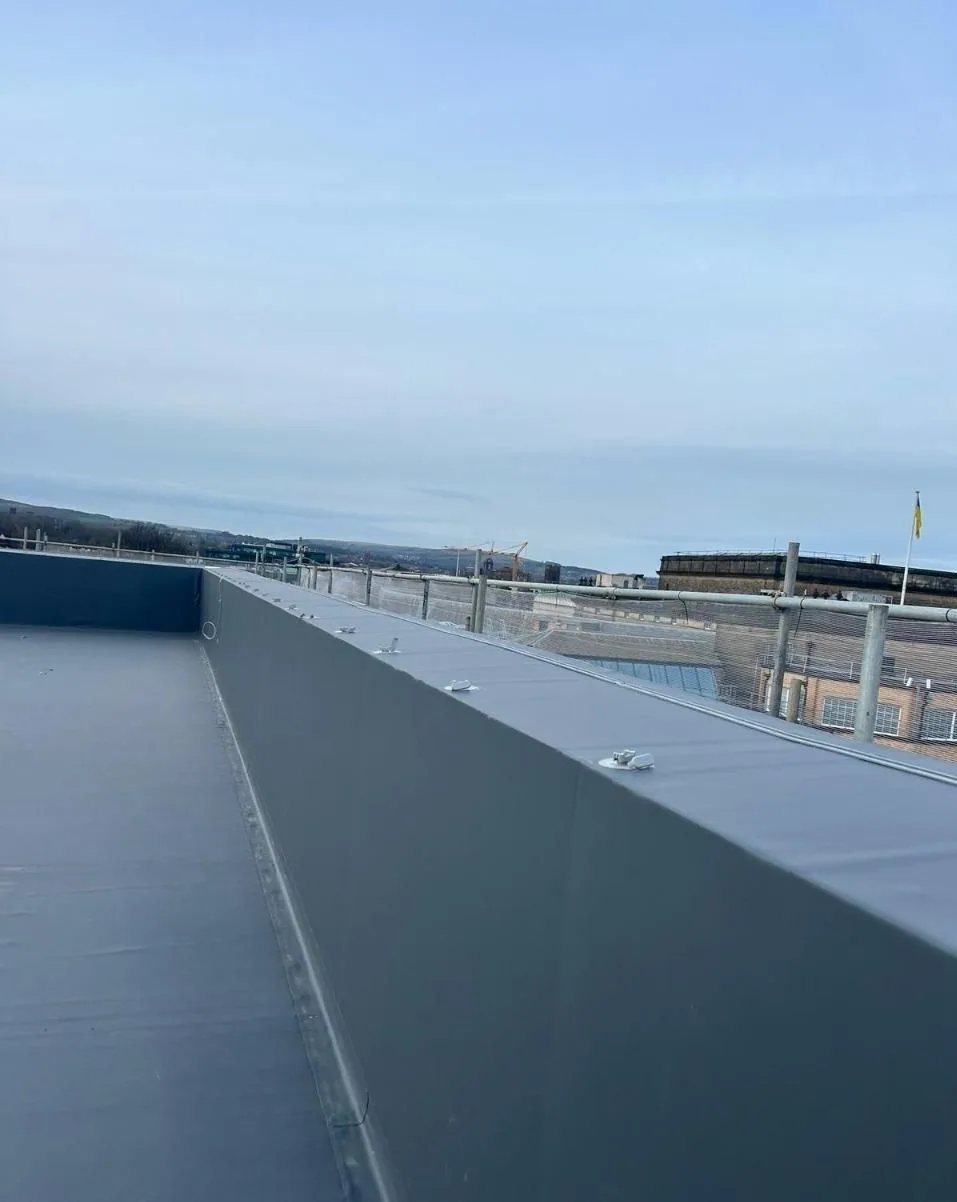
Confirm Membrane and Seam Condition
Sarnafil is a roofing-system name; it does not tell us the condition or exact composition of the sheet on a particular building. We review accessible markings and project records, then compare them with seam shape, flashing transitions and existing repairs. A representative test area can show whether a seam remains sound and whether the repair surface is suitable. The chosen repair material and preparation should follow the identified product and project requirements. TPO, PVC and EPDM are not interchangeable simply because they appear in the same single-ply category. The PVC roof-system review helps frame the assembly questions without substituting for field identification.
The inspection also follows water paths. We check drains and scuppers, wall edges, penetrations, rooftop equipment bases and locations where the roof changes plane. At a leak, the interior symptom may sit away from the membrane opening, so we note both the reported location and tested roof area. A leak investigation can document those points and identify where a moisture reading or selective opening would answer a remaining question. The roof plan should show what was inspected and what could not be reached.
Seams deserve repeatable observations. We record the condition at corners, field joints and terminations, including prior repairs that may affect adhesion or welding. A sound patch should transition to stable material and leave a visible, inspectable boundary. If a repair crosses an old coating, adhesive or incompatible patch, we pause to identify the substrate rather than burying the uncertainty. For comparison, Johns Manville assemblies and GAF commercial systems still require product-specific documents; the details on this roof remain tied to its own recorded materials.
Set the Scope from Confirmed Conditions
A localized repair can be appropriate when the membrane around the defect is stable and the insulation beneath it is dry. We remove failed material, prepare a sound repair zone and rebuild the seam or flashing using a compatible method. The scope notes the limit, tested conditions and any nearby item that remains outside the repair. When moisture extends beyond a single detail, the repair area may need to widen or move into replacement planning. The Brandon Road Dam series lists 38.03 inches of annual precipitation and 16.9 inches of snow for Joliet. On Sarnafil, we follow each low field to its outlet and inspect the seam transitions crossed by runoff. Our field log marks outlet condition and the Sarnafil seam transitions on a roof plan for later review.
Recover work requires its own checks: existing layers, attachment, moisture, drain elevations, edge height, penetrations and compatibility with the new assembly. A recover review can record whether the existing roof is a sound base or whether tear-off is more appropriate. Replacement scope then names removal limits, deck review, insulation, cover board, perimeter transitions, equipment handoffs and the daily dry-in sequence. The replacement plan should also set an approval process for concealed conditions so the owner can make an informed decision after opening a roof area.
Joliet enforces adopted building codes with local amendments and may require documents sealed by an Illinois-licensed professional for commercial work. The property owner and design team confirm which reviews apply to the proposed project. We can supply measurements, photographs and observations, while code interpretation and design decisions stay with the responsible professionals. That division keeps the field record useful without presenting it as an approval or engineering determination.
Plan Work Around the Building Below
Reroofing has to protect the occupied space, not only close the roof at day's end. We divide the building into work zones, locate penetrations and drains, and set limits on how much membrane can be open at once. A warehouse, school, office or manufacturing property may have different access and notification needs. Joliet's economy includes logistics, manufacturing, retail and office activity. For a property manager serving several uses, a zone-by-zone schedule helps describe the actual work without assuming one building operates like another.
We coordinate crane access, deliveries, staging, equipment shutdowns and emergency routes with the site contact. Regional planning in Joliet counts ten interchanges along I-80 and I-55 inside the city, with two intermodal terminals nearby. That is regional dispatch context; the facility's gate and roof-access route set the Sarnafil delivery sequence. We confirm the lift position and delivery route with site staff before scheduling the Sarnafil work. The facility's gate rules, dock traffic, roof hatch and interior protection plan set the workable sequence. A occupied-building reroof plan can outline these handoffs before demolition begins.
Temporary dry-in is a daily task. The crew should track the last completed seam, the exposed edge, temporary drains and any area that needs a weather check before leaving. Photographs at hold points show what was removed, what was installed and what remains to be covered. Closeout records identify membrane, insulation changes, repairs and follow-up items by roof zone. A condition report can keep those records clear for the facilities team and design professionals.
Keep a Usable Roof Record
Closeout is more than a product label. It should connect material identification to completed work: seam repairs, replaced flashing, insulation, deck observations, drainage work, equipment resets and photos of concealed layers. The owner can then compare a future leak or inspection with the actual work history. If later work is proposed, the record helps the next reviewer understand which areas changed and which were left in place. The maintenance service can revisit these locations after seasonal weather and note whether conditions have shifted.
We keep open items explicit. If a drain could not be inspected, if a curb needs a mechanical trade or if a concealed deck condition awaits approval, the closeout records that status instead of implying completion. A meeting with the property contact can separate immediate repair needs from longer-term capital planning. A Joliet roof visit begins with the building's actual access, work limits and condition, whether the project is a small repair or a larger reroof.
Commercial Roofing Questions
How do you confirm a Sika Sarnafil roof before repair?
We review markings and available project records, then inspect seams, flashing, penetrations and prior repair areas. If the material or assembly remains uncertain, we record that and recommend an appropriate test or document check before selecting repair materials.
Can you repair one seam instead of replacing the membrane?
A seam repair may be suitable when testing finds stable surrounding sheet, dry underlying layers and no broader movement. The repair scope should identify the tested area and any nearby condition that needs separate attention.
What information helps plan a replacement?
Useful inputs include roof plans, prior scopes, leak records, access rules, equipment locations, drain layouts and details about occupied operations. We verify those records against field conditions and mark open questions before procurement.
Does a PVC roof use the same repair method as TPO?
No. The repair method depends on the identified membrane, its condition, the product requirements and the project details. We confirm those items first and test a representative location when the evidence calls for it.
How is an occupied Joliet building protected during reroofing?
The plan divides work into zones, limits daily exposure, identifies temporary dry-in and coordinates deliveries and equipment with the site contact. Building-specific access and interior needs determine the sequence.
Document the Roof Before Choosing a Method
Arrange a roof walk with Commercial Roofers Joliet. We will identify accessible materials, record tested conditions and outline the repair or replacement decisions that need owner and design-team review.
